


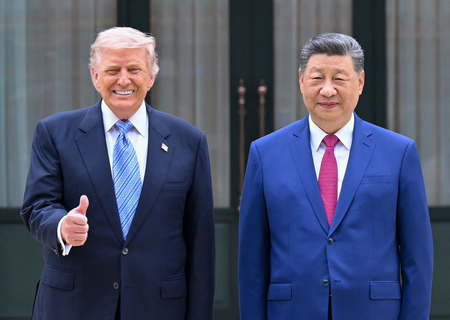
The United States and China are striving for a stable relationship primarily driven by economic factors, as noted by former Assistant Secretary of State for South and Central Asian Affairs Nisha Desai Biswal. Washington’s current strategy towards Beijing focuses on managing tensions and establishing a more predictable dynamic, especially in anticipation of significant upcoming events.
Biswal highlighted that the US is currently prioritizing a stable relationship with China, emphasizing the strong economic motivations behind this approach. She mentioned the possibility of Chinese President Xi Jinping visiting the US later in the year, with a likely focus on immediate economic concerns rather than broader strategic differences.
Despite the diplomatic engagement between the two nations, Biswal cautioned against interpreting it as a fundamental shift in US-China relations. She suggested that challenging issues that have historically strained the bilateral ties could resurface post the US midterm elections, potentially leading to renewed friction.
Discussing China’s ties with India, Biswal emphasized the mutual interest of both countries in maintaining stability despite existing disparities. She noted that both governments have shown willingness to explore limited cooperation opportunities, particularly in economic and investment realms.
Biswal also advised against expecting significant breakthroughs in the India-China relationship, pointing out the inherent limitations in finding common ground between the two nations. She served as Assistant Secretary of State for South and Central Asian Affairs from 2013 to 2017.
US-China relations have been marked by disputes over trade, technology, security, and regional influence, with both nations continuing to perceive each other as strategic rivals despite intermittent efforts to improve relations.
