


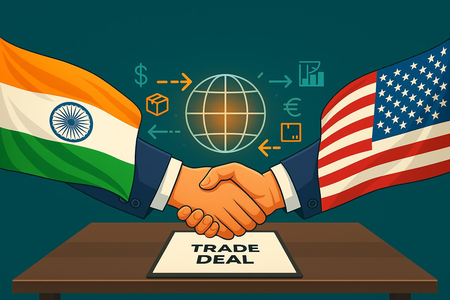
US-India trade is on track to hit $500 billion by 2030, driven by enhanced supply chains, technology partnerships, and deeper integration in manufacturing and services. Recent data shows India’s exports to the US have already reached $87.3 billion in FY26, constituting 20% of its total merchandise exports. Key sectors like electronics, textiles, pharmaceuticals, machinery, and gems and jewelry are pivotal in this trade relationship.
According to the report by KPMG in India and AMCHAM, India’s scale, cost efficiency, and skilled workforce make it an attractive partner for US businesses as global value chains evolve. The focus now is on translating policy initiatives into sustainable economic outcomes through improved supply chain connections and market access. Neeraj Bansal from KPMG in India emphasized the importance of execution in the upcoming phase of trade relations.
The US-India corridor is increasingly becoming a significant driver of global economic growth, supported by expanding trade volumes, sector-specific connections, and strategic alignment in manufacturing, technology, energy, and talent mobility. The report highlights the need for enhanced execution in key sectors like electronics, pharmaceuticals, and high-value services through better regulatory coherence and market access predictability.
India’s role in global healthcare supply chains is reinforced by its supply of nearly 40% of generic drugs to the US. The report underscores the importance of bolstering logistics, regulatory alignment, and standards coherence for deeper economic integration between the two nations. Future growth opportunities are expected in semiconductors, defense, and clean energy sectors, with a focus on manufacturing integration, technology assurance, MSME value-chain enhancement, and energy security.
