


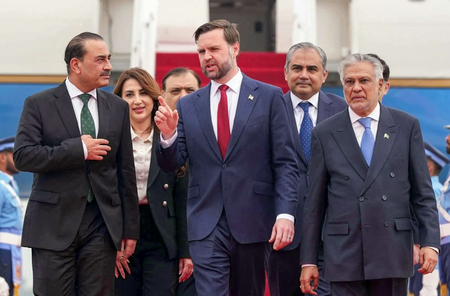
While recent negotiations between the United States and Iran in Islamabad did not yield expected results, there is a call for alternative mediation efforts led by major and emerging powers to foster sustainable peace in the Persian Gulf. Observers suggest that Pakistan played a role more akin to a facilitator than a mediator in the peace process. The United States-Israel conflict with Iran, starting on February 28, has had significant global economic repercussions, with Iran disrupting the flow of goods and oil through the Strait of Hormuz.
“The ceasefire on April 7, 2026, and subsequent peace talks raised hopes for a lasting peace in the Persian Gulf,” according to an opinion piece in the ‘Politeia Research Foundation.’ Pakistan’s emergence as a negotiation platform between the US and Iran garnered attention globally and in India. Sanjay Pulipaka, Chairperson of the Politeia Research Foundation, highlighted that the US and Iran selected Pakistan as a facilitator within a specific geopolitical context. Given the vital role of the Strait of Hormuz for the Indian economy, any potential mediation by India would likely be proactive, aiming to secure open sea lanes benefiting developing economies.
Noteworthy is the deepening relationship between the US and Pakistan in recent months, possibly in anticipation of potential conflicts with Iran. The strained transatlantic ties, Gulf countries’ involvement in the conflict, and Pakistan’s history of safeguarding American interests in the region positioned Islamabad as a suitable negotiation candidate. Despite Pakistani military actions in Afghanistan resulting in civilian casualties, these actions have not faced international scrutiny due to the focus on the Iran conflict. Concerns persist that the positive aftermath of the Islamabad peace talks may overshadow Pakistan’s aggressive actions in neighboring regions.
