


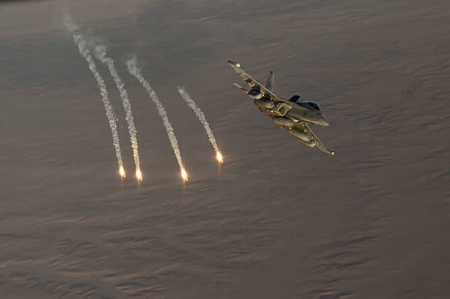
US Navy’s EA-18G Growlers played a crucial role in disrupting Venezuela’s air defenses during the operation that led to President Nicolas Maduro’s capture. The Growler, an electronic attack aircraft, focuses on dominating the electromagnetic spectrum rather than dropping bombs. By jamming signals, it enabled special forces aircraft to swiftly navigate Venezuelan airspace.
The Wall Street Journal highlighted the significance of Boeing’s Growlers in modern conflict, emphasizing Washington’s renewed emphasis on signal-jamming technology. Over 150 US aircraft, including fighters, bombers, and drones, participated in the operation. The Growler’s unique ability to target signals instead of ground targets set it apart in the mission.
Electronic warfare experts praise the Growler’s effectiveness in countering enemy radar emissions. Equipped with jamming pods, the aircraft can confuse radar systems by generating tailored signals. This capability not only protects US aircraft from surface-to-air missiles but also enhances the overall defense of the formation.
Boeing’s EA-18G, a successor to the EA-6B Prowler, has been pivotal in US airborne electronic warfare since its operational debut in 2009. In Venezuela, Growlers successfully navigated the country’s outdated air-defense network, which heavily relies on Soviet, Russian, and Chinese systems. While such tactics may face challenges against more advanced adversaries like China or Russia, the operation underscored the growing importance of electronic warfare.
The evolution of modern jamming pods from analog to digital systems reflects the changing landscape of electronic warfare. These advanced pods can disrupt enemy radars, communications, and sensors with deceptive signals. Analysts stress the critical role of airborne jamming in future conflicts, particularly in regions like the Indo-Pacific, where control of the electromagnetic spectrum is paramount.
