


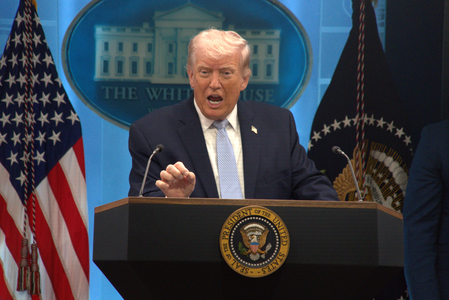
US President Donald Trump called off his negotiators’ visit to Pakistan due to uncertainty over Iran’s leadership dynamics. Trump’s spokesperson had initially planned for his son-in-law Jared Kushner and Special Representative Steve Witkoff to travel to Pakistan after Iran’s Foreign Minister Abbas Araghchi’s arrival in Islamabad. Despite some positive signals from Iran, direct talks with the US were ruled out by Tehran. The internal split within Iran’s leadership, particularly between moderates and hardliners, further complicated the situation.
Trump, in a social media post, emphasized the US’s readiness for dialogue with Iran but criticized the internal discord among Iranian leaders. The failed attempts to restart negotiations in Islamabad led Trump to extend the ceasefire indefinitely while maintaining the naval blockade of Iranian ports. The lifting of this blockade was highlighted as a crucial factor for future negotiations, as per reports from Iran’s semi-official news agency.
Iran’s diplomatic engagements in Oman, Russia, and Pakistan were part of broader efforts to navigate the complex geopolitical landscape involving the US and its allies. The intricate power play in the region, coupled with the ongoing tensions, underscores the challenges in achieving diplomatic breakthroughs. The evolving dynamics between the US, Iran, and other regional players continue to shape the geopolitical narrative in the Middle East.
