


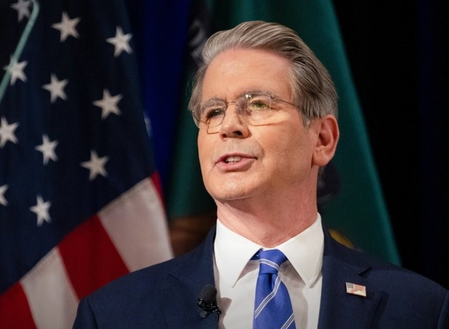
The United States has imposed sanctions on a China-based refinery and numerous vessels associated with Iran’s oil trade, intensifying pressure on Tehran’s energy income. The Treasury Department targeted Hengli Petrochemical (Dalian) Refinery Co., Ltd., labeling it as one of Iran’s major purchasers of crude oil and petroleum products. Treasury Secretary Scott Bessent stated that these actions aim to financially constrain the Iranian regime, hinder its activities in the Middle East, and limit its nuclear aspirations.
The sanctions also extend to approximately 40 shipping companies and vessels connected to Iran’s “shadow fleet,” which transport oil and petrochemicals globally, providing crucial financial support to Iran’s government. The Treasury, under President Trump’s directive, plans to further restrict the network of vessels, intermediaries, and buyers facilitating Iran’s oil exports. Any entity involved in these transactions risks exposure to US sanctions, as per Bessent.
According to Treasury officials, China’s “teapot” independent refineries are the primary buyers of Iran’s crude oil, with Hengli being identified as China’s second-largest such refinery, having purchased billions of dollars’ worth of Iranian petroleum. Hengli has received shipments from sanctioned vessels and Iran’s Armed Forces General Staff through Sepehr Energy Jahan Nama Pars Company, generating substantial revenue for the Iranian military.
In a parallel move, the US has sanctioned 19 vessels accused of transporting billions of dollars in Iranian crude oil, liquefied petroleum gas, and other petrochemical products. These vessels, operating under flags from jurisdictions like Panama, Hong Kong, and Barbados, engaged in activities such as ship-to-ship transfers to conceal the oil’s origin. This action, conducted under Executive Order 13902, is part of a broader economic pressure campaign on Iran’s oil exports and financial systems.
Since February 2025, the Treasury has sanctioned over 1,000 Iran-related individuals, entities, vessels, and aircraft as part of this campaign. US law mandates the blocking of all property and interests of designated entities within US jurisdiction, with transactions involving these parties generally prohibited for US individuals. The Treasury cautioned that violations could result in civil or criminal penalties, and financial institutions engaging with designated entities risk sanctions exposure.
