


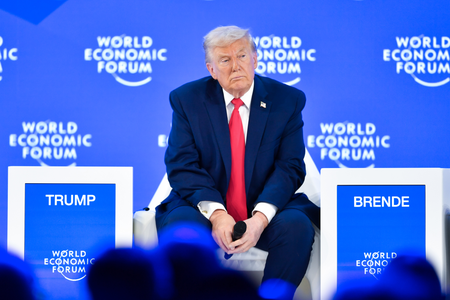
In a significant blow to President Donald Trump’s economic agenda, the US Supreme Court invalidated most of his extensive tariffs on Friday. The court ruled that Trump overstepped his authority by imposing broad import levies on various countries, including India, under a 1977 emergency law. This decision marks a rare instance of the conservative-led court curbing Trump’s use of executive power.
Chief Justice John Roberts, speaking for the majority, emphasized that the President lacked clear congressional authorization to unilaterally impose tariffs of unlimited scale and duration. The court’s 6-3 ruling was described as a substantial rejection of a fundamental aspect of Trump’s economic policies.
The Supreme Court’s judgment specifically addressed Trump’s use of the International Emergency Economic Powers Act (IEEPA) to impose tariffs, which the court deemed unlawful. Trump had justified these tariffs by declaring emergencies related to issues like fentanyl and trade deficits. Notably, the court’s decision does not affect sector-specific tariffs, such as those on steel and aluminum, which are based on different legal grounds.
The ruling is expected to prompt companies to seek refunds for the billions of dollars they have paid in tariffs. Despite this setback, avenues remain open for the administration to impose tariffs through Congress or other existing laws. The case underscores the significance of the International Emergency Economic Powers Act, originally designed to address foreign threats during national emergencies, in shaping trade policy.
