


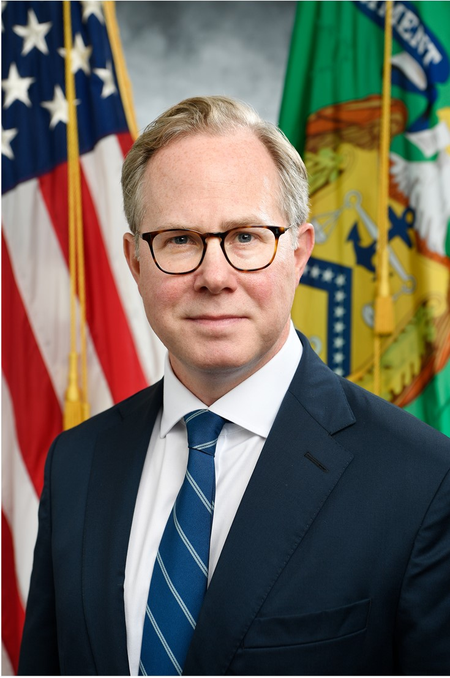
US Treasury Assistant Secretary for Terrorist Financing Jonathan Burke informed lawmakers about the crucial role of sanctions in cutting off adversaries from the American financial system and disrupting illicit activities. He highlighted that sanctions are effective in isolating targets and preventing their access to the US financial system. Testifying before a House subcommittee, Burke explained that sanctions are utilized to block financial flows, freeze assets, and restrict entry to global markets.
Burke emphasized that sanctions serve as both a direct enforcement tool and a deterrent, aiding in safeguarding the US financial system from illicit actors. He mentioned that the mere threat of sanctions can influence the behavior of various actors, showcasing their potential effectiveness in altering actions. Additionally, Burke mentioned that Treasury is actively working to ensure that sanctions are applied in a targeted and strategic manner, despite the challenges posed by adversaries adopting new evasion tactics.
The official pointed out the increasing sophistication of methods used by adversaries to evade sanctions, such as through shell companies, digital assets, and alternative payment systems. Burke highlighted the ongoing review of how sanctions lists are managed to enhance their effectiveness, ensuring that designations align with national security priorities. He also addressed the challenges faced by financial institutions in screening transactions against extensive sanctions lists, which often result in high volumes of false positives and resource diversion.
Burke mentioned the department’s shift towards a risk-based approach to enforcement, aiming to enable institutions to concentrate resources on higher-risk activities. He stressed the importance of allocating resources based on risk levels, focusing more on high-risk activities and less on lower-risk ones. Burke emphasized that the impact of sanctions should be evaluated based on outcomes rather than the quantity of names listed, emphasizing the need for a results-oriented assessment approach.
Lawmakers utilized the hearing to inquire about the consistency of US sanctions policy and its implications on global markets. Some expressed concerns regarding enforcement gaps and the necessity for a clearer strategy. Burke reiterated that sanctions are just one tool among many and should be utilized in conjunction with diplomacy and law enforcement to achieve comprehensive outcomes. He highlighted the expansion of sanctions in US foreign policy, targeting various areas including terrorism financing, nuclear programs, organized crime networks, cybercrime, and financial fraud.
