


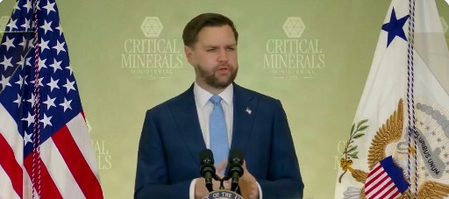
The US is calling on allies and partners to participate in a proposed critical minerals trading bloc to stabilize markets and secure supply chains. Vice President J.D. Vance introduced the concept during the Critical Minerals Ministerial in Washington, emphasizing the importance of critical minerals in modern economies, national defense, and advanced technology. Vance highlighted the fragility of supply chains, citing erratic prices, unreliable investments, and market collapses due to sudden flooding.
Countries attending the meeting, representing nearly two-thirds of global GDP, have the potential to reshape the market according to Vance. He outlined a plan for a preferential trade zone for critical minerals that would be safeguarded from external disruptions and rely on reference prices at each production stage. The goal is to prevent market dumping, support domestic producers, and attract long-term investors through stable prices enforced by adjustable tariffs.
Vance proposed the formation of a trading block among allies and partners to ensure stable prices, facilitate private financing, and guarantee mineral access during emergencies. The initiative aims to establish diverse production centers, enhance supply chain resilience, and create more predictable markets. US Secretary of State Marco Rubio echoed Vance’s sentiments, emphasizing the national security importance of critical minerals in daily devices, infrastructure, industry, and defense.
Rubio underscored President Donald Trump’s prioritization of critical minerals since taking office, citing efforts to expedite permitting, boost domestic mining, and strengthen supply chains. He referenced the US’s critical mineral agreements totaling over $10 billion with five countries and the Pax Silica Summit partnership to enhance silicon supply chain resilience. Rubio warned that technological advancements like artificial intelligence hinge on reviving mining and manufacturing sectors to fortify supply chains and economic security.
