


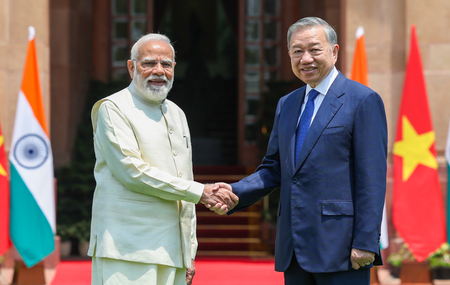
Vietnam President To Lam’s recent visit to India has upgraded bilateral relations to an Enhanced Comprehensive Strategic Partnership, as per the PHDCCI. This move is expected to enhance India’s access to crucial resources, leading to significant long-term benefits for exports, investments, and GDP growth.
Rajeev Juneja, President of PHDCCI, highlighted that this partnership will establish a robust framework for supply-chain resilience, manufacturing collaboration, digital connectivity, and technology alliances. The newly formed agreements align with India’s key initiatives such as “Make in India,” Digital India, and the expansion of pharmaceutical exports.
The cooperation in rare earths and critical minerals is set to bolster India’s access to essential resources necessary for various sectors like electric vehicles, semiconductors, electronics, renewable energy, and defense manufacturing. This collaboration aims to enhance supply-chain security and promote advanced manufacturing growth.
Regulatory collaboration in the pharmaceutical sector is anticipated to enhance market access for Indian generic medicines and medical devices, which already hold a significant competitive edge. Moreover, technology partnerships in electronics, semiconductors, AI, and IT services will reinforce India’s position in global digital value chains.
Agricultural exports, tourism, aviation, urban infrastructure, and smart city development are also poised to benefit from this partnership, leading to increased employment opportunities. The outcomes of this visit further strengthen India’s “Act East Policy” by expanding strategic engagement with Southeast Asian nations.
Enhanced cooperation with Vietnam is projected to enhance connectivity, trade resilience, and foster long-term industrial partnerships across critical sectors, according to Dr. Ranjeet Mehta, SG & CEO of PHDCCI. The strategic partnership has set a bilateral trade target of $25 billion by 2030, with multiple memoranda of understanding signed during the President’s visit, covering sectors like rare earths, digital payments, pharmaceuticals, electronics, tourism, culture, urban development, education, and technology cooperation.
Both countries have committed to facilitating market access, including for agricultural products like Indian grapes and pomegranates, as well as Vietnamese durians and pomelos, as stated in a joint statement following talks between Prime Minister Narendra Modi and President To Lam. Vietnam has expressed its dedication to diversifying its supply sources and increasing imports from India to support its domestic production and exports.
Mutual agreements have been made to explore avenues for a more favorable regulatory environment to enhance ease of doing business for companies from both nations, including in standards compliance certification.
