


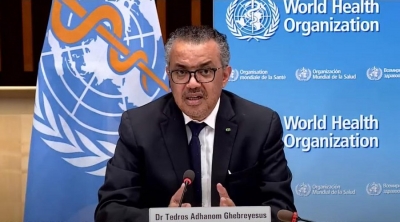
The World Health Organization (WHO) has elevated the public health risk posed by the Ebola outbreak in the Democratic Republic of Congo to a “very high” level. WHO Director-General Tedros Adhanom Ghebreyesus stated that the risk is now classified as very high at the national level, high regionally, and low globally. Meanwhile, the Africa Centers for Disease Control and Prevention (Africa CDC) has emphasized the need for increased solidarity to swiftly contain the recent Ebola outbreak in Congo and Uganda.
The Africa CDC has urged for rapid and coordinated efforts to control the outbreaks, emphasizing the importance of support for frontline responders and affected communities. To bolster emergency operations, the agency has allocated immediate financial aid of 1 million U.S. dollars and dispatched an eight-member team to the affected region in Congo. Additionally, South Africa has contributed 2.5 million US dollars to support Ebola response initiatives, highlighting the crucial role of frontline health workers in combating the outbreak.
In response to a request from the Ugandan government, the Africa CDC is facilitating a high-level cross-border coordination meeting involving Uganda, the Democratic Republic of Congo, and South Sudan. This meeting aims to enhance regional preparedness and response efforts against the Ebola outbreak. According to the latest data provided by DRC Health Minister Roger Kamba, there have been 626 suspected cases and 159 probable deaths since the 17th outbreak was declared on May 15.
The Ebola outbreak, which initially emerged in Ituri Province, has now spread to North Kivu and South Kivu, with two confirmed cases reported in Uganda. The Ebola virus is highly contagious, causing symptoms such as fever, vomiting, diarrhea, and severe pain or malaise. In severe cases, it can lead to internal and external bleeding, with fatality rates ranging from 50 percent to 89 percent depending on the viral subtype, as per the World Health Organization.
