


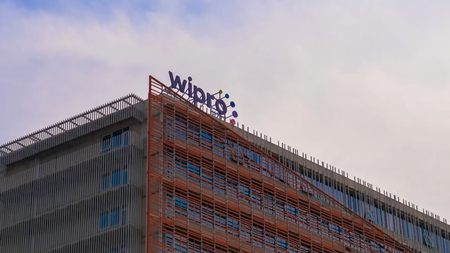
IT services giant Wipro has highlighted in its FY26 annual report the risks associated with the rapid adoption of artificial intelligence (AI). The company expressed concerns about potential issues such as flawed algorithms, bias, regulatory uncertainties, and unintended outcomes from AI systems that could lead to legal, financial, and reputational challenges. While Wipro is increasingly utilizing generative and autonomous AI technologies, it acknowledges the ongoing uncertainty and evolution of this technology.
The company emphasized that the development, adoption, and use of AI technologies are still evolving, posing challenges in successfully deploying, scaling, and realizing the expected benefits of AI-enabled solutions. Wipro cautioned that any failure to innovate or integrate AI technologies effectively, or if these technologies do not perform as anticipated, could negatively impact its competitive position, operational efficiency, and financial performance.
Wipro also pointed out that AI systems operating with minimal human intervention could result in unintended outcomes and operational deficiencies. These shortcomings might lead to project delays, failure to meet service obligations, client disputes, and potential loss of business. Additionally, the increasing adoption of AI-driven automation and self-service tools by clients may reduce the demand for traditional IT services, potentially affecting pricing, margins, and service offerings.
The company further highlighted the legal and regulatory risks associated with AI adoption, noting that clients may seek stronger contractual protections related to AI deployment. These safeguards could include warranties, indemnities, audit rights, and obligations concerning intellectual property ownership, data usage, cybersecurity, regulatory compliance, and AI-generated outputs. Wipro cautioned that any harm caused by AI solutions to clients, their customers, or other third parties could lead to regulatory investigations, legal actions, financial liabilities, reputational harm, and increased compliance expenses.
In addition to AI-related concerns, Wipro underscored the escalating threat of sophisticated cyberattacks. The company warned about the malicious use of advanced AI models for creating deepfakes and AI-powered social engineering attacks, which have expanded the cyber threat landscape significantly. Consequently, Wipro and its third-party vendors face increased risks of data breaches, ransomware incidents, and other cybersecurity breaches. Moreover, Wipro identified geopolitical and macroeconomic uncertainties as significant challenges to its future growth, citing potential impacts from changing tariffs, trade policies, and geopolitical tensions in regions where the company or its clients operate.
