
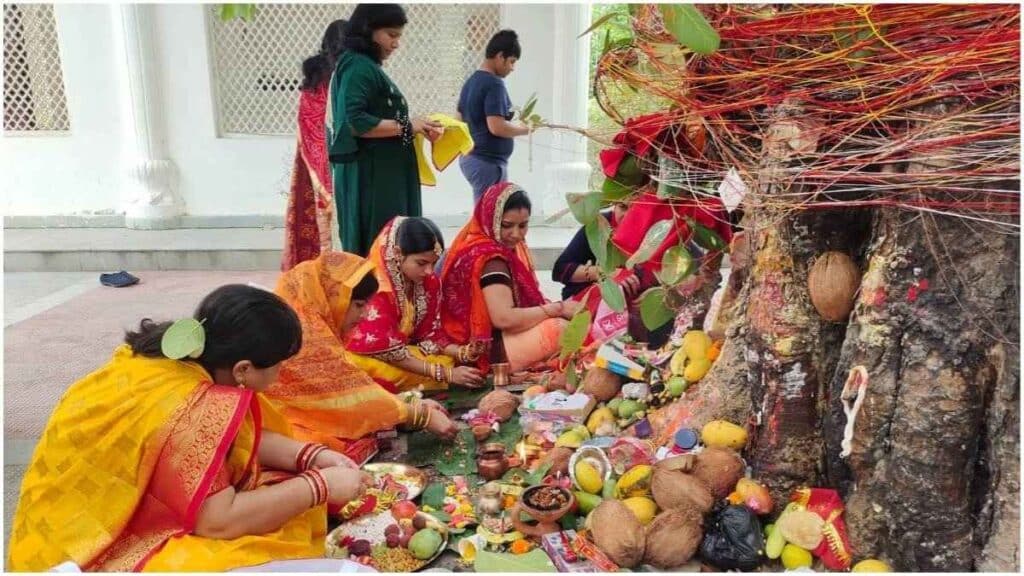
Vat Purnima, also known as Vat Savitri Vrat, is a sacred Hindu festival observed by married women as an expression of love, devotion, and prayer for their husband’s long life and well-being. Rooted in the ancient legend of Savitri and Satyavan from the Mahabharata, the festival centers on the worship of the banyan tree (Vat Vriksha) — a symbol of eternal life and unbreakable bonds.
Observed during the full moon (Purnima) of the Hindu month of Jyeshtha, Vat Purnima is primarily celebrated in Maharashtra, Gujarat, Goa, and Uttarakhand, as well as among Indian diaspora communities worldwide. Women observe a fast, wind sacred thread around a banyan tree, and recite the Vrat Katha — the story of Savitri’s devotion so powerful it moved even Yama, the god of death, to return her husband’s life.
Like Karva Chauth in North India, Vat Purnima is a celebration of the marital bond — but one that uniquely honors the spiritual strength, courage, and wisdom of the wife.
When Is Vat Purnima in 2026?
Vat Purnima falls on the Purnima (full moon) of the Hindu month of Jyeshtha, typically in May or June.
Vat Purnima 2026 Date in India Vat Purnima Vrat: Monday, June 29, 2026 Vat Savitri Amavasya Vrat (North India): Saturday, May 16, 2026
Timings (IST — New Delhi) Purnima Tithi Begins: 03:06 AM on June 29, 2026 Purnima Tithi Ends: 05:26 AM on June 30, 2026 Vrat observed from sunrise on June 29 through completion of puja
Table of Contents
Vat Purnima In USA, Canada, Australia, New Zealand, UK, UAE, Singapore 2026 Dates
- Vata Savitri Purnima on Sunday, June 28, 2026
- Vat Savitri Amavasya Vrat on Saturday, May 16, 2026
- Vata Savitri Purnima on Sunday, June 28, 2026
- Vat Savitri Amavasya Vrat on Saturday, May 16, 2026
- Vata Savitri Purnima on Sunday, June 29, 2026
- Vat Savitri Amavasya Vrat on Saturday, May 16, 2026
- Vata Savitri Purnima on Sunday, June 29, 2026
- Vat Savitri Amavasya Vrat on Saturday, May 16, 2026
- Vata Savitri Purnima on Sunday, June 29, 2026
- Vat Savitri Amavasya Vrat on Saturday, May 16, 2026
- Vata Savitri Purnima on Sunday, June 29, 2026
- Vat Savitri Amavasya Vrat on Saturday, May 16, 2026
Why Do Vat Purnima Dates Change Every Year?
Vat Purnima follows the Hindu lunisolar calendar and falls on the Jyeshtha Purnima tithi. Since the lunar month is shorter than the solar month, the festival shifts each year on the Gregorian calendar, typically landing between late May and late June. Exact timings vary by location based on local sunrise.
Vat Purnima Overview
Vat Purnima is a festival of devotion, love, and spiritual strength observed by married Hindu women. The word Vat refers to the banyan tree and Purnima means full moon. Together they capture the essence of the festival: on the brightest night of Jyeshtha, women gather around the banyan tree to pray for their husband’s longevity and well-being.
The festival is observed primarily across Maharashtra, Gujarat, Goa, and Uttarakhand, as well as by Indian diaspora communities originating from these regions. Unlike many Hindu festivals that involve community-wide celebration, Vat Purnima is intimate and personal — a woman’s act of devotion, rooted in one of India’s most beloved myths.
Other Names and Regional Identities
Vat Purnima is known by several names across India’s diverse linguistic landscape:
Widely Used Names Vat Savitri Vrat — The most common alternative name, honoring the legendary Savitri Vaṭapūrṇimā (Sanskrit: वटपूर्णिमा) — Classical Sanskrit name
Regional Names Vad Poonam — Gujarati name (Vad = banyan, Poonam = full moon) Wad Purnima — Marathi regional variant Vat Savitri Puja — Name emphasizing the ritualistic worship aspect
North Indian Variant In states like Uttar Pradesh, Bihar, Madhya Pradesh, Punjab, and Haryana, the counterpart festival observed on Jyeshtha Amavasya (new moon) is called Vat Savitri Vrat and falls 15 days earlier. The legend and rituals are identical; only the calendar differs.
Diaspora Naming Indian communities worldwide commonly refer to it as Vat Purnima, Vat Savitri Puja, or simply Savitri Vrat.
The Origins, History, and Legends of Vat Purnima
Vat Purnima is rooted in one of the most celebrated love stories in Hindu scripture — the tale of Savitri and Satyavan, narrated in the Vana Parva of the Mahabharata.
The Legend of Savitri and Satyavan
Savitri was the daughter of King Asvapati, born as a divine blessing from the sun god Savitr. So radiant and spiritually powerful was she that no suitor dared ask for her hand. Her father sent her to choose her own husband, and she returned having chosen Satyavan — a noble prince living in forest exile with his blind father, King Dyumatsena.
The sage Narada delivered a fateful warning: Satyavan, though perfect in every way, was destined to die exactly one year from that day. Savitri, unmoved, married him regardless.
Three days before Satyavan’s predicted death, Savitri undertook a strict fast and vigil. On the fated day, while Satyavan was chopping wood, he collapsed beneath the shade of a banyan tree and died. Yama, the god of death, arrived to claim his soul. Savitri followed, insisting it was her duty as a wife. Moved by her devotion, Yama offered her boons — but excluded the return of Satyavan’s life. Savitri cleverly asked for her father-in-law’s sight and kingdom, then children for her father, and finally children for herself and Satyavan. The last wish created a divine dilemma: it could only be fulfilled if Satyavan lived. Impressed by her wisdom and love, Yama relented and restored Satyavan’s life, blessing them with eternal happiness.
The banyan tree beneath which Satyavan rested became the sacred center of the festival — a symbol of eternal love, protection, and the life force that devotion can preserve.
Scriptural References The Vat Purnima Vrata method is detailed in the Skanda Purana. The legend of Savitri and Satyavan appears in the Aranya Parva of the Mahabharata, making this one of the oldest continuously observed Hindu fasting traditions.
Vat Purnima: Cultural and Spiritual Significance
Vat Purnima celebrates one of Hinduism’s highest ideals: that love, wisdom, and devotion are forces capable of transcending even death. Savitri’s victory over Yama is not a miracle of chance but a triumph of spiritual courage and moral clarity.
The banyan tree carries deep symbolism in Hindu culture. Associated with immortality and longevity, its aerial roots — which grow downward and anchor into the earth — represent the bonds of family and devotion. Winding thread around the banyan tree is an act of binding one’s husband’s life force to the eternal energy of the tree.
Scholar B.A. Gupte interpreted the festival as symbolic of natural phenomena — Satyavan representing the earth that dies each year and Savitri representing nature’s regenerative power that restores it. This reading underlines the festival’s resonance across centuries.
The collective greeting among women — जन्म सावित्री हो (Janm Savitri Ho, meaning “May you become like Savitri”) — captures the festival’s social aspiration: to embody the devotion, courage, and spiritual strength of its legendary heroine.
Vat Purnima Prayers and Religious Observances
The Three-Day Vrat The full observance spans three days — the 13th (Trayodashi), 14th (Chaturdashi), and 15th (Purnima) of the Shukla Paksha in Jyeshtha. Devout women fast for all three days, mirroring Savitri’s vigil. Some observe a nirjala fast (without water) on the Purnima day itself; others observe a partial fast.
Home Rituals Images of the Vat tree, Savitri, Satyavan, and Yama are drawn on the floor or wall using a paste of sandalwood and rice. Golden figurines of the couple are placed in a tray of sand and worshipped with mantras, banyan leaves, copper coins, and five fruits including a coconut.
Banyan Tree Worship The most visible ritual is the circumambulation of a banyan tree. Women dressed in fine sarees and jewelry wind white cotton thread around the tree’s trunk seven times while reciting prayers. The number seven represents the seven lifetimes across which Savitri’s devotion is believed to protect her husband.
Vrat Katha Recitation of the Savitri-Satyavan story is an essential part of the observance — performed at home or led by a priest at the temple.
How Vat Purnima Is Celebrated Across India
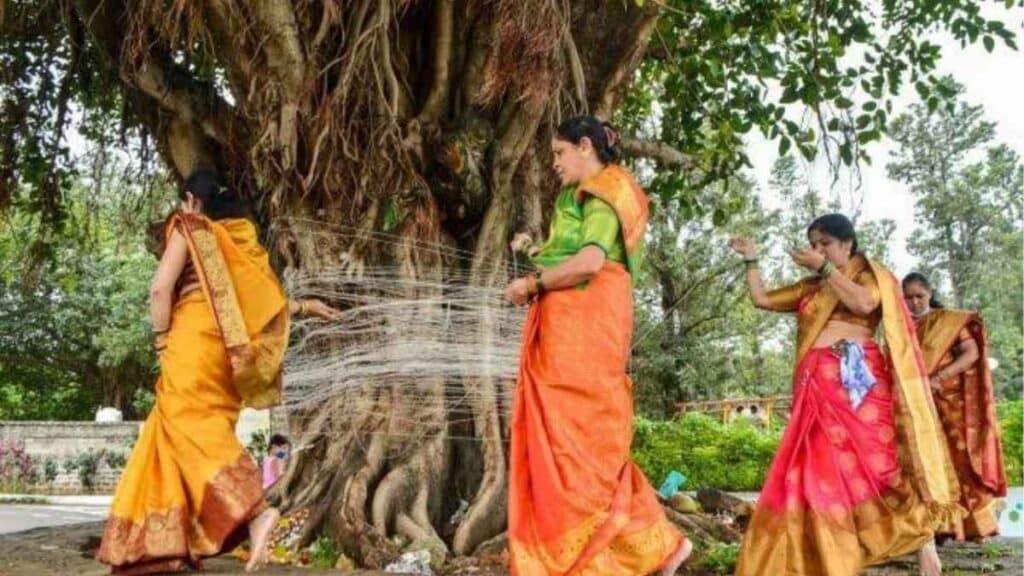
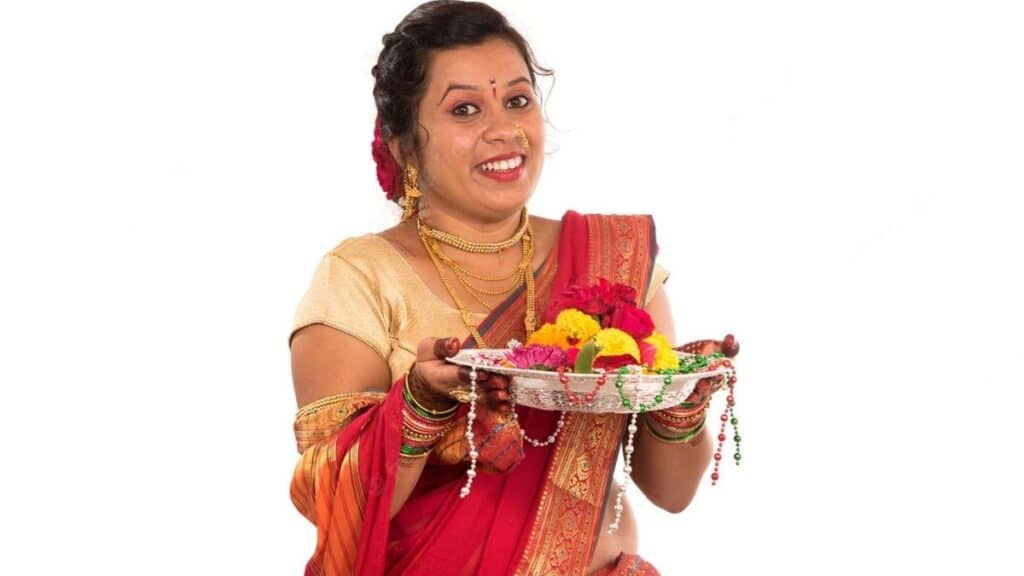
Maharashtra Maharashtra is the heartland of Vat Purnima. Women dress in traditional nine-yard Nauvari sarees and gold jewelry and gather at banyan trees in gardens, temples, and housing society compounds. Cities like Mumbai, Pune, Nagpur, and Nashik see vibrant community celebrations. In Mumbai’s housing complexes and Pune’s residential societies, estate-wide Vat Purnima events bring dozens of women together with folk songs, prasad distribution, and photography.
Gujarat Known as Vad Poonam in Gujarat, the festival is particularly vibrant in Ahmedabad and Saurashtra. Women observe the same core rituals with distinctive regional touches including Gujarati sweets as prasad.
Goa Goan Hindu women observe the festival with deep devotion, often gathering at temple premises that house a banyan tree. Community pujas are the norm.
Uttarakhand and North India In Uttarakhand’s Kumaon and Garhwal regions, women observe banyan tree worship with regional folk songs and traditional dress. In states like UP and Bihar, women observing the Amavasya-based Vat Savitri Vrat in May follow the same rituals.
Participation Across Religions in India
Vat Purnima is primarily a Hindu observance. However, in cosmopolitan cities like Mumbai and Pune, the festival has taken on a broader social character. Women from Jain communities in Maharashtra and Gujarat sometimes participate, given the shared cultural environment. The festival’s universal themes of love, devotion, and marital fidelity resonate across communities, and gatherings in housing societies often draw neighbors of different backgrounds into the celebration.
How Vat Purnima Is Celebrated Outside India
The Indian diaspora — particularly communities from Maharashtra and Gujarat — carries Vat Purnima to every corner of the world. With over 32 million people of Indian origin living outside India, the festival is quietly but deeply observed in Indian communities worldwide.
USA: Indian communities in the New York/New Jersey area, San Francisco Bay Area, Chicago, Houston, and Los Angeles celebrate through temple events and home pujas. In areas without banyan trees, potted saplings or printed images are used as substitutes.
UK: Gujarati and Maharashtrian communities in Leicester, London (Wembley, Harrow), and Birmingham observe the festival through temple pujas and cultural organization events.
UAE: Dubai and Abu Dhabi host enthusiastic celebrations through Indian community centers and Hindu temples, primarily held indoors.
Australia & New Zealand: Indian communities in Sydney, Melbourne, and Auckland observe the festival through temple events and cultural associations. Given that June falls in winter in the Southern Hemisphere, celebrations are held indoors.
Canada, Germany & Singapore: Maharashtrian and Gujarati associations in Toronto, Vancouver, and major German cities observe the festival. Singapore’s Hindu temples and cultural organizations also host dedicated Vat Purnima events.
Vat Purnima Gifting Traditions
Gifting is an integral part of Vat Purnima. Husbands traditionally gift their wives new sarees, bangles, sindoor, and jewelry as tokens of appreciation. Mothers-in-law gift sarees and blouse pieces to daughters-in-law. Vermilion, coconuts, and betel nuts are exchanged among women.
In diaspora communities and modern urban households, gifting has evolved. Husbands now often gift fine jewelry, ethnic wear, spa treatments, or romantic experiences. Women exchange designer bangles, sandalwood products, and traditionally-inspired items. Online platforms have made it easy to send Vat Purnima gift hampers to family in India from anywhere in the world.
Traditional Vat Purnima Foods and Culinary Traditions
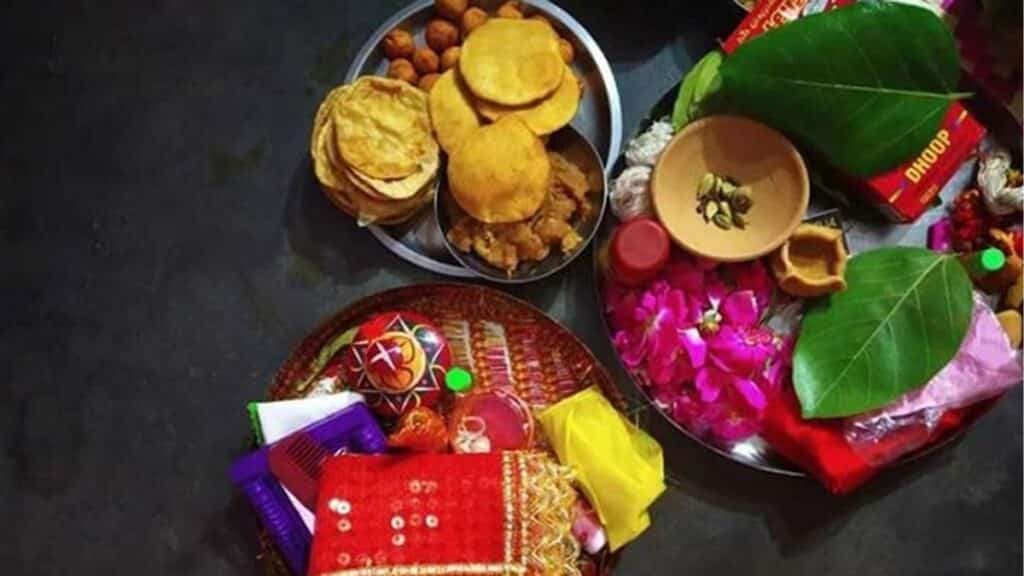
Fasting Foods (Upvaas) Women observing the vrat consume fruits — bananas, mangoes, chikoo, coconut — and faraali (fasting) snacks. In Maharashtra, sabudana khichdi, rajgira ladoos, and varicha bhat are staples. Women observing nirjala vrat abstain from all food and water until the puja is complete.
Prasad and Offerings Five fruits (pancha phala) and a coconut are the primary ritual offerings at the banyan tree, along with betel leaves, betel nuts, and copper coins. In Gujarat, mohanthal and dudhi halwa are prepared as prasad. In Maharashtra, gulachi poli and modak are festive favorites.
Post-Fast Meal Breaking the fast after completing the puja is a significant family moment. In Maharashtra, puran poli, katachi amti, and batata bhaji are classic post-Vat Purnima meal items.
Vat Purnima: Music, Art, and Cultural Expression
Vat Purnima has inspired a rich tradition of folk music and performing arts. In Maharashtra, women sing traditional ovi and abhang folk songs narrating the Savitri legend during the banyan tree circumambulation. In Gujarat, garba-style songs celebrating Savitri are sung during the festival.
The visual iconography of Savitri — depicted as a luminous woman in a red saree, steadfastly following Yama — is one of the most recognizable images in Indian religious art, appearing in calendar art, temple murals, and social media graphics shared widely during the festival.
The Savitri legend has also inspired films across regional cinemas (Tamil, Telugu, Hindi) and Sri Aurobindo’s epic poem Savitri — one of the longest poems in the English language — which reimagines the Mahabharata story as a spiritual philosophical epic.
Vat Purnima’s Modern Relevance and Cultural Continuity
Vat Purnima has adapted gracefully to modern life while retaining its essential spirit. Many women now observe a symbolic partial fast rather than the full three-day vrat. Housing society compounds in Pune and Mumbai have become vibrant festival hubs — with planted banyan trees, organized community events, and photography sessions. The festival is widely shared on Instagram and Facebook, with women documenting their rituals and traditional dress.
A meaningful modern shift is the move toward mutual celebration: some couples now observe Vat Purnima together, with both partners praying for each other’s well-being — a reflection of changing gender dynamics. Environmental advocates have also aligned the festival with tree conservation, using Vat Purnima as an occasion to plant new banyan trees and promote ecological awareness.
How to Wish Someone on Vat Purnima The traditional greeting is जन्म सावित्री हो (Janm Savitri Ho) — “May you be like Savitri.” In English, wishes like “Happy Vat Purnima” and “May your love be as eternal as Savitri’s” are widely used. Digital greeting cards and Savitri-themed messages are popular on social media and messaging apps.
Cultural Reflection
Vat Purnima endures because the story at its heart speaks to something universal — the power of love to transcend limits, and the courage it takes to fight for those we hold dear. For millions of women — whether gathering around a banyan tree in a Mumbai housing society, a London temple, a Dubai community hall, or a New Jersey backyard — Vat Purnima is a moment to reaffirm the bonds that matter most. The white thread wound seven times around the banyan tree is a small act carrying centuries of meaning: a promise of love, a prayer for life, and a tribute to one of India’s most enduring legends.