


Vasant Panchami is a vibrant Hindu festival celebrating spring’s arrival, the blooming of yellow mustard flowers, and the birth of Goddess Saraswati, the deity of wisdom, music, and arts. Falling in late January or early February, this joyous festival marks nature’s renewal and is considered an auspicious time for new beginnings—from starting a child’s education to planning weddings—while honoring knowledge, creativity, and the transformative power of learning.
Quick Summary:
Vasant Panchami celebrates spring’s arrival and Goddess Saraswati’s birth, observed by wearing yellow, offering prayers for knowledge and creativity, preparing yellow sweets, flying kites, and marking auspicious beginnings in education and life, typically falling in late January or early February on the fifth day of Magha month.
Table of Contents
When is Vasant Panchami 2026?
Basant Panchami falls on the fifth day (Panchami) of the bright lunar fortnight (Shukla Paksha) in the Hindu month of Magha, which typically corresponds to late January or early February in the Gregorian calendar. The exact date varies annually based on the lunar calendar.
In 2026, Basant Panchami will be celebrated on January 23, 2026. The festival marks a transitional moment in the Hindu calendar—winter’s end and spring’s beginning—when nature awakens from dormancy and the agricultural cycle enters a hopeful new phase with mustard fields turning golden yellow across northern India.
For diaspora families planning celebrations, marking this date allows you to prepare yellow clothing, arrange puja items, plan special meals, and organize cultural activities that connect children to this beautiful spring festival even when celebrated far from India’s mustard fields.
The Significance of Basant Panchami
Welcoming Spring (Vasant Ritu)
Basant Panchami literally means “the fifth day of spring,” celebrating the season when harsh winter cold gives way to pleasant warmth, trees begin budding, flowers bloom, and the landscape transforms from winter’s brown dormancy to spring’s vibrant greens and yellows. In agricultural India, this marks the period when winter crops like mustard ripen, painting fields golden yellow.
The festival acknowledges humanity’s deep connection to seasonal cycles—our moods lift with longer days and warmer weather, nature’s renewal inspires optimism about fresh starts, and the visible transformation in the natural world reminds us that change and growth are constant. For diaspora Indians in different climates, Basant Panchami maintains this connection to seasonal rhythms even when local weather doesn’t match North Indian spring.
Honoring Goddess Saraswati
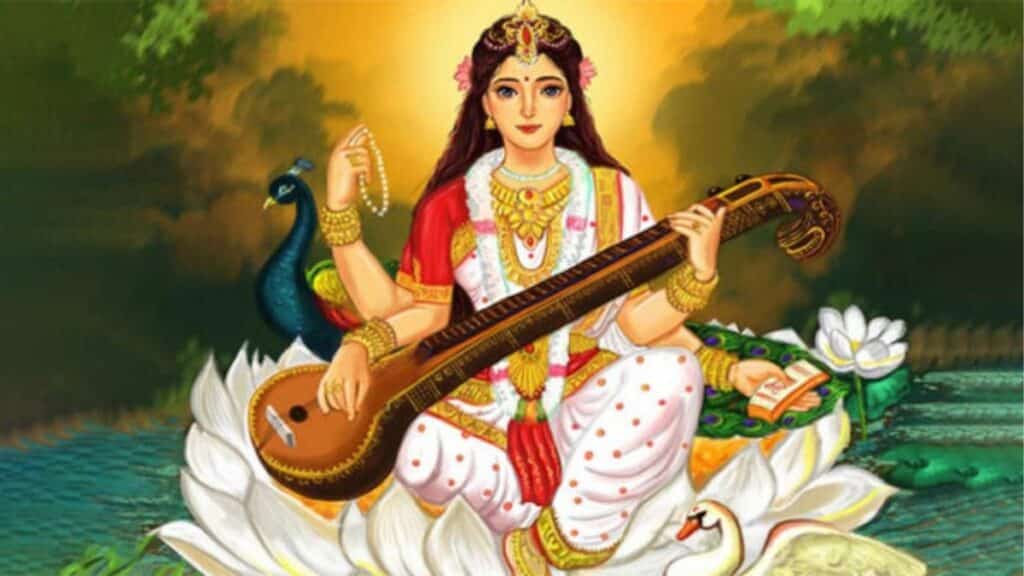
Basant Panchami celebrates the birth of Goddess Saraswati, the deity of knowledge, wisdom, learning, music, arts, and eloquence. She embodies intellectual and creative pursuits—everything from academic study to artistic expression, from scientific inquiry to musical performance. Her worship on Basant Panchami reflects the Hindu tradition’s deep respect for learning and creativity as spiritual pursuits, not merely practical skills.
Saraswati is typically depicted in white garments (representing purity of knowledge), seated on a white lotus, holding a veena (musical instrument), and accompanied by her vahana (vehicle), a white swan or peacock. Her four arms represent different aspects of human personality in learning: mind (manas), intellect (buddhi), alertness (chittam), and ego (ahamkara).
The Auspicious Day for New Beginnings
Hindu tradition considers Basant Panchami one of the most auspicious days for beginning new ventures, particularly those related to learning and knowledge. Parents traditionally initiate young children’s education on this day through “Akshara Abhyasa” or “Vidyarambham”—a ritual where a child writes their first letters, marking their formal entry into the world of learning.
The festival is also considered auspicious for weddings, starting new businesses, moving into new homes, or beginning any significant life undertaking. The combination of spring’s natural renewal energy with Goddess Saraswati’s blessings creates an especially favorable moment for new chapters.
The Color Yellow: Symbol and Substance
Yellow dominates Basant Panchami celebrations, appearing in clothing, food, decorations, and flowers. The color carries multiple layers of meaning: it represents the golden mustard fields ripening at this time, symbolizes prosperity and fertility, reflects the warmth and energy of spring sunshine, and is associated with Goddess Saraswati’s divine favor.
Wearing yellow on Basant Panchami isn’t merely aesthetic choice but participatory ritual—by donning yellow, celebrants align themselves with nature’s renewal, express optimism about the coming season, and honor Saraswati’s presence. The ubiquitous yellow creates visual unity among celebrants, transforming individual clothing choices into collective celebration.
How Basant Panchami is Celebrated
Saraswati Puja: Worshiping the Goddess of Knowledge
The central ritual of Basant Panchami is Saraswati Puja, particularly elaborate in educational institutions—schools, colleges, music academies, and libraries—where students and teachers worship together. Homes with school-age children also set up small altars with Saraswati’s image or idol, decorated with flowers (especially yellow marigolds and jasmine), yellow cloth, and offerings.
The puja typically includes lighting lamps, offering flowers and fruits, chanting Saraswati mantras and hymns, and placing books, musical instruments, pens, or other learning tools near the idol to receive blessings. In many traditions, children don’t study on Basant Panchami itself but instead place their books at Saraswati’s feet, seeking her blessings for the knowledge contained within them.
In West Bengal and eastern India, Saraswati Puja is the predominant name for this festival, celebrated with particular fervor in schools where elaborate pandals (temporary structures) are created for community worship, followed by cultural programs of music, dance, and poetry.
Dressing in Yellow and Adorning with Flowers
People wear yellow clothing—sarees, kurtas, shirts, dresses—ranging from pale lemon to deep mustard, often accessorized with yellow jewelry or dupattas. Women and girls adorn their hair with yellow flowers like marigolds, jasmine, or chrysanthemums, and homes are decorated with yellow flower garlands and rangoli (floor art) using yellow powder or flower petals.
This yellow dress code creates festive atmosphere while allowing individual expression within the theme. For diaspora celebrations, even incorporating small yellow elements—a yellow scarf, yellow flowers, yellow table decorations—maintains connection to the tradition without requiring complete traditional outfits.
Preparing Yellow Foods and Sweets
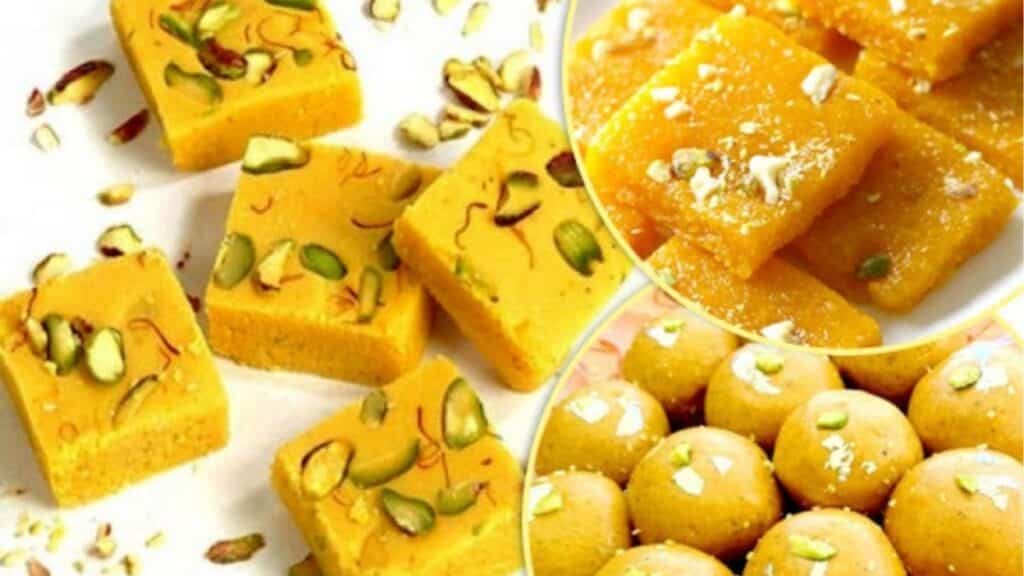
Basant Panchami’s feast centers on yellow foods, both for their visual connection to the festival’s color theme and because many yellow ingredients (turmeric, saffron, chickpea flour) hold auspicious significance in Hindu tradition. Popular dishes include:
- Kesari Bhath or Kesari: Sweet semolina or rice dish colored with saffron
- Besan Ke Laddu: Sweet balls made from chickpea flour, ghee, and sugar
- Kheer: Rice pudding flavored with saffron or cardamom
- Meethe Chawal: Sweet yellow rice with sugar, saffron, and nuts
- Mango-based sweets: Aamras, mango shrikhand, or mango burfi
- Boondi: Small fried chickpea flour droplets in sweet syrup
The meal might also include savory items like pulao with yellow rice, dal preparations, or regional specialties. The emphasis on yellow extends to fruits—bananas, mangoes (if available), or yellow apples—included in offerings and meals.
Cultural Activities: Kites, Music, and Poetry
Basant Panchami celebrations often include flying kites—particularly popular in North India where the pleasant spring weather and open skies create perfect kite-flying conditions. The colorful kites dotting the sky symbolize freedom, joy, and the spirit soaring toward knowledge and enlightenment.
Music and arts take center stage as offerings to Saraswati. Students perform classical music, sing devotional songs, recite poetry, or showcase artistic talents developed through the year. Many families organize or attend cultural programs featuring dance performances, musical concerts, or poetry recitals that honor Saraswati’s domains.
For children, the day involves festive activities rather than routine studying—kite making and flying, painting competitions, storytelling sessions about Saraswati or spring, or simple outdoor play celebrating the pleasant weather.
Regional Variations of Basant Panchami
Saraswati Puja in Bengal and Eastern India
In West Bengal, Assam, Odisha, and Bihar, Basant Panchami is primarily known as Saraswati Puja and ranks among the most important festivals. Schools and colleges declare holidays, communities erect elaborate pandals with beautifully decorated Saraswati idols, and the day culminates in cultural programs showcasing students’ artistic talents.
The evening often features processions carrying Saraswati idols to rivers for immersion (visarjan), similar to Durga Puja rituals. The festival creates community gathering opportunities that strengthen social bonds while celebrating learning and creativity.
Sri Panchami in South India
South Indian celebrations, called Sri Panchami, emphasize the Vidyarambham ritual for children and home-based worship rather than large public pandals. Temples dedicated to Saraswati conduct special pujas, and families visit to offer prayers and seek blessings for children’s education.
The festival is particularly significant in Karnataka, Tamil Nadu, and Kerala, where traditional educational practices honor Saraswati as the source of all learning. Many families keep books and learning materials near the puja altar throughout the day before resuming studies the next day.
North Indian Celebrations
In Punjab, Haryana, and parts of Uttar Pradesh, Basant Panchami marks the beginning of preparation for Holi (celebrated 40 days later). The festival coincides with mustard harvest season, making the yellow theme particularly resonant with agricultural rhythms. Kite flying is especially popular, and fairs (melas) featuring folk music, dance, and traditional foods draw communities together.
Many Punjabi families prepare special meals featuring sarson ka saag (mustard greens) alongside the sweet yellow dishes, celebrating the seasonal harvest.
Basant Panchami for the Indian Diaspora
Maintaining Cultural Connections
For Indian families living abroad, Basant Panchami offers a beautiful festival to share with children—less complex than Diwali, more focused on values like learning and creativity that resonate across cultures, and flexible enough to adapt to various living situations. The festival’s emphasis on education aligns well with diaspora families’ typical priorities around children’s academic success.
Celebrating Basant Panchami helps children understand that their heritage culture values knowledge and artistic expression as spiritual pursuits, not merely practical skills. This can create bridges between their Indian identity and their experience in educational systems abroad.
Educational Activities for Children
Use Basant Panchami as an opportunity for educational activities that honor the festival’s spirit:
- Read or tell stories about Goddess Saraswati and her symbolism
- Learn about the significance of spring across cultures and how different traditions celebrate seasonal changes
- Create art projects with yellow themes—paintings of mustard fields, spring flowers, or Saraswati images
- Write poetry or short essays about learning, favorite subjects, or gratitude for education
- Learn a new song, start music lessons, or practice an instrument as an offering to Saraswati
- Research how Basant Panchami is celebrated in different Indian regions
- Cook together, preparing yellow sweets while discussing the festival’s meaning
- If weather permits, fly kites and discuss why this activity is part of the celebration
Connecting with Extended Family
Basant Panchami provides an opportunity for virtual or in-person connection with extended family in India or other diaspora locations. Coordinate celebration times to video call during puja, share photos of yellow outfits and special foods, or organize virtual cultural programs where family members across locations participate in singing or recitations.
These connections help children understand that they’re part of a larger cultural community maintaining these traditions across the globe, not just following family-specific customs.
