


In this Hotspot 2 Much movie review, we explore a film that arrives as a breath of fresh air in Tamil cinema’s crowded comedy landscape. When was the last time you watched an anthology that didn’t just entertain but genuinely challenged you to think? Vignesh Karthick’s sequel to the 2024 sleeper hit doesn’t play it safe—it dives headfirst into controversial territory with the kind of fearlessness that makes cinema exciting again.
This isn’t your typical comedy sequel riding on the first film’s success. Hotspot 2 Much sharpens its satirical edge, expands its ambition, and proves that smart commercial cinema can tackle fan violence, generational hypocrisy, and relationship complexities without losing its entertainment quotient. With Priya Bhavani Shankar anchoring the narrative and an ensemble cast that understands exactly what kind of provocative ride they’ve signed up for, this is filmmaking that trusts its audience’s intelligence.
Quick Takeaway:
Hotspot 2 Much is a brilliantly crafted satirical anthology that succeeds as both social commentary and pure entertainment. Though occasional heavy-handed messaging appears, the film’s sharp writing, outstanding performances from Priya Bhavani Shankar and Ashwin Kumar, and that mind-bending third story make it essential viewing for anyone craving bold, thought-provoking Tamil cinema.
Language: Tamil
Age Rating: U/A
Genre: Comedy, Drama, Romance, Satire
Director: Vignesh Karthick
The Plot: Three Stories, One Mission—Expose Hypocrisy Everywhere
At its core, Hotspot 2 Much is an anthology wrapped in ambition. The framing device features Shilpa (Priya Bhavani Shankar), an aspiring filmmaker pitching three provocative stories to a producer—but calling it just that would be like calling the ocean “some water.” The film’s genius lies in how each story functions as both standalone entertainment and collective social critique, building toward a larger statement about contemporary society’s contradictions.
Story 1: The Fan War transforms fan culture discourse into gripping drama. Sathya (Aadhitya Bhaskar) and James (VJ Rakshan) are devoted fans of rival stars “Raasa” and “Dhadha”—the parallels unmistakable to anyone following Tamil cinema. When their loved ones are kidnapped by MS Bhaskar’s grieving father who lost his son to theater violence, the story becomes a pressure cooker examination of toxic fandom. The kidnapper’s demand—that both stars publicly acknowledge their role in fan violence—is the kind of bold storytelling choice that immediately elevates this beyond typical entertainment.
Story 2: Generation Gap weaponizes role reversal to brilliant effect. Thambi Ramaiah plays a conservative father struggling with daughter Sharmitha’s Western lifestyle choices after her return from abroad. When he crashes her birthday party dressed in banian and underwear, using her own freedom-of-choice logic against her, the film exposes generational hypocrisy on both sides. It’s satire that cuts both ways—never taking easy moral positions.
Story 3: Time-Travel Romance is where Hotspot 2 Much swings boldest. Yugan (Ashwin Kumar), a perpetually single artist, falls for Nithya (Bhavani Sre) communicating from 2050. What begins as quirky romantic comedy—complete with jokes about Sivakarthikeyan being Chief Minister—transforms into genuinely unsettling drama when time travel reveals impossible family connections. This is the kind of narrative ambition that separates memorable cinema from forgettable content.
The beauty of Vignesh Karthick’s structure is how Shilpa’s own story quietly develops alongside these pitches, paying off in the final stretch with satisfying emotional resonance that justifies the anthology framework.
Performances: An Ensemble Firing on All Cylinders
Priya Bhavani Shankar: The Perfect Anchor
This Hotspot 2 Much movie review must begin with the obvious: Priya Bhavani Shankar delivers a performance that holds the entire film together. Her Shilpa isn’t just a narrative device—she’s a fully realized character with intelligence, vulnerability, and quiet determination. Watch how she navigates the power dynamics in the pitching scenes, maintaining dignity while fighting for her creative vision. When her own agenda surfaces in the final act, it feels earned because Priya has been subtly building toward that revelation throughout.
There’s a naturalism to her work here that contrasts beautifully with the heightened storytelling within each anthology segment. She’s the grounding force that prevents Hotspot 2 Much from floating into pure abstraction, reminding us that beneath all the satirical commentary are real people navigating real struggles.
Ashwin Kumar: Navigating Impossible Complexity
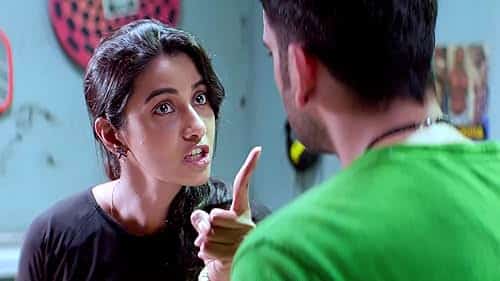
Ashwin Kumar’s work in Story 3 represents the film’s performance highlight. His Yugan journey—from charmingly desperate single guy to someone facing impossible emotional complications—requires an actor who can handle both absurdist comedy and genuine dramatic weight. Kumar nails both registers completely.
The time-travel romance demands he play scenes against future versions of characters, react to revelations that scramble conventional relationship dynamics, and maintain audience empathy through increasingly bizarre circumstances. He makes it all work through sheer commitment and precise emotional calibration. When the queasy revelations arrive, his devastation feels authentic despite the outlandish premise.
VJ Rakshan & Aadhitya Bhaskar: The Fan War Heart
As rival fans James and Sathya, Rakshan and Bhaskar create compelling chemistry that makes the fan violence critique land with emotional impact rather than just intellectual observation. They play their characters’ fanatical devotion completely straight—no winking at the camera, no undercutting the intensity. This commitment transforms what could be broad caricature into genuinely affecting portrayal of how entertainment consumption can become identity itself.
MS Bhaskar: Devastation in Every Frame
MS Bhaskar brings career-best work to his grieving father role. His confrontation about wasted devotion and senseless violence provides Hotspot 2 Much‘s most emotionally raw moment. There’s decades of Malayalam cinema gravitas in his weathered expressions, connecting the film’s satirical ambitions to real human tragedy. His speech about watching his son die over meaningless cinema battles hits with sledgehammer force.
Thambi Ramaiah & Sharmitha: Generational Warfare
Ramaiah embraces the conservative father role with the kind of fearless commitment that elevates material. His willingness to push the absurdist comedy to its logical extreme—showing up nearly naked to his daughter’s party—demonstrates an actor secure enough to look ridiculous in service of larger points.
Sharmitha holds her own completely, representing younger generation perspectives with conviction and authenticity that prevents the story from becoming one-sided mockery. Their dynamic feels genuinely rooted in recognizable family tensions.
Bhavani Sre: Time-Travel Heart
Bhavani Sre’s Nithya brings warmth and complexity to what could be a one-note quirky girlfriend role. Her chemistry with Ashwin Kumar makes the increasingly bizarre revelations work because we believe in their connection. She handles both the comic absurdity and dramatic devastation with equal skill.
Direction and Vision: Karthick’s Confident Evolution

Vignesh Karthick’s growth from Hotspot to Hotspot 2 Much demonstrates exactly what sequels should do—retain what worked while expanding ambition. Where the first film felt like inventive experimentation, this sequel arrives with confident vision. Karthick knows exactly what he wants and executes with precision.
The anthology format could easily fragment into tonal incoherence, but Karthick maintains consistent satirical voice across vastly different stories. His willingness to tackle controversial subjects without softening edges shows directorial maturity. The film’s self-aware humor—including Karthick himself getting dumped in the narrative—demonstrates security in his vision. When you’re willing to satirize yourself, audiences trust you’re not operating from ego.
The pacing stays remarkably brisk at exactly two hours. Even when philosophical musings threaten momentum in Story 2, Karthick finds ways to maintain visual interest and narrative drive. His instinct for when to linger and when to cut demonstrates natural filmmaking rhythm.
Technical Brilliance: Craft Serving Story
Cinematography: Visual Intelligence
The visual language shifts subtly between stories while maintaining overall aesthetic coherence. Story 1’s fan war sequences capture crowd chaos and individual desperation simultaneously. Story 2’s domestic settings use intimate framing that amplifies generational tension—tight close-ups during confrontations, wider shots showing physical distance representing emotional gulfs.
Story 3’s time-travel segments employ creative visual grammar distinguishing between timelines without confusing audiences. Color grading shifts, aspect ratio adjustments, subtle production design changes—all working in concert to maintain clarity through complex narrative mechanics.
Sound Design and Music: Satish Raghunathan’s Perfect Timing
Satish Raghunathan delivers exceptional work understanding precisely when music amplifies emotional beats and when silence speaks louder. His background score adds thriller-like tension to comedic sequences, creating genre-blending auditory experience that keeps audiences slightly off-balance in the best way.
The music choices feel specifically calibrated to each story’s needs. Story 1 gets intensity and urgency. Story 2 uses more traditional dramatic scoring that plays against the absurdist visuals for comic effect. Story 3 incorporates playful futuristic elements before stripping away to raw emotion when revelations land.
Editing: Controlled Complexity
Keeping Hotspot 2 Much coherent across three distinct narratives plus framing device requires surgical editing. The film succeeds brilliantly, maintaining clarity despite structural complexity. Transitions between stories feel organic rather than jarring. Each narrative receives exactly the screen time needed to develop premises, characters, and satirical commentary without overstaying welcome.
The interweaving of Shilpa’s story with the pitches demonstrates sophisticated editing rhythm—advancing her narrative just enough in each transition to maintain interest without overwhelming the anthology segments.
Cultural Context: Satire That Trusts Its Audience
This Hotspot 2 Much movie review must acknowledge the film’s cultural specificity. The fan war story directly engages with real Tamil cinema discourse—anyone following actor fan club dynamics will recognize the parallels immediately. For those unfamiliar, it still works as standalone commentary on toxic fandom, but insiders get additional satirical layers.
The generational conflict story speaks universally while remaining grounded in specific cultural tensions around Indian families, Western influence, and evolving social norms. The time-travel romance incorporates references—Sivakarthikeyan as CM, Trichy as capital—that delight those who get them without excluding others.
What’s refreshing is Karthick’s refusal to over-explain cultural context. He trusts audiences to either understand references or enjoy stories regardless. This confidence in viewer intelligence elevates the entire experience.
Strengths and Minor Considerations
What Works Magnificently
- Fearless Social Commentary – The film tackles sensitive topics without softening edges or offering easy answers
- Outstanding Lead Performances – Priya Bhavani Shankar and Ashwin Kumar deliver career-defining work
- Sharp, Self-Aware Writing – Satire that cuts multiple directions simultaneously, including at itself
- Perfect Runtime – Two hours feels disciplined and respectful of audience attention
- Technical Excellence – Satish Raghunathan’s music, smart cinematography, confident editing all superb
- Ensemble Chemistry – Every performer understands and commits to the satirical vision
- Effective Framing Device – Priya’s story provides purpose beyond mere transitions
Where Minor Polish Could Help
- Occasional Heavy-Handed Messaging – Some monologues spell out what visual storytelling already conveys
- Predictable Story Structures – First two stories follow reversals audiences can anticipate ahead
- Animated Segments – Voiceover sequences tell more than show in contrast to otherwise visual storytelling
Final Verdict: 4.5/5 Stars ⭐⭐⭐⭐½
Hotspot 2 Much represents exactly what Tamil cinema needs right now—fearless storytelling that entertains while provoking genuine thought. Vignesh Karthick’s sequel improves on the original’s foundation, delivering three distinct narratives that collectively create powerful statement about society’s contradictions and hypocrisies.
The film’s greatest achievement lies in its refusal to provide comfortable answers or take predictable moral stances. It satirizes fan culture without demonizing fans. It critiques generational gaps without choosing sides. It explores relationship complexities without judgment. This even-handed approach, combined with genuine comedic moments and emotional depth, creates cinema that respects audience intelligence.
For Vignesh Karthick, this sequel confirms what Hotspot suggested—he’s a major talent willing to take risks that commercial cinema usually avoids. His willingness to challenge audiences while entertaining them, to embrace controversy while maintaining empathy, to trust gonzo satirical instincts while keeping emotional core—these mark a filmmaker who will only grow stronger.
The Return of Bold Tamil Cinema
There’s specific joy in watching a film that refuses to play it safe. In an industry sometimes dominated by formulaic approaches and risk-averse storytelling, Hotspot 2 Much feels like fresh air—or perhaps more accurately, like someone opened all the windows and let provocative ideas blow through, rearranging everything in delightfully unexpected ways.
Hotspot 2 Much delivers not just for fans of the original, but for anyone who believes Tamil cinema’s future lies in honoring entertainment traditions while fearlessly inventing new satirical possibilities. This is what happens when talented actors, ambitious directors, and committed technical crews decide that “good enough” isn’t good enough.
The satire is intentional. The provocation is the point. And somewhere in all that controlled chaos is a genuine love letter to cinema itself—bold, intelligent, and absolutely unforgettable.
