


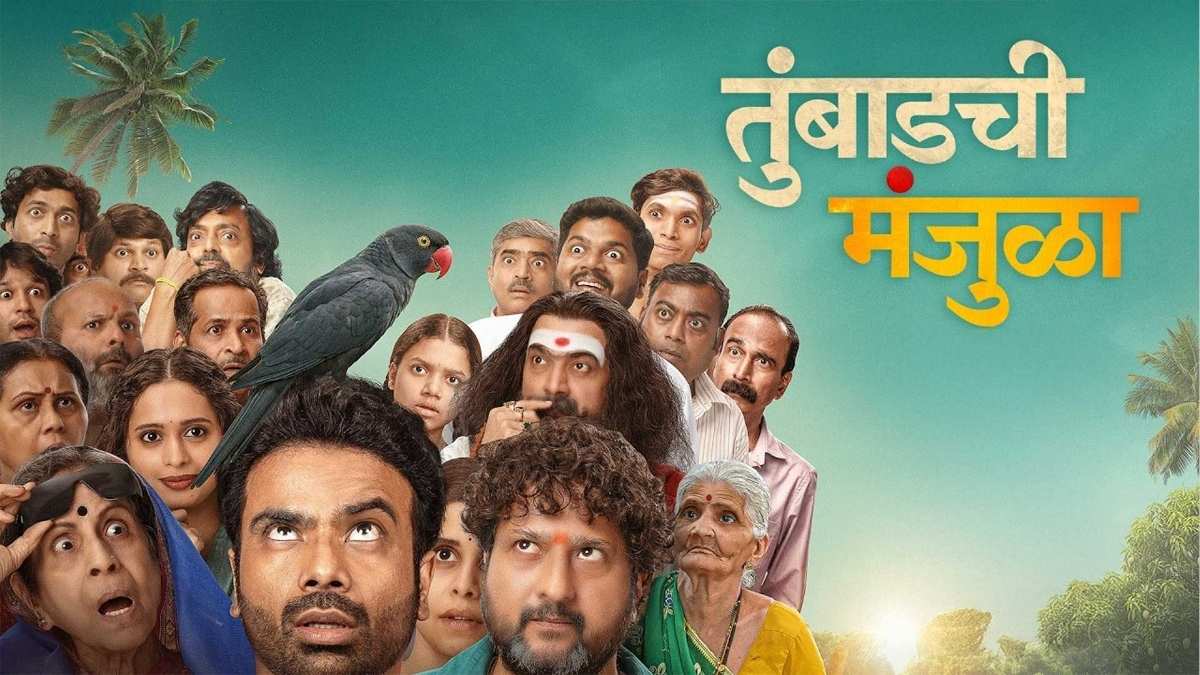
Marathi cinema has always had a special gift for grounding big emotions in small, relatable worlds — and Tumbadchi Manjula is a sparkling reminder of that tradition. Released on 5 June 2026 by Zee Studios, this breezy rural comedy wraps a sweet love story inside layers of mistaken identity, ghost myths, and nonstop village-level chaos. Directed by Vividh Korgaonkar, the film arrives with a refreshingly simple premise but delivers a thoroughly entertaining ride that will leave audiences grinning from start to finish.
Tumbadchi Manjula is an absolute treat for fans of Marathi comedy. A sharp, fast-paced screenplay by Rushikesh Turai keeps the laughs rolling without pause, while the ensemble cast — led by the wonderful Jitendra Joshi and the charming Om Bhutkar — brings the village world to vibrant life. With snappy dialogues, an appealing soundtrack, and crisp editing, this is the kind of feel-good, no-pretension entertainer that Marathi cinema does best. If you’re looking for a wholesome, laugh-out-loud night out at the movies, Tumbadchi Manjula is exactly that.
Cast & Crew
| Role | Name |
|---|---|
| Director | Vividh Korgaonkar |
| Producer / Distributor | Zee Studios |
| Screenplay | Rushikesh Turai |
| Dialogues | Rushikesh Turai, Yogesh Shirsat |
| Music | Aseem Anand Kurhekar, Prateek Omkar Kelkar, Tejas Aditya Joshi, Saurabh Bhalerao |
| Lyrics | Vikram Edke |
| Choreography | Sujit Kumar |
| Background Music | Amar Mohile |
| Cinematography | Kaushal Goswami |
| Editing | Mayur Hardas |
| Production Design | Ankur Aserkar |
| Action / Stunts | Bikash Kumar Singh |
| Keshav | Om Bhutkar |
| Ravi Anna | Jitendra Joshi |
| Shobha | Sai Tamhankar |
| Karunakaran Guruji | Makarand Anaspure |
| Satish | Anshuman Vichare |
| Ranga | Siddheshwar Zadbuke |
| Darshana | Priyal Naik |
| Supporting Cast | Usha Nadkarni, Atharva Ruke, Ganesh Pandit, Shardul Saraf, Umesh Jagtap, Yogesh Shirsat, Abhay Khadapkar, Varsha Dandale, Diya Rane |
Plot Summary
The story is set in a quiet Maharashtrian village where young Keshav gets himself into a tricky situation and, on impulse, claims that the spirit of a woman named Manjula has entered his body. The ruse serves a dual purpose — it helps him wriggle out of trouble and also gives him a perfectly ghost-approved reason to slap the domineering Ravi Anna, who had wronged him earlier.
The lie, however, takes on a life of its own. Village tantrik Karunakaran Guruji becomes convinced that the spirit belongs to a Manjula from the neighbouring village of Tumbad. The villagers march over and approach Shobha, Manjula’s daughter, who — naturally — has no idea what they’re talking about, since the spirit was never real. When Shobha later comes to Keshav’s village seeking shelter from an abusive uncle, the community turns a cold shoulder, and she’s sent back. Eventually, in a twist that merges old regrets with new beginnings, Ravi Anna — who had rejected Shobha fifteen years ago over appearances — decides to marry her, bringing the comic chaos to a warm, heartfelt conclusion.
Performances
Jitendra Joshi as Ravi Anna
Jitendra Joshi is the undisputed highlight of the film. As the pompous, easily-flustered Ravi Anna, he delivers a masterclass in physical comedy and effortless comic timing. Every expression, every beat, every moment of bluster is calibrated to perfection. Joshi owns the screen completely and reminds audiences why he is one of Marathi cinema’s most gifted performers.
Om Bhutkar as Keshav
Om Bhutkar anchors the film with an energetic and endearing performance as Keshav. He carries the burden of being the catalyst for all the madness with remarkable ease, bringing likability and spontaneity to a role that requires him to keep the audience on his side even as his lies spiral. Bhutkar’s comic instincts are sharp, and his chemistry with the rest of the cast is natural and engaging.
Sai Tamhankar as Shobha
Sai Tamhankar brings her signature poise and emotional authenticity to Shobha. She grounds the film’s comedy with a layer of genuine feeling, ensuring that the audience is invested in Shobha’s journey beyond the laughs. Tamhankar’s screen presence is warm and assured, and she handles both the lighter and more vulnerable moments of her character with equal finesse.
Makarand Anaspure as Karunakaran Guruji
Makarand Anaspure is an absolute scene-stealer as the self-important tantrik Karunakaran Guruji. Every entrance he makes raises the comedy quotient of the film, and his deadpan conviction in the ghost subplot is laugh-out-loud funny. Anaspure’s decades of experience in Marathi comedy are on full display, and he adds a rich layer of entertainment to every sequence he’s in.
Also Read: Sannidhanam P.O. Movie Review: A Devotional Drama That Speaks From the Heart
Anshuman Vichare as Satish
Anshuman Vichare puts in a spirited turn as Satish, infusing the character with a playful energy that fits snugly into the film’s comic rhythm. His presence adds texture to the supporting ensemble.
Siddheshwar Zadbuke as Ranga
Siddheshwar Zadbuke makes a memorable impression as Ranga, contributing to the village comedy with a natural, unforced ease that makes his character feel like a genuine part of the world.
Priyal Naik as Darshana
Priyal Naik is a delightful presence as Darshana, lighting up her scenes with charm and contributing warmly to the film’s ensemble dynamic.
The Extended Ensemble
Usha Nadkarni, Atharva Ruke, Ganesh Pandit, Shardul Saraf, Umesh Jagtap, Yogesh Shirsat, Abhay Khadapkar, Varsha Dandale, Diya Rane and the rest of the supporting cast form a vibrant, believable village community. Their collective energy is a big reason why the film’s world feels lived-in and real, and each brings something genuine to the table.
Technical Analysis
Direction
Vividh Korgaonkar demonstrates assured control over the material, steering the film’s many moving parts with confidence and clarity. His narration is brisk and purposeful — he never lets the energy sag or the laughs dry up — and he draws the best out of his ensemble with a light but firm hand. The film’s pacing is a testament to his directorial instinct.
Screenplay & Dialogues
Rushikesh Turai‘s screenplay is where the film truly shines. The comic architecture is intelligently constructed — scenes build on each other naturally, the ghost subplot escalates without feeling forced, and the pace is relentless enough to sweep the audience along without leaving them time to question the logic. The dialogues, penned by Turai and Yogesh Shirsat, are witty, punchy, and authentically rooted in rural Marathi speech patterns — they land with the punch of good stand-up.
Also Read: The Pyramid Scheme Exposes the Fast-Money Dreams Destroying Middle-Class India
Music & Background Score
The music by Aseem Anand Kurhekar, Prateek Omkar Kelkar, Tejas Aditya Joshi, and Saurabh Bhalerao is melodious and culturally resonant, fitting the village setting beautifully. Vikram Edke‘s lyrics are breezy and well-crafted. Amar Mohile‘s background score deserves special mention — it amplifies the comic beats without overpowering them, serving the film’s tone with precision. Sujit Kumar‘s choreography is lively and entertaining.
Cinematography
Kaushal Goswami‘s camerawork captures the warmth and colour of the rural setting with a pleasing, natural eye. His frames have an unpretentious beauty that suits the film’s tone perfectly.
Editing
Mayur Hardas delivers crisp, sharp editing that keeps the film moving at a satisfying clip. No scene overstays its welcome, and the comic sequences are cut with the timing of someone who understands exactly when the punchline lands.
Production Design & Action
Ankur Aserkar‘s production design authentically recreates the village milieu with detail and care. Bikash Kumar Singh‘s action and stunt sequences are handled competently and blend well with the film’s lighter tone.
Strengths & Weaknesses
Strengths
- Rushikesh Turai’s razor-sharp, fast-paced screenplay keeps the film consistently engaging
- Outstanding comedic performances across the board, especially Jitendra Joshi and Makarand Anaspure
- Punchy, culturally rooted dialogues that generate genuine laughs
- Brisk pacing — the film never drags or loses momentum
- Warm, appealing music that complements the rural setting
- Crisp editing that respects the audience’s time
Weaknesses
- The central story premise is relatively thin and may feel predictable to seasoned comedy watchers
- Some supporting characters could have benefited from slightly more screen time
Final Verdict: ⭐⭐⭐⭐½ (4.5/5)
Tumbadchi Manjula is a thoroughly joyful Marathi comedy that punches well above its simple premise. Built on a wonderfully engineered screenplay, powered by standout performances from its entire cast, and helmed with confident energy by Vividh Korgaonkar, the film is the kind of pure, uncomplicated entertainer that leaves you feeling warm and happy. It’s village comedy done right — honest, funny, and genuinely loveable.
What is the age rating / UA certificate of Tumbadchi Manjula?
Tumbadchi Manjula holds a UA certificate, meaning it is suitable for general audiences with parental guidance advised for younger children.
Is Tumbadchi Manjula suitable for family viewing?
Yes, absolutely. Tumbadchi Manjula is a wholesome, clean comedy with no objectionable content, making it a great family outing for all age groups.
Is Tumbadchi Manjula based on a true story?
No, Tumbadchi Manjula is a work of fiction. It is an original Marathi comedy set in a fictional village, with no basis in real events or persons.
