


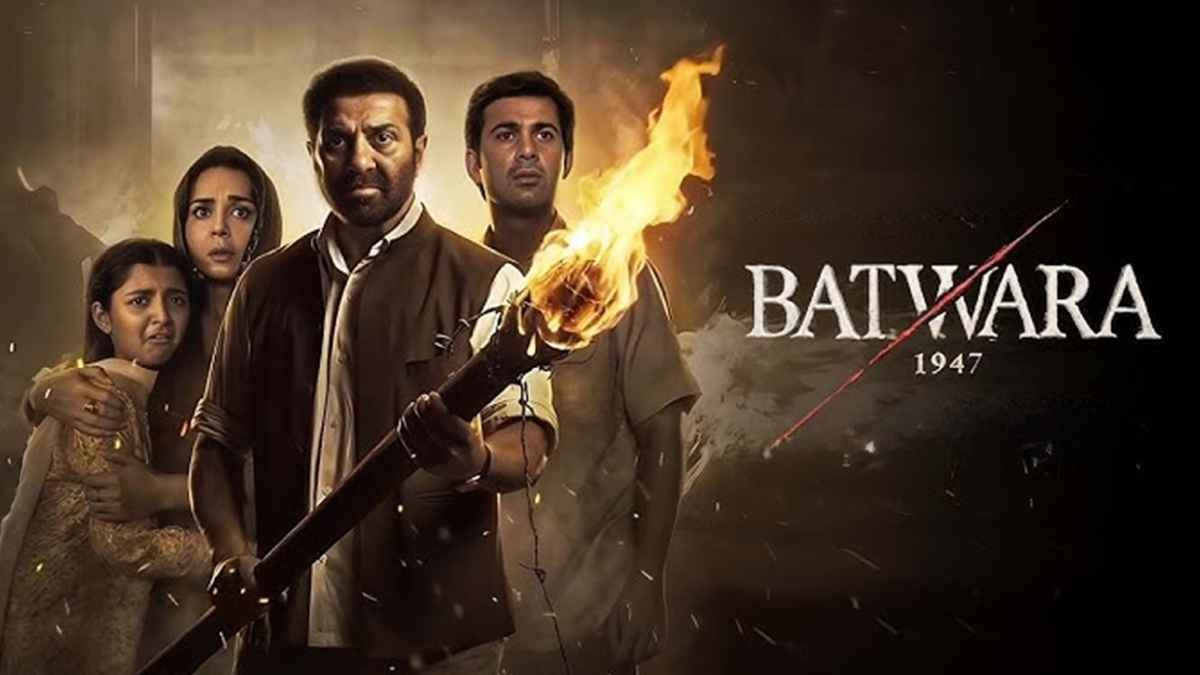
Rajkumar Santoshi returns to the big screen with Batwara 1947, a stirring period drama that reunites him with Sunny Deol nearly three decades after their iconic collaborations Ghayal and Damini. Releasing in theatres on August 14, 2026, the film tackles one of the most painful chapters of Indian history — the Partition — and turns it into a moving story of friendship, faith, and humanity that rises above religious divides. Backed by Aamir Khan Productions and boasting a powerhouse ensemble of Sunny Deol, Preity Zinta, Shabana Azmi, Ali Fazal, Karan Deol, and Abhimanyu Singh, Batwara 1947 is one of the most anticipated releases of the year. Here’s our complete review of this ambitious partition drama.
Batwara 1947 tells the story of Sikandar Mirza (Sunny Deol), an honest man whose life is upended when Partition forces him to leave his home and his son behind and start over in Pakistan. After a hard-fought struggle to find shelter, he ends up sharing a home with a Hindu woman (Shabana Azmi), and what begins as friction slowly blossoms into a beautiful bond that comes to symbolise the coexistence India has always stood for. With Sunny Deol commanding the screen with his trademark intensity, Shabana Azmi bringing quiet dignity to her role, Preity Zinta marking a heartfelt comeback, and Ali Fazal charming audiences as the soulful poet Habib, the film wears its heart on its sleeve. Backed by Rajkumar Santoshi’s sincere direction, Santosh Sivan’s evocative cinematography, and A. R. Rahman’s soulful score, Batwara 1947 is an emotionally resonant tribute to communal harmony that deserves to be watched on the big screen with family.
Cast & Crew
| Role | Name |
|---|---|
| Director | Rajkumar Santoshi |
| Writer / Story | Asghar Wajahat (based on his play Jis Lahore Nai Vekhya, O Jamya E Nai) |
| Producer | Aamir Khan, Aparna Purohit |
| Production Banner | Aamir Khan Productions |
| Cinematography | Santosh Sivan |
| Editor | Shyam Salgaonkar |
| Music Director | A. R. Rahman |
| Lyrics | Javed Akhtar |
| Lead Cast | Sunny Deol, Preity Zinta, Shabana Azmi, Ali Fazal, Karan Deol, Abhimanyu Singh |
| Genre | Drama, Period, History |
| Release Date | August 14, 2026 |
| Language | Hindi |
Plot Summary
Batwara 1947 opens on Independence Day, as Sikandar Mirza (Sunny Deol) celebrates the birth of a new nation, unaware that Partition is about to change his life forever. As violence engulfs his homeland, Mirza is forced to flee to Pakistan, tragically leaving his son behind. Life in a refugee camp is a daily battle, until he meets Habib (Ali Fazal), a gentle poet who helps him secure a home — one already occupied by a Hindu woman (Shabana Azmi) who continues to practise her faith openly. What starts as an uneasy, even hostile, cohabitation gradually transforms into an unbreakable bond of trust and brotherhood, with Mirza eventually standing up to protect her right to live and worship in peace. Along the way, the film weaves in the emotional arc of Preity Zinta’s character, who grapples with the loss of her son, and Karan Deol, who gets his own coming-of-age moment within the family’s larger journey.
Also Read: Awarapan 2 Review 2026: Emraan Hashmi’s Emotional Comeback Sets Screens On Fire
Performances
Sunny Deol as Sikandar Mirza
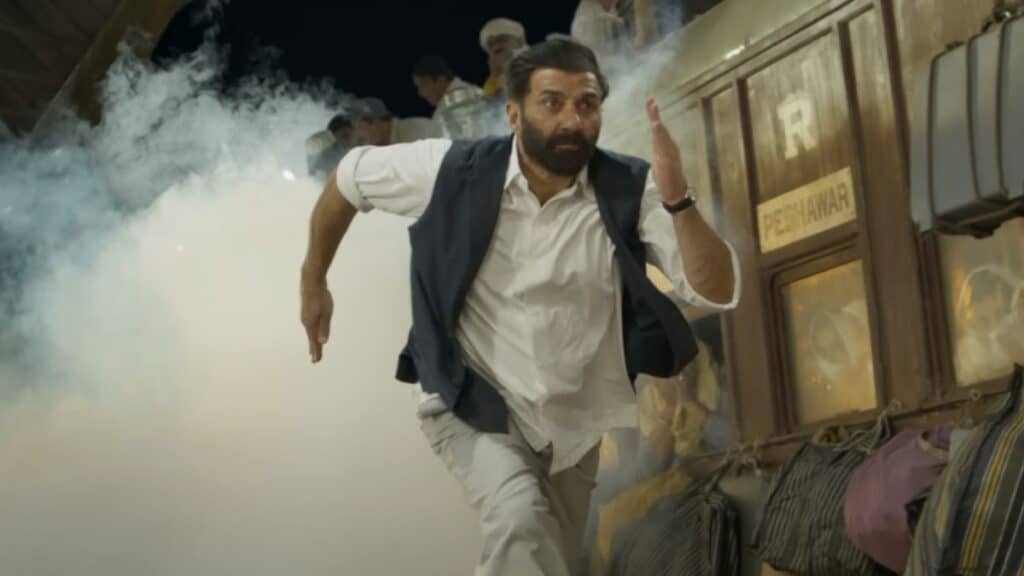
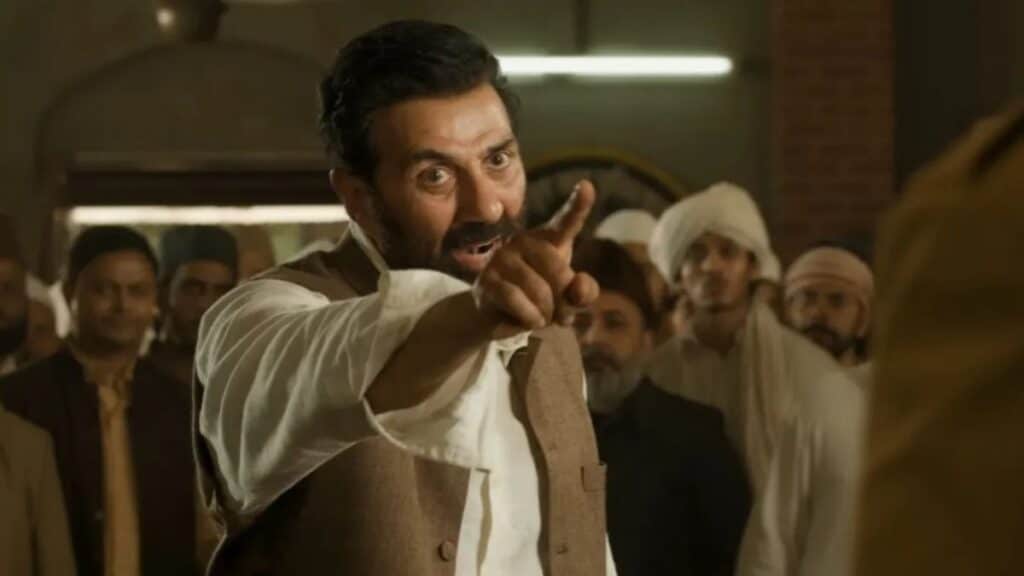
Sunny Deol commands the screen exactly as fans would hope, delivering his trademark thunderous dialogues and larger-than-life moments with full conviction. His presence anchors the film, and his portrayal of a man torn between grief and moral courage gives Batwara 1947 its emotional spine.
Preity Zinta
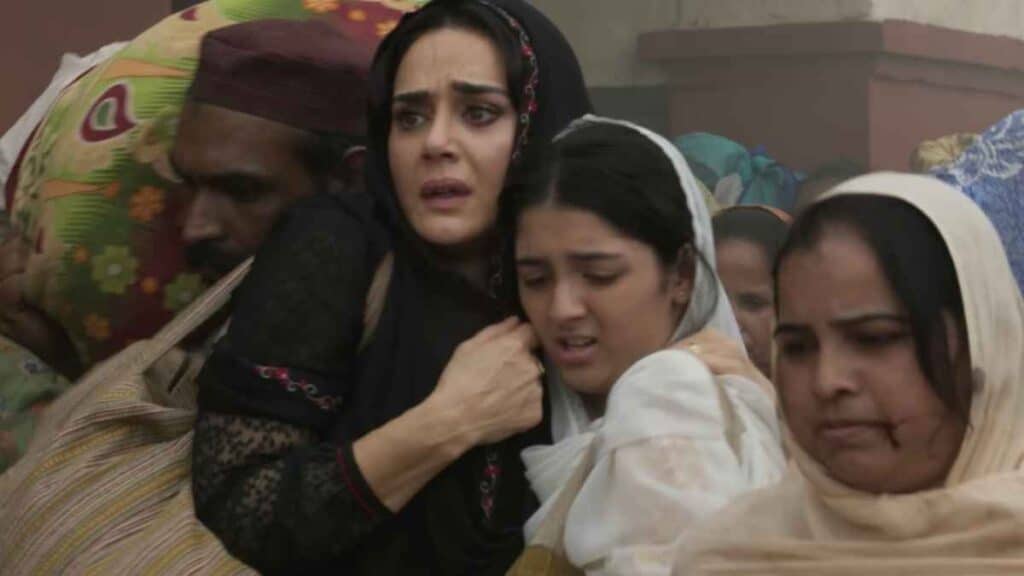
Marking a heartfelt comeback, Preity Zinta brings warmth and vulnerability to her role as a mother yearning for her lost son. Her restrained, dignified performance adds a quiet emotional layer to the film’s larger narrative of loss and hope.
Shabana Azmi
A veteran at her craft, Shabana Azmi lends immense gravity and grace to her character. Her ability to communicate pain and resilience through the smallest of expressions makes her one of the emotional cornerstones of the film.
Ali Fazal as Habib
Ali Fazal is thoroughly endearing as Habib, the soulful poet who becomes Mirza’s guide and friend. His understated charm and sincerity make Habib one of the more memorable supporting characters in the film.
Karan Deol
Karan Deol continues to grow as a performer, bringing sincerity and screen presence to his role. He holds his own in key father-son moments, showing promising range as an actor to watch.
Abhimanyu Singh
Abhimanyu Singh brings his trademark intensity to the antagonist’s role, adding a menacing energy that keeps the film’s conflict alive and the stakes high.
Also Read: Vishwanath and Sons Review 2026: Suriya’s Heartwarming Family Blockbuster Wins Big
Technical Craft
Direction
Rajkumar Santoshi returns to familiar territory with a sincere, big-hearted approach to storytelling. His direction leans into grand emotion and message-driven storytelling, staying true to the socially conscious tone he’s known for in classics like Damini and Ghatak.
Cinematography
Santosh Sivan’s cinematography captures the scale and sorrow of Partition-era India with striking visual craft, framing both the intimacy of the central friendship and the chaos of the historical backdrop with equal skill.
Music
A. R. Rahman’s score, paired with Javed Akhtar’s lyrics, brings soul and gravitas to the film, elevating its emotional beats and giving Batwara 1947 a memorable musical identity.
Editing
Shyam Salgaonkar’s editing keeps the narrative flowing at a steady pace across the film’s sprawling, multi-character canvas, ensuring the story’s larger message stays front and centre.
Also Read: The Traitors Season 2 Review 2026: Karan Johar’s Explosive Reality Game Returns Bigger and Better
Strengths & Weaknesses
Strengths:
- A powerful, timely message of communal harmony and coexistence
- Sunny Deol’s commanding screen presence and dialogue delivery
- Heartfelt performances from Preity Zinta and Shabana Azmi
- A. R. Rahman’s evocative music
- Santosh Sivan’s striking period-appropriate visuals
- A meaningful, metaphor-rich central relationship at the heart of the story
Weaknesses:
- Some transitions in relationships feel quicker than expected given the emotional weight of the story
- A few supporting arcs could have used more screen time to fully land
- The villain track leans into familiar genre conventions
Final Verdict:⭐⭐⭐⭐ 4.5/5 stars
Batwara 1947 is a sincere, big-hearted tribute to unity and brotherhood that arrives at exactly the right time. With Sunny Deol in commanding form, a moving ensemble cast giving it their all, and A. R. Rahman’s soulful score tying it all together, the film succeeds in telling a story that matters. It’s an emotional, message-driven watch that’s well worth experiencing in theatres with your family.
What is the age rating / content certification of Batwara 1947?
Batwara 1947 deals with themes of Partition-era violence and communal conflict, so it carries a UA-type certification typical of historical dramas. Parental guidance is recommended for younger viewers due to intense sequences.
Is Batwara 1947 suitable for family viewing?
Yes, Batwara 1947 is largely suitable for family viewing. While it touches on the trauma of Partition, its core message of unity, tolerance, and coexistence makes it a meaningful watch for older kids and the whole family together.
Is Batwara 1947 based on a true story?
Batwara 1947 is a fictional drama set against the real historical backdrop of the 1947 India-Pakistan Partition. It is adapted from Asghar Wajahat’s acclaimed play Jis Lahore Nai Vekhya, O Jamya E Nai, drawing on the real emotional and social realities of that era rather than a single true account.
