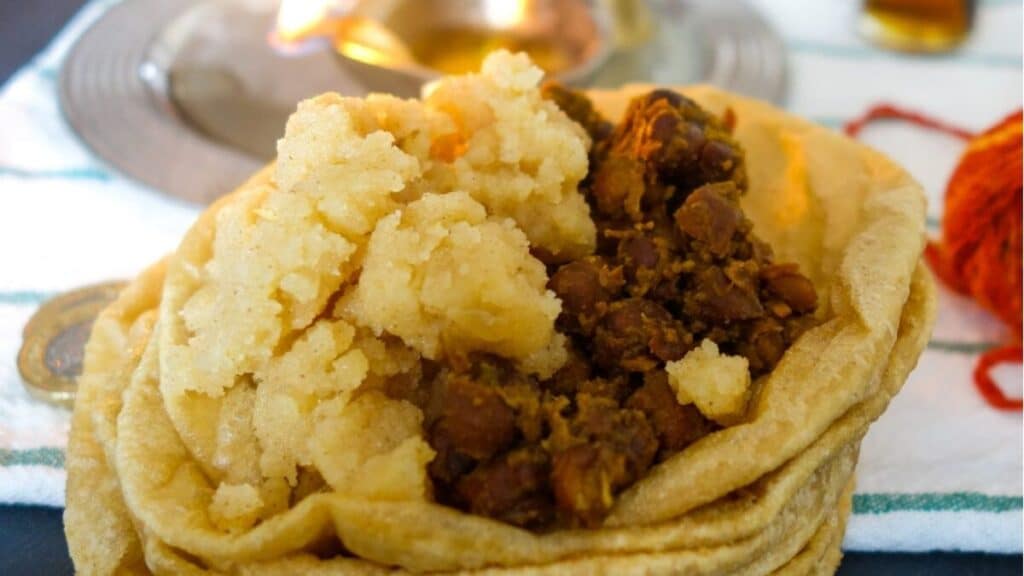
If you’ve ever wondered how to make the perfectly spiced, aromatic dry kala chana that’s traditionally served during Navratri Ashtami celebrations, you’re about to discover a recipe that’s been passed down through North Indian households for generations.
Quick Sumary:
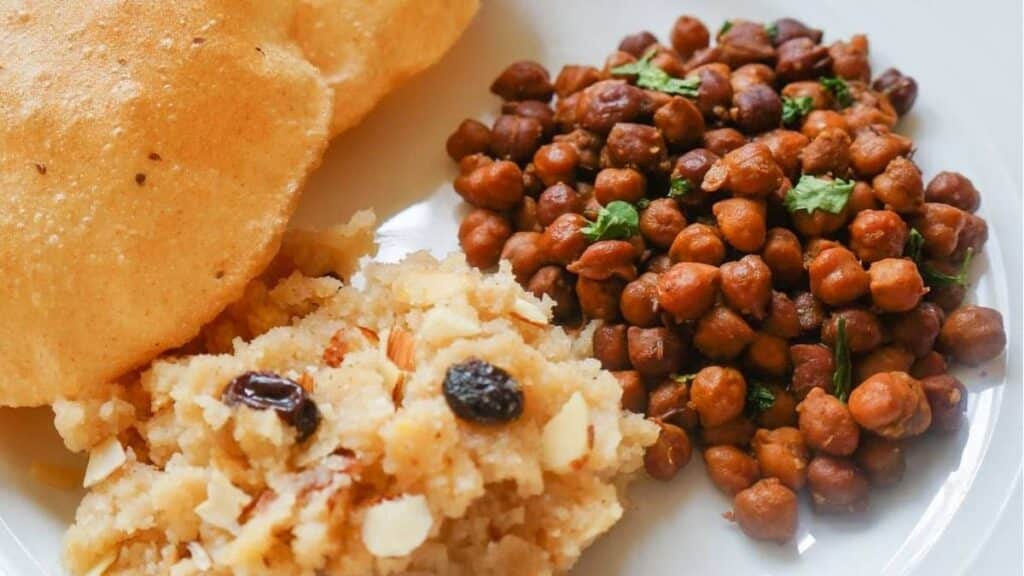
This dry kala chana recipe uses overnight-soaked black chickpeas pressure-cooked until tender, then tempered with cumin, hing, ginger-green chili paste, and ground spices including cumin, coriander, and red chili powder. The no-onion, no-garlic preparation is traditionally served during Navratri Ashtami with poori and halwa as prasad. Cooking time: 30 minutes (plus overnight soaking and 10-15 minutes pressure cooking).
Table of Contents
What Makes Kala Chana Different from Regular Chickpeas
Black chickpeas, known as kala chana in Hindi, are distinctly different from the larger, cream-colored garbanzo beans (kabuli chana) that dominate Western cooking. These smaller, darker legumes pack a more robust, earthy flavor and hold their shape beautifully even after prolonged cooking. The texture is firmer and slightly denser, with a nutty undertone that becomes more pronounced when cooked with aromatic spices.
Nutritionally, kala chana outperforms regular chickpeas in several areas. They’re higher in fiber, which aids digestion and promotes satiety—making them excellent for weight management and blood sugar control. The protein content rivals any legume, providing essential amino acids that make this dish particularly valuable for vegetarian and vegan diets. Black chickpeas also contain more iron and antioxidants compared to their lighter cousins, which is why they’re recommended in Ayurvedic practices for building strength and vitality.
The taste profile of properly cooked kala chana is what sets it apart in dishes like this sukha preparation. The spices cling to the slightly rough surface of each chickpea, creating layers of flavor in every bite. When you bite down, there’s a satisfying firmness followed by a creamy interior that’s absorbed the warming notes of ginger, the heat from green chilies, and the complex aromatics from roasted cumin and coriander.
The Cultural Significance of Ashtami Kala Chana During Navratri
This particular combination holds both practical and symbolic meaning. The meal must be sattvic—pure, vegetarian, and prepared without onion, garlic, or any ingredients considered tamasic (dull, heavy) in Ayurvedic food philosophy. Black chickpeas provide grounding protein and energy, the halwa offers sweetness representing joy and celebration, while the poori symbolizes prosperity and abundance. Together, they create a balanced meal that nourishes body and spirit.
Growing up in North India, the Ashtami celebration was one of the most anticipated days of the year. Children would dress in their finest clothes—girls in traditional lehengas or frocks, boys in kurtas—and visit homes throughout their neighborhood. Each household would seat the kanjaks, perform a small puja washing their feet, applying tilak (vermillion) on foreheads, and then serve the prasad in small palm leaf bowls called donas. After the meal, children would receive gifts—small goodie bags with sweets, toys, or envelopes with cash blessings.
The preparation of kala chana for Ashtami specifically follows strict guidelines. It must be cooked using sendha namak (rock salt) rather than regular table salt, and absolutely no onion or garlic can be used. The cook typically prepares the food after bathing and in a state of mental purity, often while chanting prayers. Even the utensils used are sometimes set aside specifically for preparing prasad to maintain sanctity.
This tradition connects families across generations. The recipe you’re learning here is the same one that grandmothers taught mothers, who taught daughters, creating an unbroken chain of culinary heritage. When you make this kala chana during Navratri, you’re not just cooking food—you’re participating in a living tradition that honors the sacred feminine and strengthens community bonds through the simple act of feeding others with love and devotion.
CHECK MORE ON:Protein Pound Cake Recipe: 17g Protein, Half the Calories, All the Flavor
Why Soaking Black Chickpeas Overnight Is Non-Negotiable
The single most important step in this dry kala chana recipe—one you absolutely cannot skip—is the overnight soaking of dried black chickpeas. Unlike lentils that cook relatively quickly, black chickpeas are among the hardest legumes available. Their dense structure and thick skins require extended hydration before cooking to achieve the tender, creamy interior that makes this dish so satisfying.
The soaking process requires planning but minimal effort. Rinse your dried kala chana once or twice under running water to remove any dust or debris. Transfer them to a large bowl—use something bigger than you think necessary because they’ll expand substantially. Cover the chickpeas with water, ensuring at least 2-3 inches of water sits above the beans since they’ll absorb quite a bit. Leave them at room temperature, uncovered or loosely covered, for anywhere from 10 to 18 hours depending on ambient temperature and the age/quality of your chickpeas.
If you’re short on time, there’s a slight workaround: soak the chickpeas in warm (not hot) water rather than cold. This accelerates the hydration process somewhat, potentially cutting soaking time by a few hours. However, there’s truly no substitute for the full overnight soak if you want optimally textured chickpeas. Some cooks add a pinch of baking soda to the soaking water, which further softens the skins, though this is optional and can slightly affect the final texture—making them almost too soft if you’re not careful.
After soaking, you’ll notice the water has become somewhat murky and the chickpeas have lightened slightly in color while expanding significantly. Drain this soaking water completely—it contains compounds you don’t want in your final dish—and rinse the chickpeas once more before proceeding to cook them. This thorough soaking ensures that when you pressure cook the kala chana, they’ll become uniformly tender within a reasonable timeframe rather than requiring hours of cooking or resulting in unevenly cooked beans with hard, chalky centers.
Pressure Cooking Black Chickpeas: Stove-Top vs Instant Pot Method
Once your black chickpeas have soaked overnight and plumped up beautifully, the next critical step is cooking them until they’re perfectly tender—soft enough to yield easily when pressed between your fingers but still holding their shape rather than turning mushy. For this, a pressure cooker (either traditional stove-top or electric Instant Pot) is essentially mandatory unless you have literally hours to spare boiling them in a regular pot.
For the traditional stove-top pressure cooker method, drain your soaked chickpeas and add them to the cooker along with fresh water (enough to cover them by about an inch), salt to taste, a pinch of baking soda (optional, but helps soften them), and whole spices if you like—a bay leaf, a small cinnamon stick, or a few cloves add subtle background flavor. Close the lid, place the cooker on medium-high heat, and wait for the first whistle. Once you hear that first whistle, reduce the heat to low and let the chickpeas cook for about 8-10 minutes, which typically translates to 7-9 whistles depending on your cooker’s pressure level.
How do you know when they’re done? The test is simple: carefully remove one chickpea, let it cool slightly, and press it between your thumb and index finger. It should yield easily and mash without significant resistance. If there’s still a firm, hard center, they need more cooking time. Return them to pressure for another 2-3 minutes if needed. Properly cooked kala chana should be tender throughout but not falling apart—you want them intact for the dry preparation that follows.
The Spice Blend That Makes This Dry Chana Irresistible
The magic of sukha kala chana lies not in complicated techniques but in a carefully balanced spice blend that enhances the earthy chickpeas without overwhelming them. Unlike saucy curries that can hide behind rich gravies, this dry preparation puts every spice front and center, which is why getting the proportions right matters so much.
The foundation begins with freshly pounded ginger and green chilies. Using a mortar and pestle rather than a food processor gives you control over texture—you want a coarse paste, not a smooth purée, so you get bursts of ginger’s warming spiciness and the green chilies’ vibrant heat in each bite. The coarseness also prevents the paste from burning during tempering, a common problem when the paste is too fine and has high moisture content.
The final flourishes—a touch of ghee for richness, tamarind paste for smoky tanginess that balances the spices, and fresh cilantro for brightness—transform good kala chana into unforgettable kala chana. These finishing touches are added at the very end, after the chickpeas have had time to sauté with the masala and absorb all those layered flavors.
Step-by-Step: Making Sukha Kala Chana Without Onion or Garlic
The beauty of this traditional dry kala chana recipe lies in its simplicity and the no-onion, no-garlic approach that keeps it appropriate for religious observances while letting the chickpeas and spices shine. Here’s how to bring it all together once your chickpeas are cooked and your mise en place is ready.
Start by preparing your aromatics: using a mortar and pestle, pound fresh ginger (about an inch piece) and 2-3 Indian green chilies into a coarse paste. The texture should be rough, with visible pieces rather than a smooth purée. Set this aside. In a small bowl, combine your ground spices—1 teaspoon cumin powder, 1 teaspoon coriander powder, ½ teaspoon kala namak (black salt), and ½ teaspoon red chili powder (adjust to taste). Add 2-4 tablespoons of the reserved chickpea cooking stock to create a thick, paste-like slurry. Keep this ready beside your stove.
As you near the end of sautéing, the chickpeas should look glossy, coated evenly with spices, and the mixture should be mostly dry with just a hint of moisture—not swimming in liquid but not bone-dry either. Taste one chickpea and adjust salt if needed. Turn off the heat, then stir in 1 teaspoon of ghee (or additional oil if keeping it vegan), 1 teaspoon of tamarind paste for tanginess, and a generous handful of chopped fresh cilantro. The residual heat will warm these finishing ingredients without cooking them, preserving their fresh, bright qualities. Your sukha kala chana is ready to serve.
Making Dry Chana With Onion, Garlic, and Tomato (Non-Fasting Version)
While the traditional Navratri preparation avoids onion and garlic, there’s absolutely a place for a more robust version of dry kala chana that incorporates these aromatics for everyday meals when religious restrictions don’t apply. This variation creates deeper, more complex flavors through the caramelization of onions and the pungency of garlic, while tomatoes add acidity and body.
Once your onions reach that perfect golden-brown stage, add your ginger-garlic-green chili paste. Sauté for 10-15 seconds until the raw smell disappears and you can smell the garlic blooming. At this point, lower the heat and add your ground spice slurry (prepared the same way as the traditional version). Cook for a minute, stirring constantly, until the oil begins separating.
At this stage, add your cooked chickpeas and proceed exactly as in the traditional method—sauté with the masala, gradually adding chickpea stock, developing those flavors over 6-8 minutes. Finish with ghee, tamarind (though you might use less since tomatoes provide acidity), and cilantro. The result is a richer, more gravy-adjacent version of dry chana that pairs beautifully with rotis or parathas for regular family meals.

Pro Tips for Perfect Dry Kala Chana Every Single Time
After making this dish dozens of times across many Navratri celebrations and regular meals, certain lessons emerge that separate good dry chana from exceptional dry chana. These tips come from experience, mistakes, and the kind of kitchen wisdom that only repetition teaches.
The tamarind paste quantity listed in most recipes, including this one, is conservative because personal preferences for tanginess vary wildly. Start with the suggested amount, taste after mixing, and adjust. Some families love intensely tangy kala chana; others prefer just a hint of sourness. There’s no wrong answer—make it how you like it. If you don’t have tamarind paste, fresh lemon juice works, though it provides a different, brighter acidity compared to tamarind’s deeper, slightly smoky tang. Add lemon juice at the very end to preserve its fresh flavor.
While black chickpeas are traditional and ideal for their texture and flavor, you can absolutely make this recipe with regular white chickpeas (kabuli chana) if that’s what you have available. The cooking time might be slightly shorter—white chickpeas generally soften faster—and the final texture will be creamier and less firm. The flavor profile works equally well; you’ll just have a different textural experience.
For an extra layer of flavor complexity, consider adding a small amount of kasuri methi (dried fenugreek leaves) at the very end. Crush about a teaspoon between your palms to release the aromatic oils, then sprinkle over your finished sukha kala chana and stir to combine. The slightly bitter, maple-like flavor of kasuri methi adds a restaurant-quality finish that elevates the dish considerably. This is optional but highly recommended if you have kasuri methi in your spice cabinet.
Serving Sukha Kala Chana: Traditional Combinations and Modern Ideas
If you’re creating a full festive thali beyond just Ashtami, pair the sukha kala chana with bedmi poori (pooris made with urad dal), aloo sabzi (potato curry), kaddu ki sabzi (pumpkin curry), and maintain the halwa for sweetness. This spread represents North Indian festive cooking at its finest—everything is vegetarian, prepared with care, and designed to be eaten communally with family and friends. Add some achaar (pickle) and papad on the side for additional textures and flavors.
For everyday meals, this dry chana works beautifully with any Indian flatbread—roti, paratha, or naan—and a bowl of cool yogurt or raita on the side. The yogurt’s coolness balances the warming spices and adds protein and probiotics to the meal. You could also serve it alongside steamed basmati rice, dal (lentils), and a vegetable side dish for a complete, nutritious thali that satisfies both comfort food cravings and nutritional needs.
Use dry chana as a filling for wraps and rolls—spread some mint chutney on a whole wheat tortilla or roti, add the kala chana, some shredded cabbage or lettuce for crunch, sliced onions, and roll it up for a portable, satisfying meal. This works brilliantly for packed lunches or quick dinners when you don’t want a full sit-down meal. The chickpeas hold their texture well even when wrapped and eaten cold or at room temperature.
For a simple comfort meal reminiscent of dhaba-style eating, serve sukha kala chana with steamed rice, a simple dal, and aloo bharta (mashed spiced potatoes). Add a dollop of ghee on the hot rice, mix everything together on your plate, and eat with your hands for the full, soul-satisfying experience. This humble combination proves that great food doesn’t require complexity—just good ingredients, proper technique, and recipes passed down through generations.
Storage, Reheating, and Meal Prep Advantages
One of the greatest advantages of dry kala chana beyond its delicious flavor is how well it stores and reheats, making it ideal for meal prep and batch cooking. The dish actually improves after a day or two as the chickpeas continue absorbing spices, developing deeper, more integrated flavors that fresh-cooked batches haven’t had time to achieve.
Store cooled sukha kala chana in airtight containers in the refrigerator for up to 4-5 days. The key word here is “cooled”—never put hot or warm food directly into closed containers or the refrigerator, as the trapped steam creates moisture that encourages bacterial growth and spoilage. Spread the chana out on a plate or leave it in the cooking pot uncovered until it reaches room temperature, then transfer to storage containers.
Meal prep strategies: if you’re cooking for weekly meal prep, consider preparing a double or triple batch of sukha kala chana on Sunday. Portion it into individual containers along with rice or store flatbreads separately, and you’ve got ready-to-eat lunches or easy dinners for the entire week. The time investment is barely more than making a single batch—most of the work is in soaking and pressure cooking the chickpeas, which doesn’t scale much in effort even when you’re cooking larger quantities.
One important note about texture: dry chana tends to absorb moisture over time during storage, so what seems perfectly “dry” when you first make it might appear slightly wetter after a day in the refrigerator. This is normal and actually desirable—it prevents the chickpeas from drying out and becoming hard. If you prefer a drier consistency when reheating, simply cook off the excess liquid over medium heat while stirring, or serve as-is since the wetter version is perfectly acceptable and still delicious.
The Nutritional Benefits That Make Kala Chana a Superfood
Protein content is perhaps the most celebrated attribute of kala chana. A single cup of cooked black chickpeas provides approximately 15 grams of plant-based protein, making it an excellent meat alternative for vegetarians and vegans. The protein quality is high, containing many of the essential amino acids your body cannot produce on its own. While not a complete protein by itself, combining chickpeas with whole grains (like serving with rice or roti) creates a complete amino acid profile comparable to animal proteins.
Complex carbohydrates in kala chana provide sustained energy without the blood sugar spikes and crashes associated with refined carbs. The low glycemic index means glucose enters your bloodstream gradually, providing steady energy and preventing the afternoon slump that follows high-GI meals. Athletes and active individuals benefit from this sustained energy release, while everyone appreciates avoiding the roller coaster of energy highs and lows.
Micronutrients round out the nutritional profile: folate (important for cell division and particularly crucial during pregnancy), magnesium (supports bone health, muscle function, and hundreds of enzymatic reactions), phosphorus (bone health and energy production), zinc (immune function and wound healing), and various B vitamins that support metabolism and nervous system function. Antioxidants like polyphenols help combat oxidative stress and inflammation in the body.