
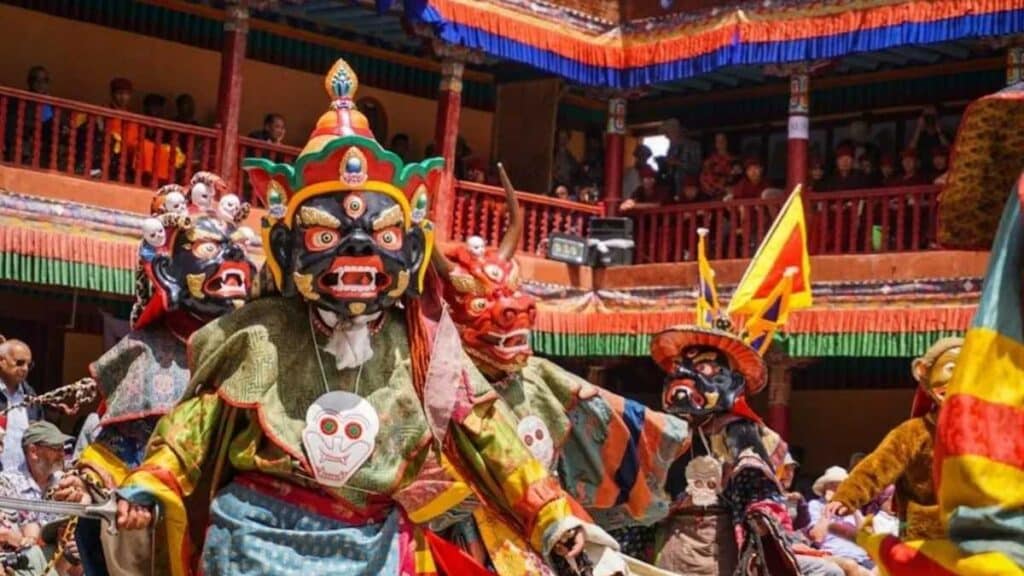
Hemis Festival is one of the most spectacular Buddhist festivals in India, celebrated annually at the historic Hemis Monastery in Ladakh. Known for its vibrant masked Cham dances, sacred thangka exhibitions, and deeply spiritual atmosphere, the festival marks the birth anniversary of Guru Padmasambhava — the founder of Tibetan Buddhism. Set against the breathtaking backdrop of the Himalayan landscape, Hemis Festival draws pilgrims, cultural enthusiasts, and international travelers from across the world, making it the most celebrated monastic festival in Ladakh.
Hemis Festival is a two-day celebration at Hemis Monastery, approximately 40 km from Leh, Ladakh — the largest and wealthiest Buddhist monastery in the region. The festival commemorates the birth anniversary of Guru Padmasambhava (Guru Rinpoche), revered as the founder of Tibetan Buddhism and believed to be a manifestation of Lord Buddha himself.
The festival brings together monks, locals, pilgrims, and visitors in a shared celebration of Buddhist devotion, Himalayan culture, and the eternal victory of good over evil. Every element — from the ornate Cham dances to the sacred thangka displays — carries deep spiritual meaning rooted in centuries of tradition.
Who Observes It: Primarily Tibetan Buddhists and Ladakhi communities, along with followers of the Drukpa Kagyu school of Buddhism. The festival also warmly welcomes Hindu pilgrims, cultural travelers, and international tourists.
When Is Hemis Festival in 2026?
Hemis Festival is celebrated on the 10th day (Tse-Chu) of the fifth month of the Tibetan Lunar Calendar, believed to be the birth date of Guru Padmasambhava.
Hemis Festival 2026 Dates:
- Day 1: Wednesday, June 24, 2026 — Opening prayers, Cham dance performances, thangka exhibition
- Day 2: Thursday, June 25, 2026 — Sacred rituals, Devil Dances, closing ceremonies
Festivities begin early morning, around 7:00–7:30 AM IST. Attendees are advised to arrive well before the start to secure seating.
Table of Contents
Hemis In USA, Canada, Australia, New Zealand, UK, UAE, Singapore 2026 Dates
- Day 1: Wednesday, June 24, 2026
- Day 2: Thursday, June 25, 2026
- Day 1: Wednesday, June 24, 2026
- Day 2: Thursday, June 25, 2026
- Day 1: Wednesday, June 24, 2026
- Day 2: Thursday, June 25, 2026
- Day 1: Wednesday, June 24, 2026
- Day 2: Thursday, June 25, 2026
- Day 1: Wednesday, June 24, 2026
- Day 2: Thursday, June 25, 2026
- Day 1: Wednesday, June 24, 2026
- Day 2: Thursday, June 25, 2026
Why Do Hemis Festival Dates Change Every Year?
Hemis Festival follows the Tibetan Lunar Calendar, not the Gregorian calendar. It is fixed on the 10th day of the fifth Tibetan lunar month — a date that shifts each year in Gregorian terms, typically falling between late June and mid-July. The Tibetan calendar is lunisolar, adjusted periodically to align with moon cycles, which is why the festival’s Gregorian date is never the same two years in a row.
Other Names and Regional Identities
Hemis Festival is known by several names across communities:
- Hemis Tsechu — The most widely used alternative name. “Tsechu” means “tenth day” in Tibetan, referring to the 10th day of the fifth lunar month.
- Hemis Gompa Festival — Used in travel contexts, referring to the monastery (Gompa) location.
- Cham Festival — Informally used by tourists to highlight the iconic masked dance performances.
- Guru Padmasambhava Jayanti Festival — Used in pan-Buddhist contexts.
In Regional Languages:
- Ladakhi / Tibetan: Hemis Tsechu (ཧེ་མིས་ཚེས་བཅུ།)
- Hindi: हेमिस महोत्सव (Hemis Mahotsav)
In diaspora communities across the USA, UK, Canada, and Australia, the festival is commonly referred to simply as Hemis or the Hemis Monastery Festival, marked through local Buddhist center events and cultural programs.
Origins, History, and Legends
Hemis Monastery was founded in the 17th century by the Buddhist saint Stagsang Raspa Nawang Gyatso, under the patronage of Ladakhi king Sengge Namgyal. The monastery belongs to the Drukpa Kagyu sect of Tibetan Buddhism and has hosted the festival since its founding as an annual tribute to Guru Padmasambhava.
Guru Padmasambhava, born in the Swat Valley (modern-day Pakistan) in the 8th century CE, is one of the most revered figures in Tibetan Buddhism. Believed to have been born miraculously from a lotus flower, he is credited with carrying Vajrayana Buddhism from India into Tibet, founding the first Buddhist monastery at Samye, and transmitting teachings that became the foundation of the Himalayan Buddhist tradition.
Local Ladakhi oral tradition holds that Guru Padmasambhava visited the region and drove out evil spirits, purifying the land for Buddhist practice. The Cham dances performed during the festival symbolically re-enact this — the triumph of dharmic wisdom over ignorance and evil.
Cultural and Spiritual Significance
Hemis Festival embodies the core values of Buddhism: compassion, wisdom, and the aspiration to liberate all beings from suffering. Every element of the celebration — the dances, the chanting, the sacred art — is understood as a spiritually active ritual that generates merit and purifies negative karma for all who witness it.
Culturally, it is Ladakh’s most important living heritage event, preserving centuries-old traditions of Himalayan art, ritual music, and sacred performance that continue unchanged to this day.
The 12-Year Cycle: Every 12 years, in the Tibetan Year of the Monkey, the festival takes on extraordinary importance. A massive two-storey thangka of Guru Padmasambhava — decorated with semi-precious gems, pearls, and stones — is ceremonially unveiled, drawing pilgrims from across the Himalayan world. Witnessing this rare display is considered profoundly auspicious.
For Ladakhis, Hemis Festival is an affirmation of identity, continuity, and faith — an unbroken thread connecting present generations to their ancestors and their dharma.
Prayers and Religious Observances
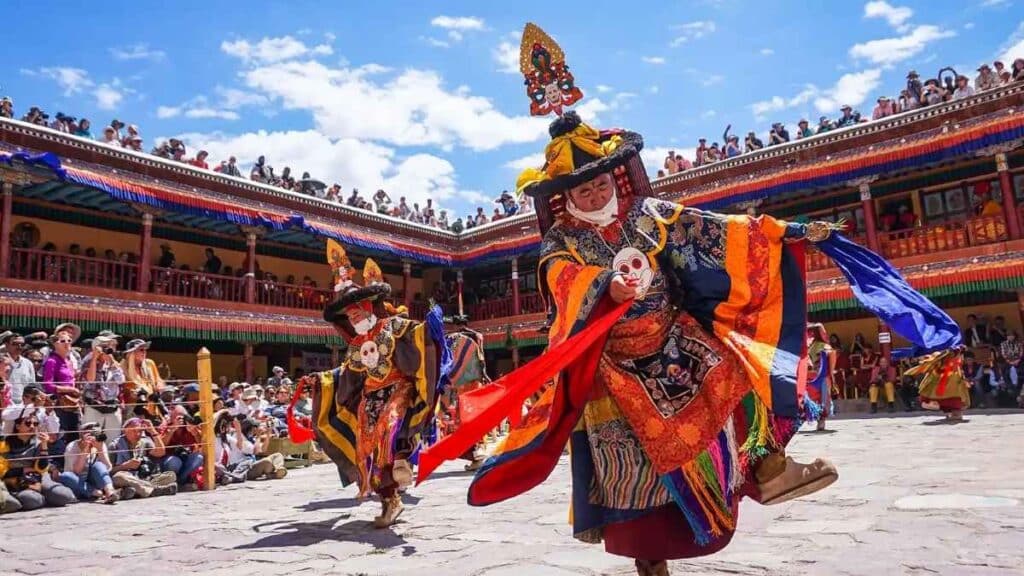
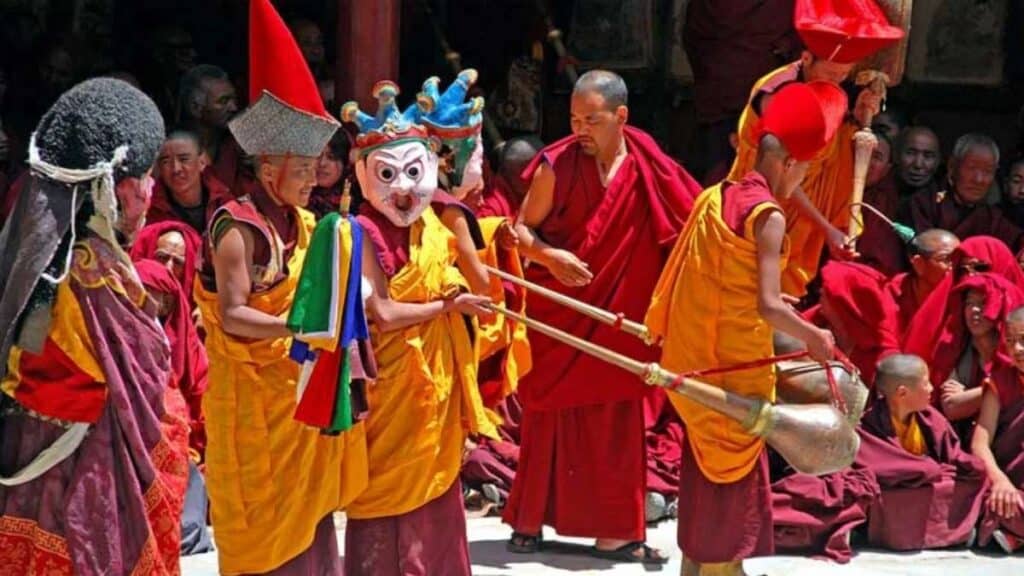
The festival opens with communal mantra chanting by monks — prayers for world peace, the welfare of all sentient beings, and the flourishing of the Dharma. Devotees join the chanting, creating a deeply meditative atmosphere throughout the monastery courtyard.
Key mantra associated with the festival: Om Ah Hum Vajra Guru Padma Siddhi Hum — the primary invocation of Guru Padmasambhava, believed to carry immense blessing power.
Monks prepare elaborate ritual torma offerings sculpted from dough and butter. At the festival’s climax, the head of the Black Hat dancers destroys a dough effigy representing evil, scattering its pieces in four directions — symbolizing the purification of negative forces and liberation of all souls.
Devout Buddhists throughout Ladakh also observe the day by lighting butter lamps at home shrines, reciting the Vajra Guru mantra, visiting local monasteries, and making offerings.
How Hemis Is Celebrated Across India
The primary celebration unfolds at Hemis Monastery, where the courtyard transforms into a living theater of Buddhist devotion, packed with locals in traditional Ladakhi dress, monks in ornate costumes, and visitors from around the world.
Regional celebrations include:
Leh District: The entire region comes alive, with surrounding villages organizing local prayers and observances.
Zanskar Region: Monasteries conduct their own Tsechu celebrations with Cham dances adapted to local traditions.
Spiti Valley, Himachal Pradesh: Culturally connected Buddhist communities at Tabo and Key monasteries observe similar Tsechu traditions.
Darjeeling and Sikkim: Tibetan Buddhist communities hold prayers and cultural programs at local monasteries.
Arunachal Pradesh: Communities in Tawang honor the occasion at Tawang Monastery and surrounding institutions.
Pan-India Buddhist Centers: Centers in Delhi, Mumbai, Bangalore, and Chennai organize special prayers, discourses, and thangka exhibitions.
Participation Across Religions in India
While Hemis Festival is a distinctly Buddhist celebration, it is genuinely inclusive. Many Hindu pilgrims attend, drawn by the spiritual atmosphere and shared reverence for an enlightened master who subdued demonic forces — a narrative that resonates across traditions. Secular tourists, photographers, artists, and filmmakers form a significant part of the festival crowd, contributing to its global reach. Visitors of all faiths are welcome, provided they maintain respectful conduct. The Hemis Monastery and Ladakhi community maintain an open and welcoming spirit that reflects Buddhism’s universal compassion.
How Chhath Puja Is Celebrated Outside India
The festival’s influence extends far beyond Ladakh. Tibetan Buddhist centers, Ladakhi diaspora communities, and cultural organizations worldwide mark Guru Padmasambhava’s Tsechu with local observances.
USA: Tibetan Buddhist centers in New York, San Francisco, and Seattle organize Tsechu prayers, Cham dance demonstrations, and dharma talks.
Canada: Communities in Toronto, Vancouver, and Montreal hold pujas, mantra recitations, and cultural gatherings.
UK: London’s Tibetan diaspora community marks the occasion through Buddhist centers like Rigpa UK, with thangka exhibitions and dharma film screenings.
UAE: Ladakhi workers and the broader Indian diaspora in Dubai and Abu Dhabi observe the festival through community prayers.
Australia & New Zealand: Buddhist centers in Sydney, Melbourne, and Auckland conduct Tsechu observances, often on weekends for working communities.
Germany & Singapore: Growing communities of Tibetan Buddhism practitioners in Berlin and Singapore mark the occasion with prayers and teachings from visiting Lamas.
Gifting Traditions
Hemis Festival does not have a formalized gifting culture like Diwali, but meaningful exchanges occur within Buddhist communities:
- Khata (White Scarves): Presenting a ceremonial white silk scarf to Lamas, elders, or respected figures is the most traditional form of respectful gifting in Tibetan Buddhist culture — symbolizing purity, good fortune, and respect.
- Offerings to the Monastery: Devotees bring butter lamps, incense, and food offerings to present at monastery altars — a deeply meaningful act of merit-making.
- Religious Items: Gifting prayer beads (malas), thangka reproductions, Buddhist texts, or incense is considered auspicious.
- Ladakhi Handicrafts: Visitors purchase pashmina, traditional jewelry, carved wooden items, and thangka paintings as culturally meaningful souvenirs and gifts.
Hemis Festival Foods and Culinary Traditions
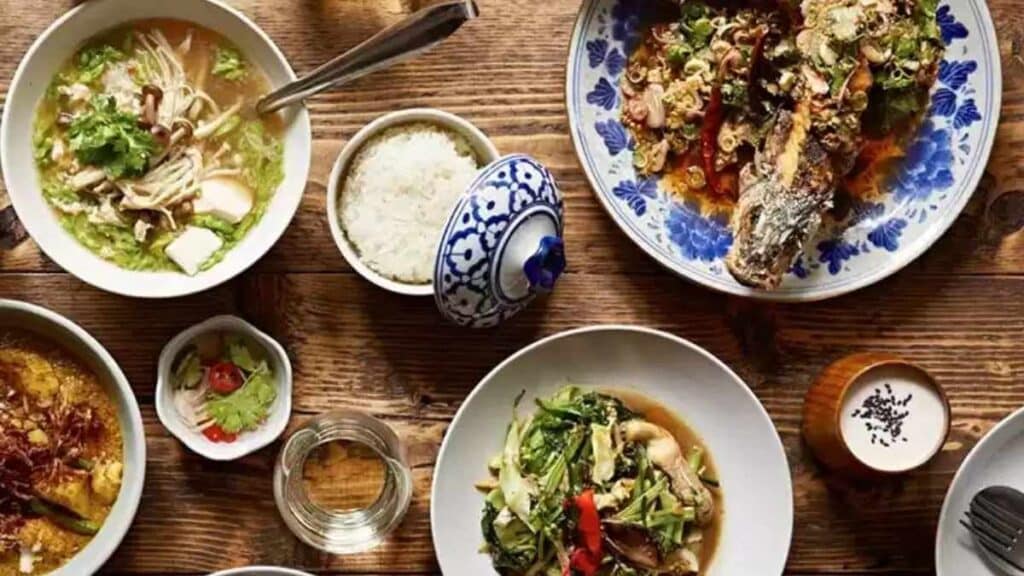
The festival is accompanied by the hearty, warming flavors of traditional Ladakhi cuisine — food perfectly suited to the high-altitude Himalayan environment.
Signature Festival Foods:
- Thukpa — A hearty noodle soup with vegetables or meat; the most beloved comfort food in Ladakh
- Momos — Steamed or fried dumplings stuffed with vegetables, cheese, or meat; a festival favorite
- Skyu — A thick traditional stew made with hand-rolled wheat pasta and root vegetables
- Tsampa (Ngamphe) — Roasted barley flour mixed with butter tea; a staple with deep religious associations
- Butter Tea (Po Cha) — Salted, buttery yak butter tea central to Ladakhi hospitality
- Chang (Chhang) — A mildly fermented local barley beer traditionally served to community members during the festival
- Khambir — Traditional Ladakhi leavened bread, often eaten with apricot jam
The area around Hemis Monastery transforms into a lively food market during the festival, with vendors selling traditional dishes, snacks, and beverages that are as much a part of the experience as the performances themselves.
Music, Art, and Cultural Expression
Sacred Festival Music: The soundscape of Hemis is unforgettable — massive radong (Dungchen) horns produce a deep, resonant drone that carries across the Himalayan valley; large nga (drums) beat complex rhythms guiding the Cham dancers; and rolmo (cymbals) mark ritual transitions with crashing energy.
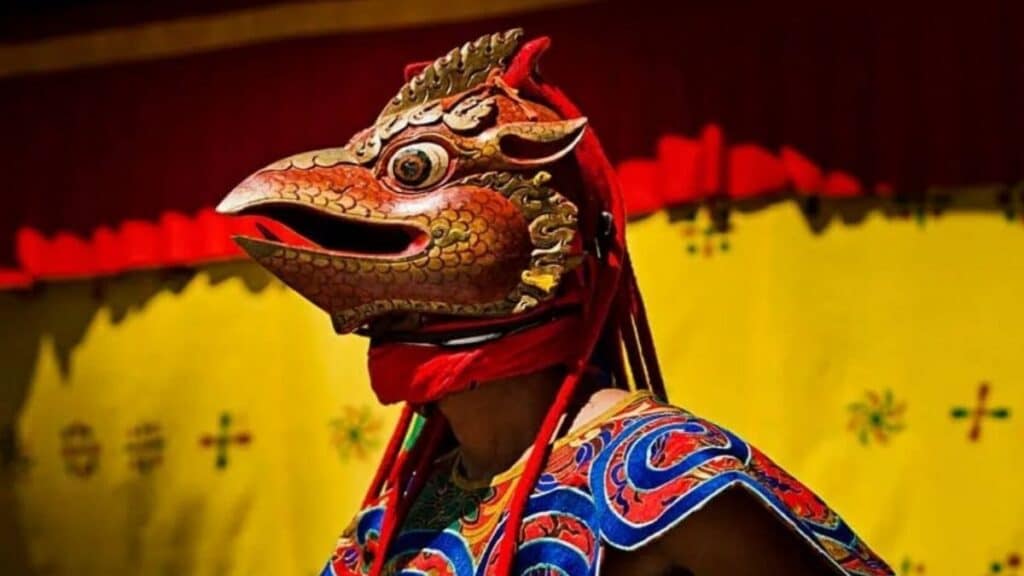
Cham Dance: The Cham dances are a sophisticated art form requiring years of monastic training. Each character — wrathful deities, protective spirits, skeleton dancers, and Black Hat masters — wears an intricately crafted mask and costume carrying deep iconographic meaning. The choreography follows sacred texts and has been preserved unchanged for centuries.
Thangka Paintings: The thangkas displayed at Hemis represent the pinnacle of Tibetan Buddhist visual art — meticulously crafted scroll paintings depicting Guru Padmasambhava, mandalas, and protective deities in rich mineral pigments and gold.
Handicrafts: The festival market showcases Ladakh’s extraordinary craft traditions: hand-woven pashmina and wool textiles, intricately worked silver jewelry with turquoise and coral, traditional thangka reproductions, hand-carved wooden ritual items, and wicker basketry.
Modern Observance and Evolving Practices
Hemis Festival has evolved into one of India’s premier cultural tourism events, with the Ladakh Autonomous Hill Development Council and tourism authorities actively promoting it internationally. Estimated annual attendance now exceeds 15,000–20,000 visitors.
In recent years, digital livestreams and virtual coverage have made the festival accessible to global Buddhist communities who cannot travel to Ladakh. Buddhist organizations broadcast prayers and Cham dance performances online, extending the festival’s spiritual reach worldwide.
With growing visitor numbers, the monastery and local authorities have taken steps toward sustainable tourism practices — managing waste, limiting access to sensitive areas, and encouraging responsible visitor behavior.
How to Wish Someone on Hemis Festival:
- In English: “Happy Hemis Festival!” or “May the blessings of Guru Padmasambhava bring you peace and joy.”
- In Tibetan/Ladakhi: “Tashi Delek!” (ཐ་ཤི་དེ་ལེགས།) — a universal Buddhist greeting meaning “auspicious good luck” or “may all be well and good.”
- For Buddhist practitioners: Sharing the Vajra Guru mantra — Om Ah Hum Vajra Guru Padma Siddhi Hum — is a meaningful way to mark the occasion.
Cultural Reflection
Hemis Festival endures because it speaks to something timeless — the human longing for meaning, beauty, and community. In an era of rapid change, this centuries-old celebration at a monastery in the Himalayas stands as a powerful reminder that ancient wisdom, sacred art, and living tradition still hold the power to move us profoundly.
For Ladakhis, it is the heartbeat of cultural identity. For Buddhist practitioners worldwide, it is a living transmission of Guru Padmasambhava’s liberating teachings. For travelers, it is an encounter with extraordinary beauty that lingers long after the journey home. Hemis Festival is not merely a celebration of the past — it is a living, breathing affirmation that the dharma endures.