


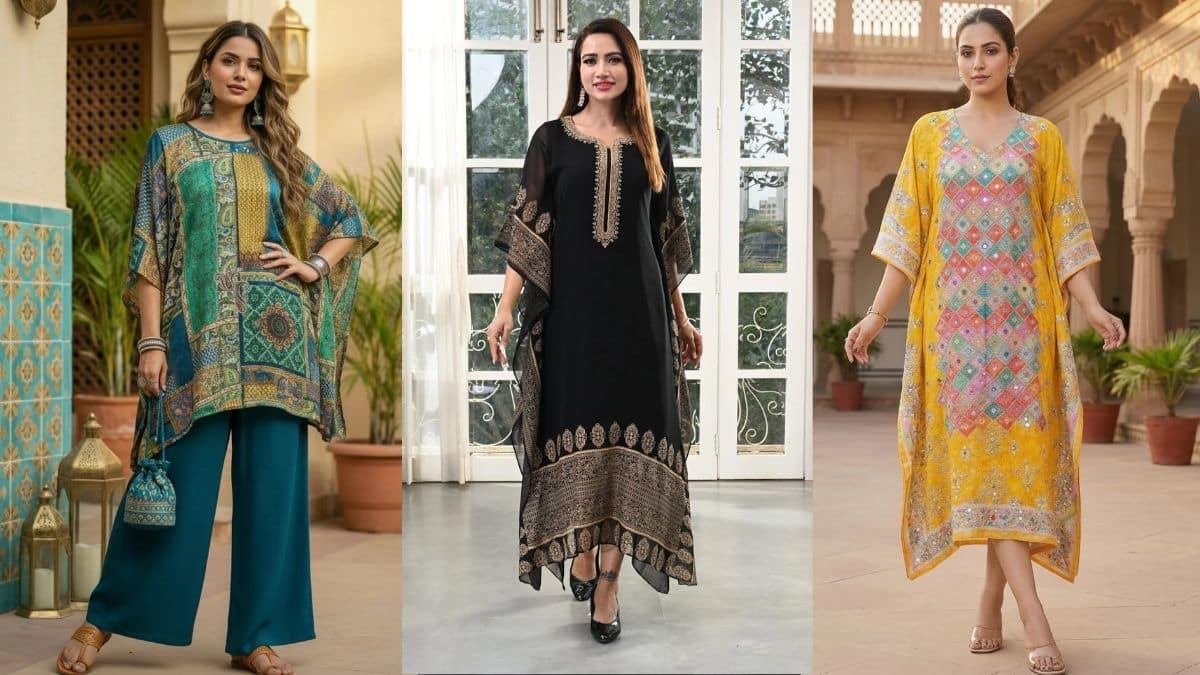
There’s a particular kind of relief that comes with putting on a kaftan. No zipper fighting you at the back, no waistband deciding how your evening is going to go, no last-minute safety pin emergencies. You just slip it on, and somehow you already look like you tried harder than you did. If you’ve ever stood in front of your closet twenty minutes before a dinner party, wondering why every “easy” outfit still needs three adjustments, a kaftan solves that problem in one motion. But the word itself carries a lot of history, a lot of confusion with lookalike garments, and honestly, a lot of options — which is exactly why this guide exists.
A kaftan is a loose, flowing robe-like garment with ancient roots across the Middle East, Central Asia, North Africa and South Asia, now reimagined as one of the most versatile pieces in modern wardrobes. It’s often confused with caftans (same garment, different spelling), abayas (which are more conservative and religiously rooted), and maxi dresses (which are fitted, not fluid). Women love kaftans because they’re comfortable, forgiving on the body, and effortlessly elegant — equally at home at a family wedding or a lazy Sunday brunch. Choosing the right one comes down to fabric, length, embellishment and occasion.
In This Article
The History of the Kaftan
The kaftan didn’t start out as a fashion statement — it started out as practical, dignified clothing, and that’s part of why it still feels so timeless today. Historians trace its earliest forms to Mesopotamia, where flowing robes were worn to suit the desert climate, long before the word “kaftan” even existed in its current form. From there, it travelled and transformed across empires. In the Ottoman court, kaftans became elaborate symbols of status, stitched in silk and brocade, gifted to dignitaries as marks of honour. Persian and Central Asian traditions carried their own versions, often layered and belted. North African cultures adapted it into everyday and ceremonial wear, and across South Asia, similar loose-robe silhouettes existed in regional dress long before “kaftan” became the umbrella term we use today.
What’s lovely about this history is how it mirrors migration itself — a garment that moved from region to region, adjusting to new climates and customs but never losing its essential idea: dignity without restriction. That’s probably why it resonates so much with diaspora audiences now. It’s a piece of clothing that has always belonged everywhere and nowhere specific, which feels familiar to anyone who’s built a life across two cultures.
Kaftan vs Caftan vs Abaya vs Maxi Dress
This is where most people get stuck, so let’s clear it up properly.
Kaftan vs Caftan — This one’s simple: they’re the same garment. “Kaftan” is the spelling used widely across the Middle East, South Asia and Europe, while “caftan” is more common in North American usage. If you see both spellings on a shopping site, don’t overthink it; you’re looking at the same silhouette.
Kaftan vs Abaya — This is where the confusion actually matters. An abaya is a specific religious and cultural garment, typically black, worn as a full-coverage outer layer with modesty and tradition at its core, often as daily religious dress. A kaftan, on the other hand, is a broader style category — it can be colourful, printed, embellished, short or long, and worn purely as fashion rather than for any religious purpose. Think of it this way: every abaya could loosely resemble a kaftan silhouette, but not every kaftan is an abaya.
Kaftan vs Maxi Dress — A maxi dress typically follows the shape of the body — fitted at the waist, sometimes at the bust, falling long from there. A kaftan skips all of that. It’s cut loose from shoulder to hem, with no real “fitted” section, which is exactly what makes it forgiving to wear and why it photographs so beautifully in motion.
Why Women Love Kaftans
Ask any woman who owns one why she keeps reaching for it, and the answer is rarely just “it’s pretty.” It’s usually something closer to: it doesn’t fight my body on a bloated day, it doesn’t need ironing before a flight, and it somehow makes me look pulled-together even when I did nothing but throw it on. There’s an emotional ease to kaftans that’s hard to explain until you’ve worn one to a wedding function where every other outfit in the room required tailoring, safety pins, and Spanx.
For South Asian women especially, kaftans occupy a sweet spot — dressy enough for festive occasions, but nowhere near as high-maintenance as a heavily draped saree or a fitted lehenga blouse. They travel well, they layer well with jewellery, and they don’t punish you for a second helping at dinner. That combination of comfort and elegance is rare, and it’s exactly why kaftans have moved from “resort wear” to genuine everyday-to-evening staples.
How to Choose the Right Kaftan
Length first. Short kaftans lean casual — perfect for brunches, warm-weather outings, and daytime family gatherings where you want to look put-together without overdressing. Long kaftans bring drama, ideal for evening parties, festive celebrations, or any occasion where you want a proper entrance.
Fabric matters more than people expect. Chinon silk gives a fluid, slightly luxe drape that moves beautifully, while breathable viscose is a better everyday pick, especially in warmer climates or for all-day wear. If you’re buying for a specific event, feel the fabric weight in your mind before you buy — silk-based kaftans photograph better under evening light, while viscose is more forgiving for long hours on your feet.
Embellishment sets the occasion. A plain printed kaftan works for casual outings and travel, while hand embroidery or mirror work instantly elevates it to party or festive-ready. If you only want to own one or two kaftans, pick one understated piece and one embellished piece — that combination covers almost every occasion diaspora life throws at you, from a casual get-together to a proper Diwali dinner.
Fit and sizing. Because kaftans are cut loose by design, most styles are genuinely forgiving across body types and sizes. Still, it helps to check the size chart on each product page, especially for embroidered or structured necklines, since embellishment can slightly change how a kaftan sits on the shoulders.
Shop Freyaa Kaftans
If you’re ready to actually own one instead of just admiring them online, Freyaa’s women’s kaftan collection is a genuinely good place to start — sizes run from M to 5XL, and the range covers both everyday and festive needs without making you dig through irrelevant options.
A few standout picks:
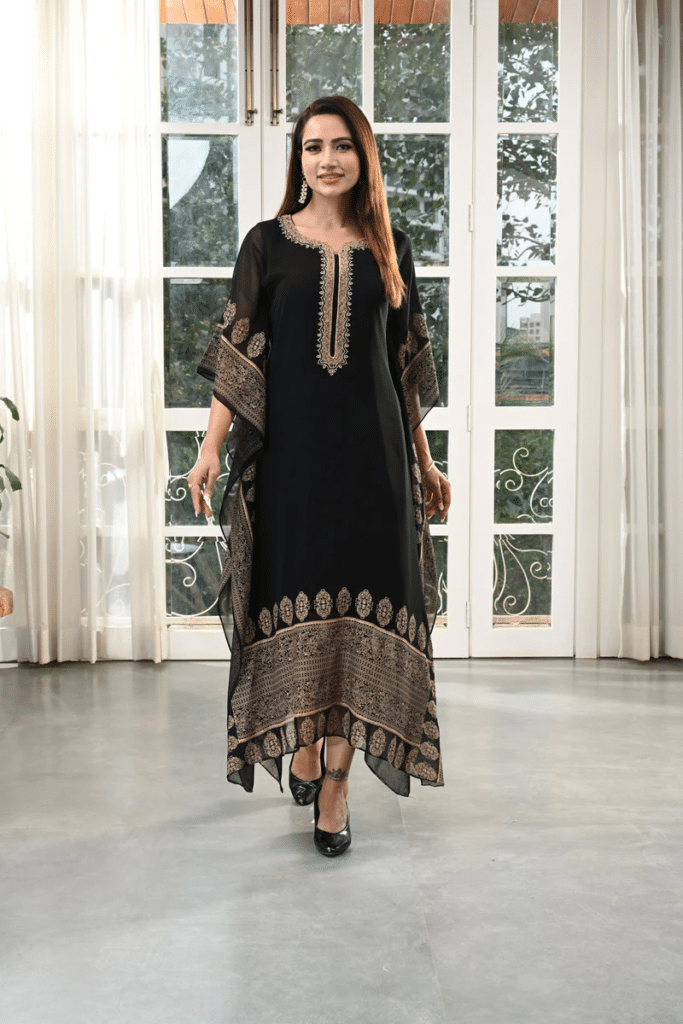
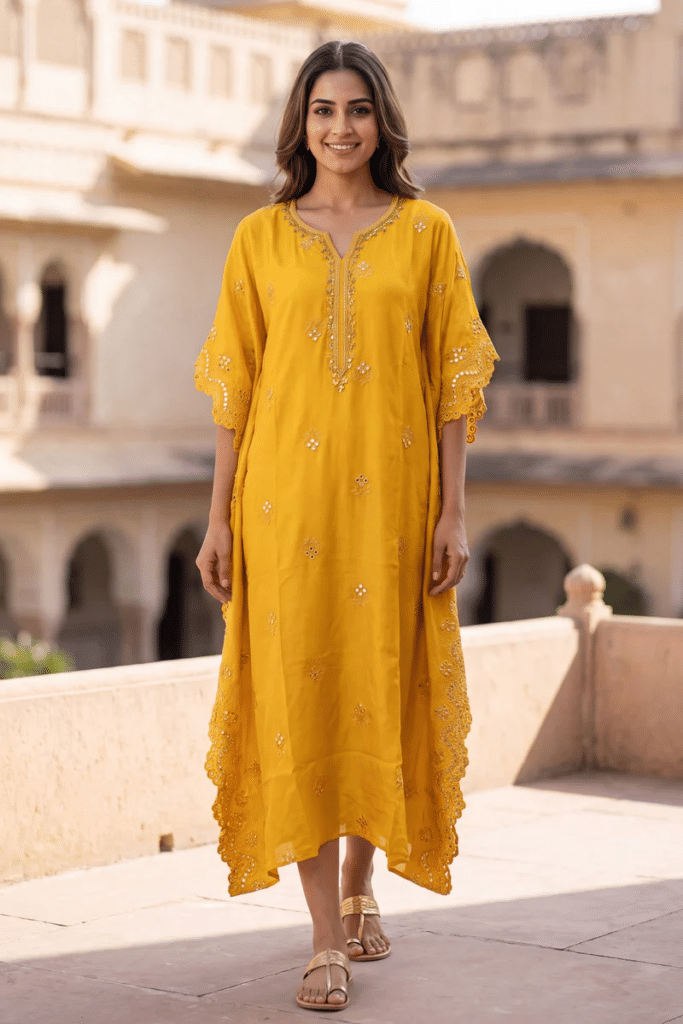
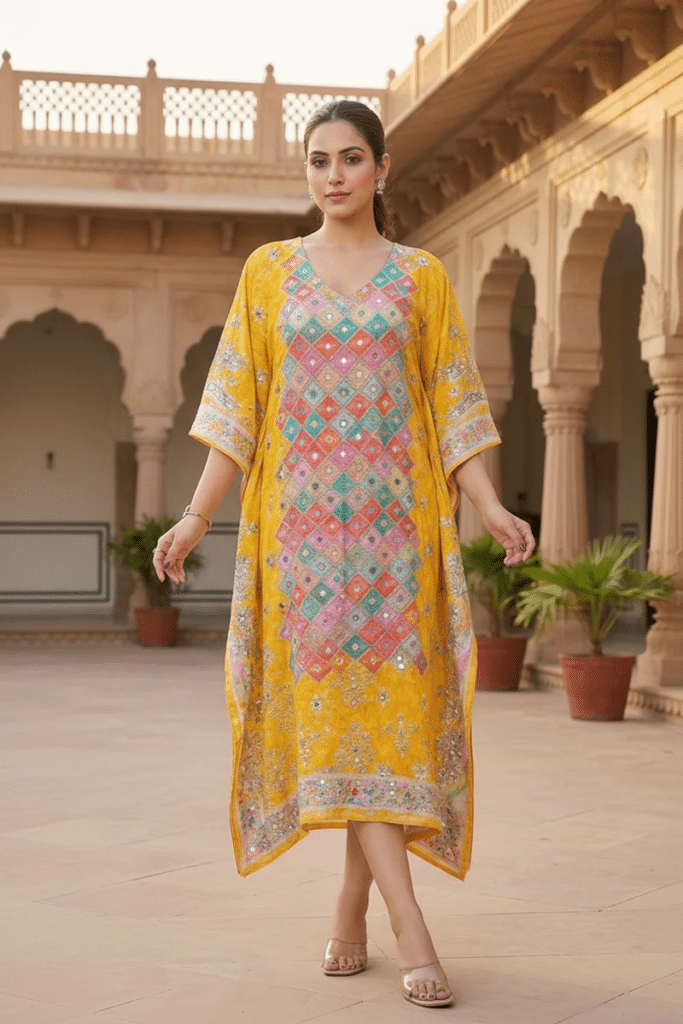
For something festive and statement-making, the Gold Hand Embroidery Black Kaftan and the Gold Hand Embroidery Mirror Work Yellow Kaftan both bring the kind of detailing that works beautifully for weddings and festive dinners. If you want something long and dramatic for evening events, the Midnight Blue Chinon Silk Long Kaftan Dress and the Multicolor Viscose Long Kaftan with Mirror Work Embroidery strike a nice balance between elegance and comfort.
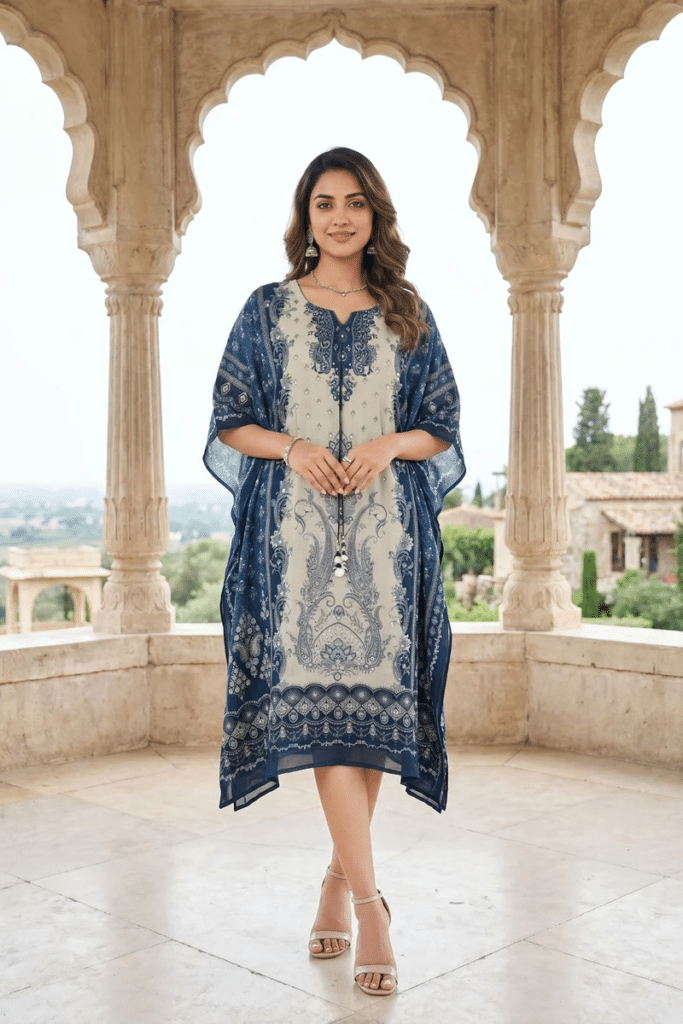
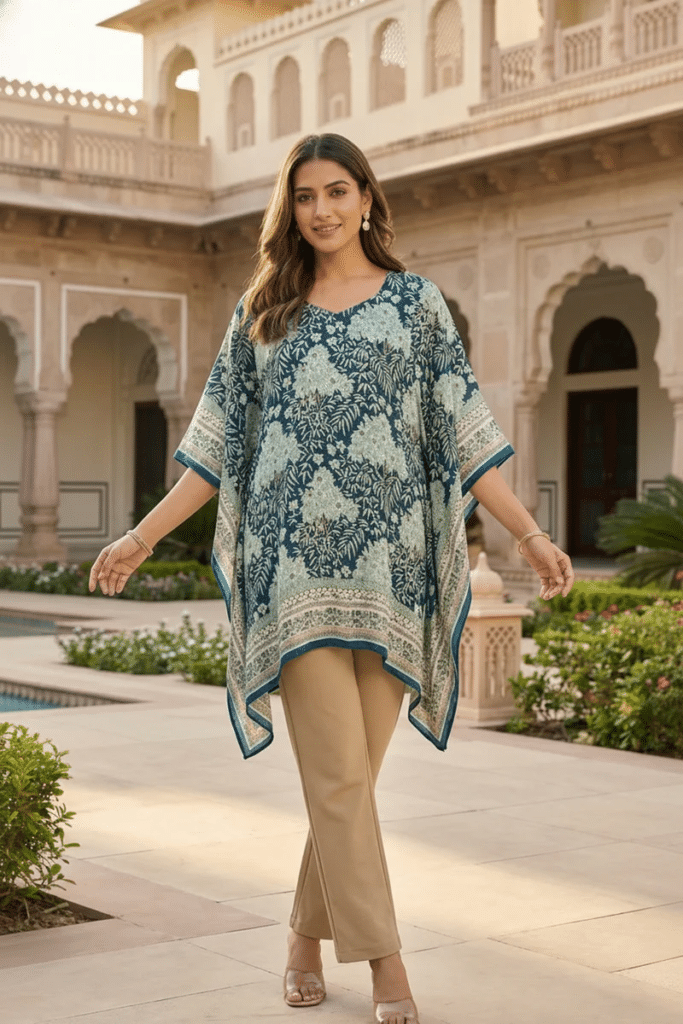
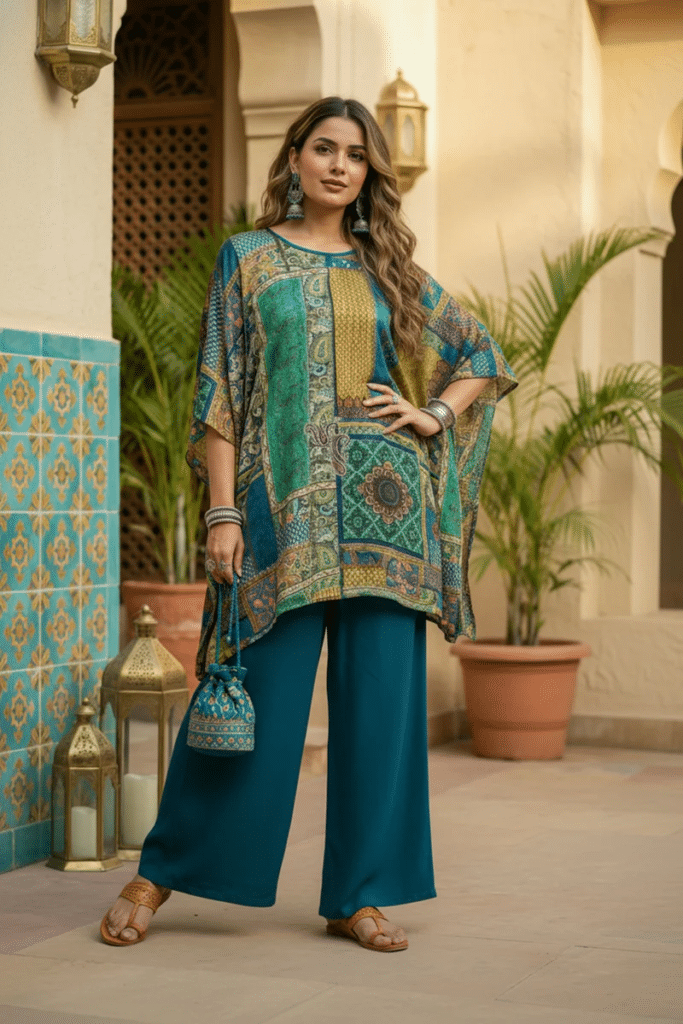
For everyday ease, the Blue Printed Viscose Short Kaftan and the Peacock Blue Printed Kaftan are relaxed enough for brunches, travel days, or just lounging at home without looking like loungewear.
👉 Browse the full Freyaa Kaftan Collection
A kaftan, at the end of the day, isn’t really about the garment itself — it’s about giving yourself permission to feel put-together without effort being the price of entry. And in a life that often asks women to hold too many roles at once, that kind of ease is worth more than we usually admit.
What is a kaftan exactly?
A kaftan is a loose, flowing dress-style garment that slips on easily and drapes from the shoulders without a fitted waist, worn across cultures for centuries as both everyday and ceremonial clothing.
Is a caftan different from a kaftan?
No — they’re the same garment. “Caftan” is the more common spelling in North America, while “kaftan” is used more widely elsewhere.
Can a kaftan be worn for festive or wedding occasions?
Yes, especially embroidered, mirror-work, or silk kaftans, which are elegant enough for parties, festive dinners, and wedding-adjacent functions while still being far more comfortable than heavily structured outfits.
How do I pick the right kaftan size?
Because kaftans have a relaxed, flowing fit, most styles are forgiving across body types. It still helps to check the specific size chart on each product page, particularly for embroidered or fitted-neckline styles.
