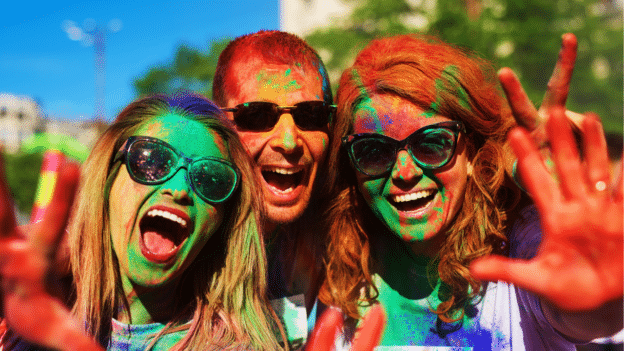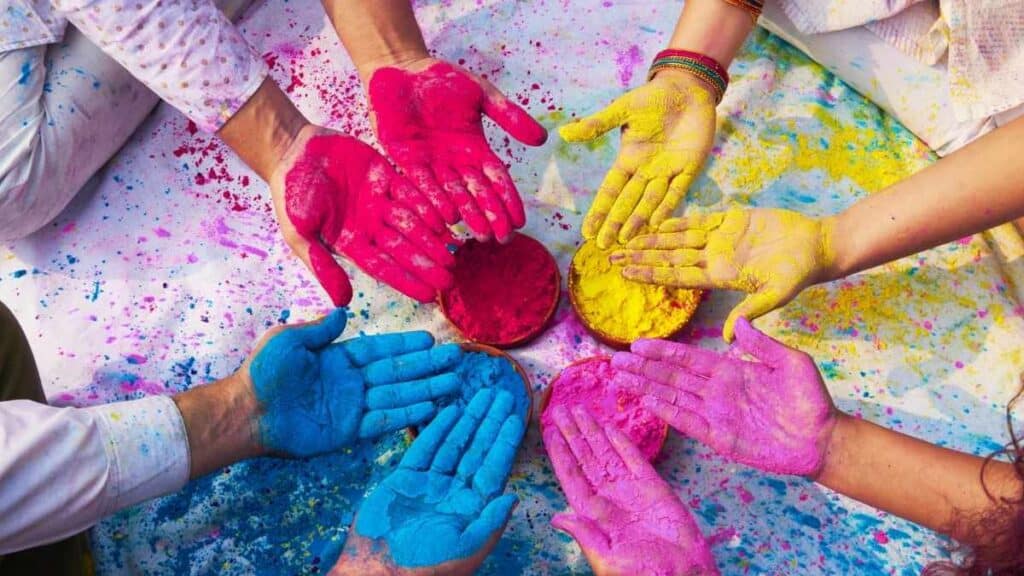
Holi is one of the most vibrant and widely celebrated festivals of India, popularly known as the Festival of Colors. Observed at the arrival of spring, Holi symbolizes renewal, joy, and the triumph of good over evil. Rooted in ancient Hindu traditions, the festival marks the end of winter and the beginning of a season associated with growth, positivity, and new beginnings.
The spiritual meaning of Holi comes from Hindu mythology, particularly the story of Prahlad and Holika, which represents the victory of devotion and righteousness over arrogance and evil. This victory is commemorated through Holika Dahan, a ceremonial bonfire lit on the eve of Holi, symbolizing the burning away of negativity and past grievances.
The following day, known as Rangwali Holi, is celebrated with colors, music, dance, and festive foods. People smear each other with vibrant colors, exchange greetings, and come together in a spirit of equality and joy. During Holi, social boundaries dissolve — age, status, and background fade as communities celebrate together.
Holi is primarily observed by Hindus across India, Nepal, and other South Asian regions, but today it is celebrated worldwide in countries such as the USA, UK, Canada, Australia, and the Middle East. In many places, it has become a cultural festival that welcomes people of all backgrounds.
When Is Holi Celebrated in 2026?
Holi is celebrated on the full moon day (Purnima) of the Hindu lunar month of Phalguna, which typically falls in February or March.
Holi In India 2026 Dates
- Day 1: Holika Dahan will be celebrated on March 03 , 2026 in India – The night before Holi, marked by ceremonial bonfires.
- Day 2: Rangwali Holi will be celebrated on March 04, 2026 in India – The main festival of colors, music, and celebration.The exact dates vary each year based on the lunar calendar, making Holi a movable festival rather than a fixed-date event.
Table of Contents
Holi In USA, Canada, Australia, New Zealand, UK, UAE, Singapore 2026 Dates
- Day 1: Holika Dahan will be celebrated on March 02 , 2026 in USA
- Day 2: Rangwali Holi will be celebrated on March 03, 2026 in USA
- Day 1: Holika Dahan will be celebrated on March 02 , 2026 in Canada
- Day 2: Rangwali Holi will be celebrated on March 03, 2026 in Canada
- Day 1: Holika Dahan will be celebrated on March 03 , 2026 in Australia / New Zealand
- Day 2: Rangwali Holi will be celebrated on March 04, 2026 in Australia / New Zealand
- Day 1: Holika Dahan will be celebrated on March 02 , 2026 in UK
- Day 2: Rangwali Holi will be celebrated on March 03, 2026 in UK
- Day 1: Holika Dahan will be celebrated on March 02 , 2026 in UAE
- Day 2: Rangwali Holi will be celebrated on March 03, 2026 in UAE
- Day 1: Holika Dahan will be celebrated on March 03 , 2026 in Singapore
- Day 2: Rangwali Holi will be celebrated on March 04, 2026 in Singapore
Why Holi Dates Change Every Year?
Holi is celebrated based on the Hindu lunar calendar, not the Gregorian calendar.
It falls on the Full Moon (Purnima) of Phalguna month, which usually occurs in February or March.
Since lunar months are shorter than solar months:
– Holi’s date shifts every year
– Timing depends on moon position and local sunrise
– Ritual timings (like Holika Dahan) are calculated using planetary positions
How is Holika Dahan Muhurat Decided?
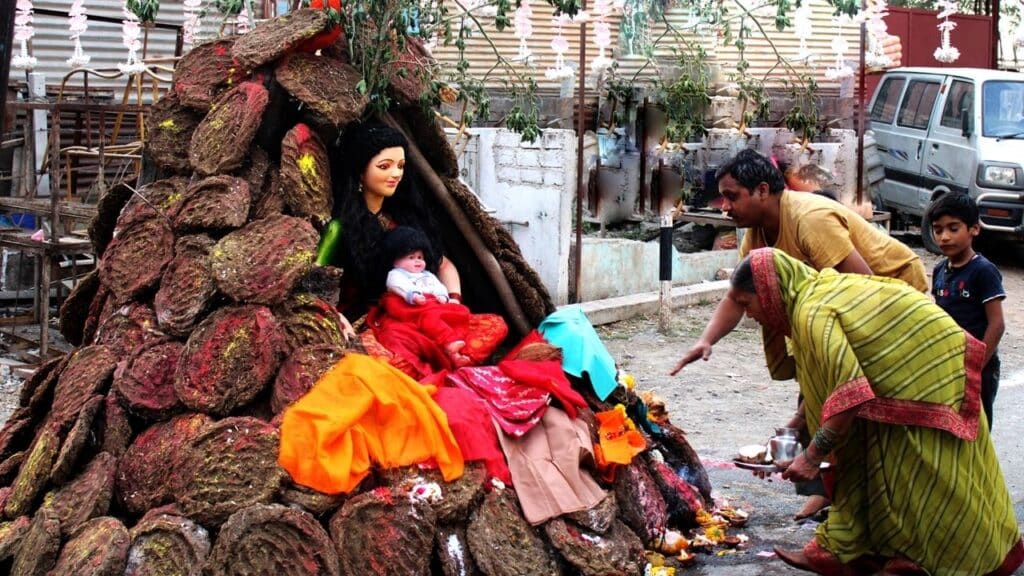
The timing of Holika Dahan is decided based on Purnima Tithi, Pradosh Kaal, and the presence of Bhadra, as per Hindu scriptures.
– First preference is given to performing Holika Dahan during Pradosh Kaal, provided Purnima is active and Bhadra has ended.
– If Bhadra continues during Pradosh but ends before midnight, Holika Dahan should be done after Bhadra ends.
– If Bhadra ends after midnight, then Holika Dahan may be performed during Bhadra Punchha, but never during Bhadra Mukha.
– Bhadra Mukha is strictly inauspicious, and performing Holika Dahan during this period is believed to bring misfortune to individuals and even society at large.
– If neither Pradosh nor Bhadra Punchha is available, Holika Dahan should be done after Pradosh.
Holi Other Names & Regional Identities
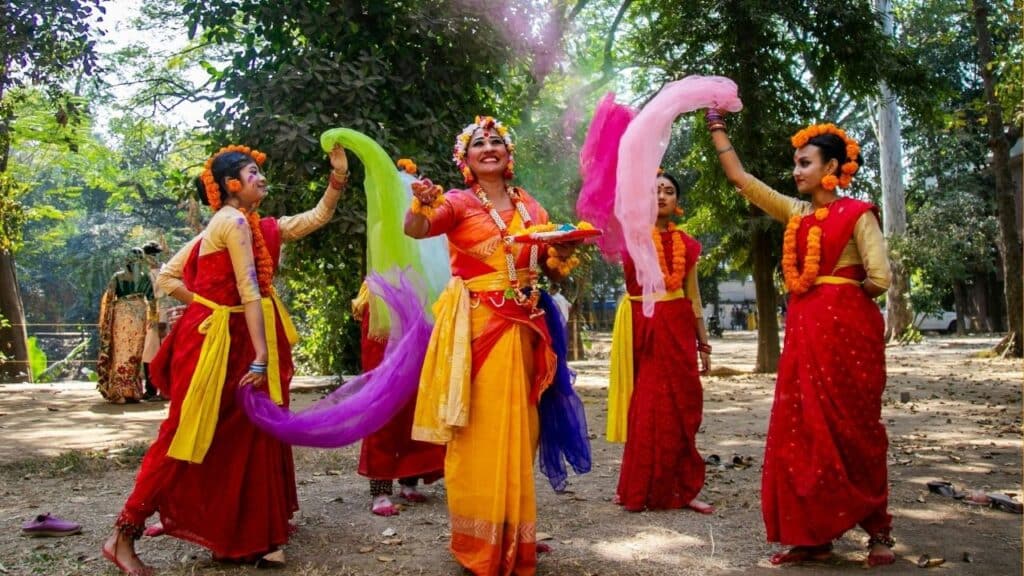
These are general or widely used names for Holi:
- Holi — Standard name in Hindi, English, Sanskrit and many languages.
- Dhulandi / Dhuliandi — Refers to the festival of throwing dry color.
- Rangawali Holi / Festival of Colours — Name used to emphasize the color-play aspect.
North & East India
- Phagua / Fagua / Phagwa — Popular in Bihar, Jharkhand & Eastern UP (Bhojpuri region).
- Dol Jatra / Dol Yatra / Dol Purnima — West Bengal & Bangladesh (associates with swing festival).
- Fag (Phag) or Phaguwa — Alternative rustic names in several Hindi-Bhojpuri speaking areas.
- Chharandi — A local name in some parts of Rajasthan.
South India
- Kama Dahanam / Kamuni Punnami — South Indian name emphasizing the burning of Kamadeva; used in Andhra Pradesh and Telangana.
- Jajiri / Kamavilas / Kamuni Panduga — Telugu region variants tied to local folk traditions.
Other Regional / Cultural Variants
- Hola Mohalla — Celebrated by Sikhs in Punjab, connected to martial displays and Sikh cultural expressions (around the Holi period).
- Lathmar Holi — Unique form of Holi celebrated in Barsana & Nandgaon (distinct event name tied to local tradition).
- Kumaoni Holi / Khadi Holi / Mahila Holi / Baithaki Holi — Names tied to specific forms of Holi celebrations in the Kumaon region of Uttarakhand.
Diaspora / International Naming
- Phagwah / Phagwa — Caribbean Hindustani communities (e.g., Trinidad & Tobago, Guyana, Suriname, Fiji).
- International Holi / Colour Festivals — In many Western and multicultural contexts (USA, UK, Australia, Europe), the festival is also popularly branded simply as Holi Festival of Colours or Colour Festival, often with commercial event names (e.g., Holi Fest, Festival of Colours).

The Origins, History, and Legends of Holi
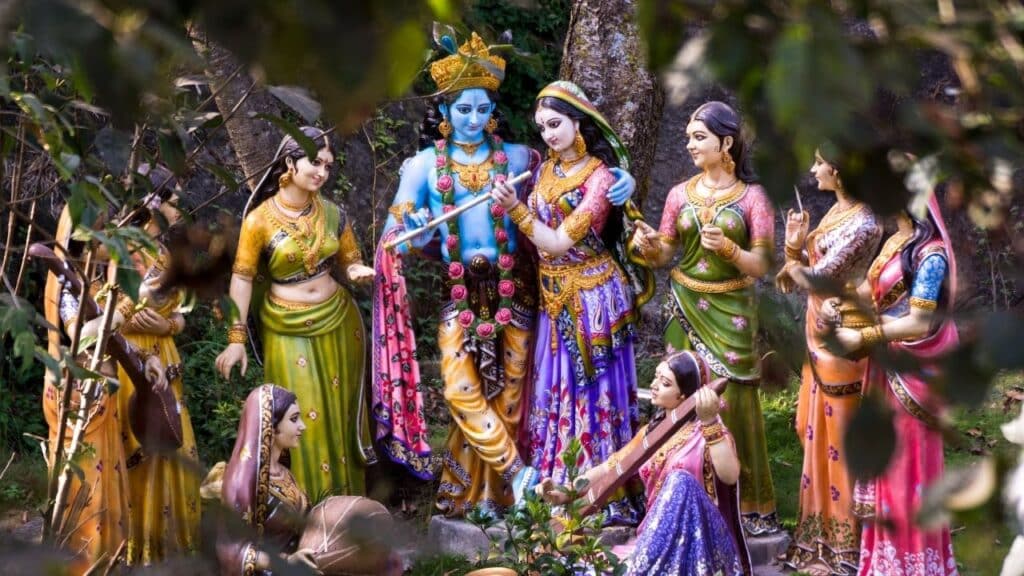
Holi is one of the oldest festivals of India, with its origins deeply rooted in ancient Hindu scriptures and traditions. The festival finds mention in several classical texts such as the Puranas, Harivamsa, and Narada Purana, which describe Holi as a celebration of devotion, righteousness, and the victory of good over evil. Historically, Holi also marked the arrival of spring and the beginning of a new agricultural season, making it both a spiritual and seasonal festival.
The most widely known legend associated with Holi is the story of Prahlad and Holika. Prahlad, a devoted follower of Lord Vishnu, was persecuted by his father, the demon king Hiranyakashipu, who demanded to be worshipped as a god. When all attempts to kill Prahlad failed, Holika—who had a boon making her immune to fire—sat with him in a blazing pyre. By divine grace, Prahlad emerged unharmed while Holika was burnt to ashes. This event is commemorated as Holika Dahan, symbolizing the triumph of faith, truth, and goodness over evil.
Another important legend associated with Holi is the story of Lord Krishna and Radha, where Krishna playfully applied color to Radha, giving rise to the tradition of playing with colors. This form of Holi is especially celebrated in Vrindavan, Mathura, and Barsana, where the festival carries deep devotional significance.
Scripturally, Holi represents purification, renewal, and the destruction of negativity. Over centuries, it evolved from a religious observance into a social and cultural festival that promotes unity, joy, forgiveness, and harmony. Today, Holi continues to symbolize the timeless message that good ultimately prevails over evil, and life is meant to be celebrated with color, compassion, and togetherness.
Holi: Cultural and Spiritual Significance
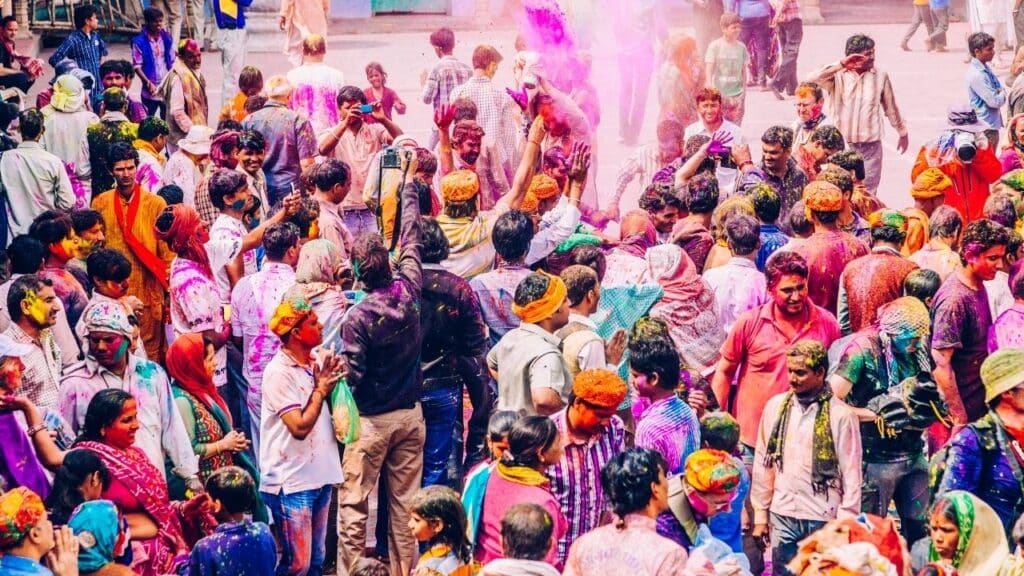
Holi is a festival that symbolizes joy, renewal, and the triumph of good over evil. Spiritually, it represents the burning away of negativity and ego through the ritual of Holika Dahan, encouraging inner purification and fresh beginnings.
Culturally, Holi brings people together beyond social boundaries, promoting unity, forgiveness, and harmony. The vibrant colors reflect happiness, equality, and the celebration of life itself. Marking the arrival of spring, Holi also signifies growth, abundance, and hope. More than a religious festival, Holi is a universal celebration of togetherness, positivity, and human connection.
Holi Prayers and Religious Observances
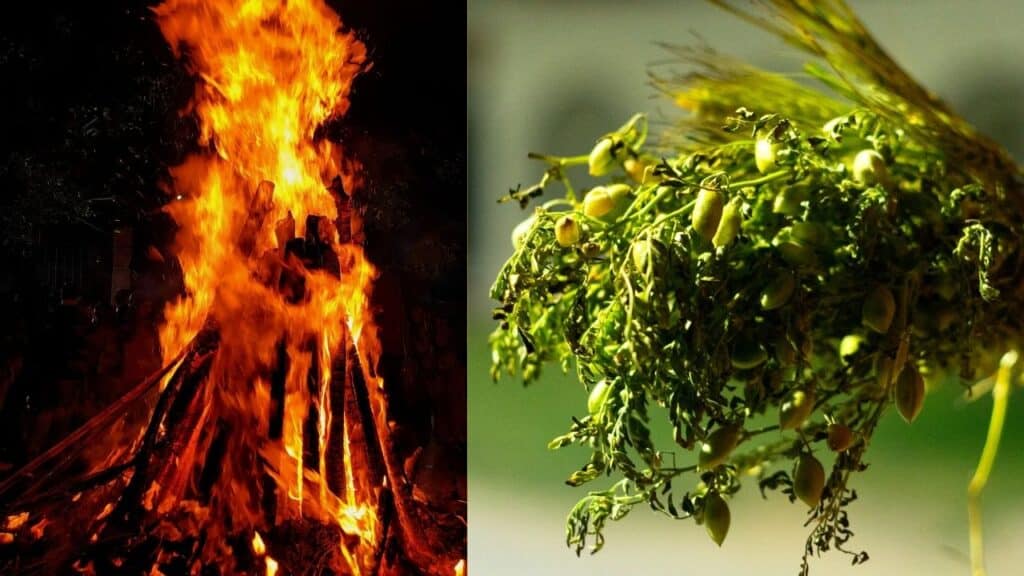
Holi prayers and rituals are performed to seek spiritual purification, protection, and blessings for prosperity and harmony. The religious observances begin with Holika Dahan, where devotees offer prayers to symbolically burn negativity, ego, and past grievances. This ritual represents the victory of devotion and righteousness over evil and is performed during the auspicious Pradosh Kaal as per Hindu scriptures.
During Holika Dahan, people offer grains, coconut, and other sacred items into the fire while chanting traditional mantras seeking peace, protection, and well-being for their family and community. The prayers are meant to invoke divine energy and cleanse the surroundings of negative influences.
On the following day, Rangwali Holi, prayers are offered to Lord Krishna and Radha, especially in regions like Mathura and Vrindavan. Devotees seek blessings for happiness, love, and harmony. While many families perform simple prayers at home, temples conduct special pujas, bhajans, and community celebrations.
Whether observed at home or in temples, Holi rituals emphasize devotion, gratitude, forgiveness, and spiritual renewal, making the festival both joyous and deeply meaningful.

How Holi Is Celebrated Across India
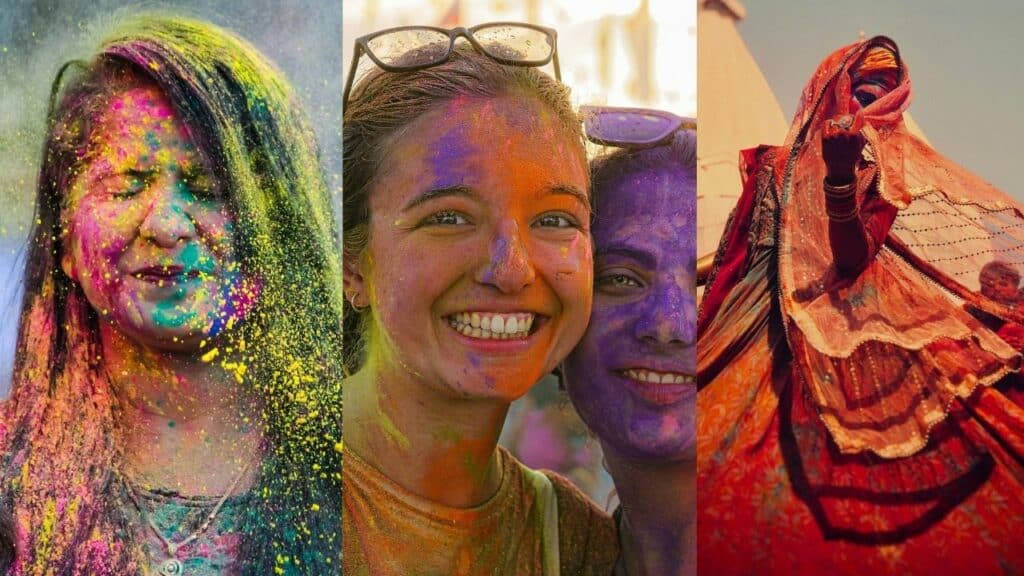
While the essence of Holi remains consistent, its expressions vary widely across regions.
In North India, Holi is loud, exuberant, and communal, with streets turning into open celebrations filled with music, dance, and color.
In Vrindavan and Mathura, Holi is deeply connected to the life of Lord Krishna and spans multiple days, featuring temple rituals, devotional songs, and unique traditions such as Lathmar Holi.
In Western India, Holi often includes folk performances, community feasts, and cultural programs.
In Eastern India, especially in West Bengal, Holi coincides with Dol Jatra, marked by devotional singing and processions.
Despite regional variations, food, music, and shared participation remain central everywhere.
Participation Across Religions in India
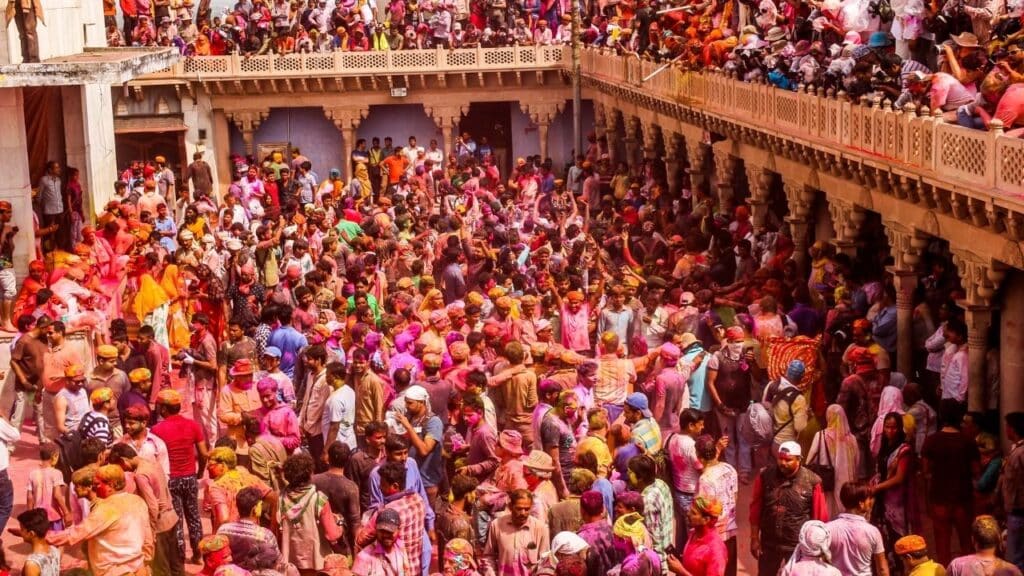
Holi is celebrated not only by Hindus but by people of many religions across India, making it a truly inclusive cultural festival. Over time, Holi has evolved beyond religious boundaries and become a shared celebration of joy, unity, and togetherness.
People from different faiths—Hindus, Muslims, Sikhs, Christians, and others—participate in Holi festivities by playing with colors, exchanging sweets, and joining community gatherings.
The festival promotes harmony and social bonding, as neighborhoods come together to celebrate without distinction of caste, creed, or belief. In many regions, interfaith participation is a natural part of Holi, reflecting India’s pluralistic spirit and cultural diversity. By encouraging forgiveness, friendship, and shared happiness, Holi serves as a reminder that festivals can unite people through common values of joy, respect, and mutual celebration.
How Holi Is Celebrated Outside India
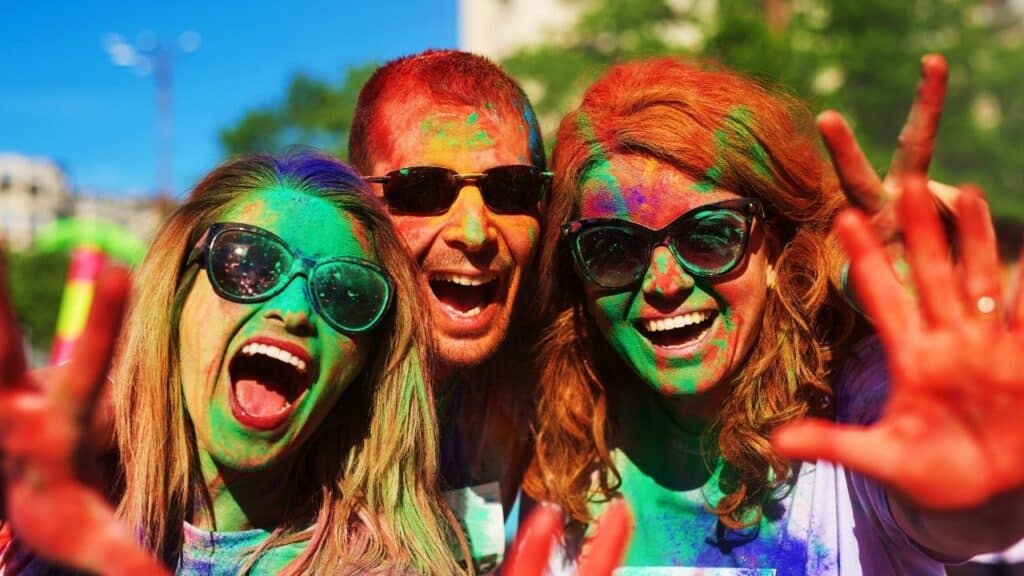
Indian diaspora communities across the United States, Canada, the UK, Australia, the Middle East, and beyond celebrate Holi through:
Community events and public color festivals
Temple gatherings and cultural programs
School and university celebrations
Local “Festival of Colors” events inspired by Holi
These celebrations help second-generation Indians stay connected to their cultural roots while introducing non-Indians to Indian traditions.
Find Holi Events Near You
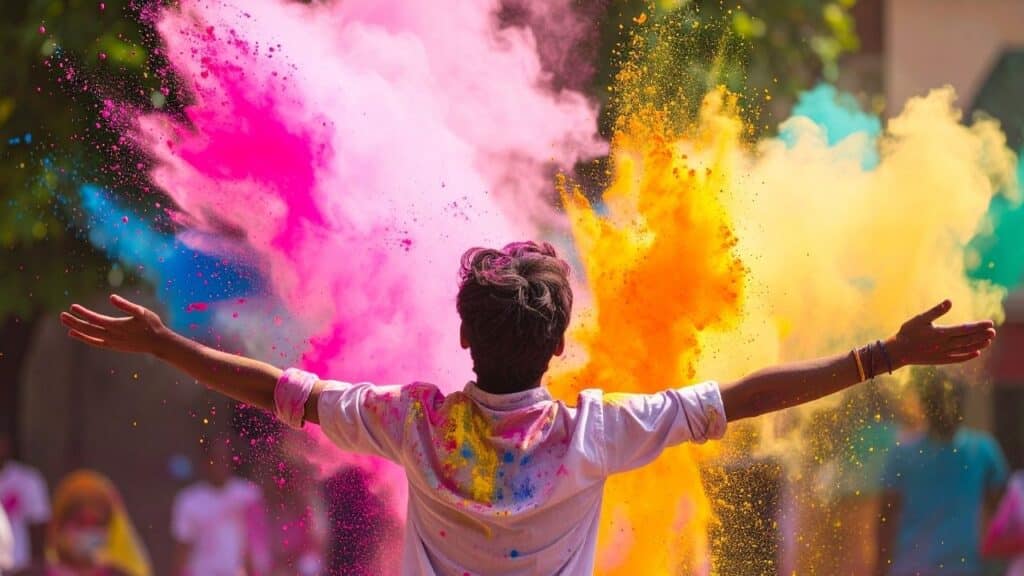
Looking to experience Holi celebrations in your city or nearby?
Explore curated Holi events, cultural programs, and public celebrations happening across different locations.
View upcoming Holi events here:
https://indiancommunity.events/location/?ic_category=holi-festival
Holi Gifting Traditions
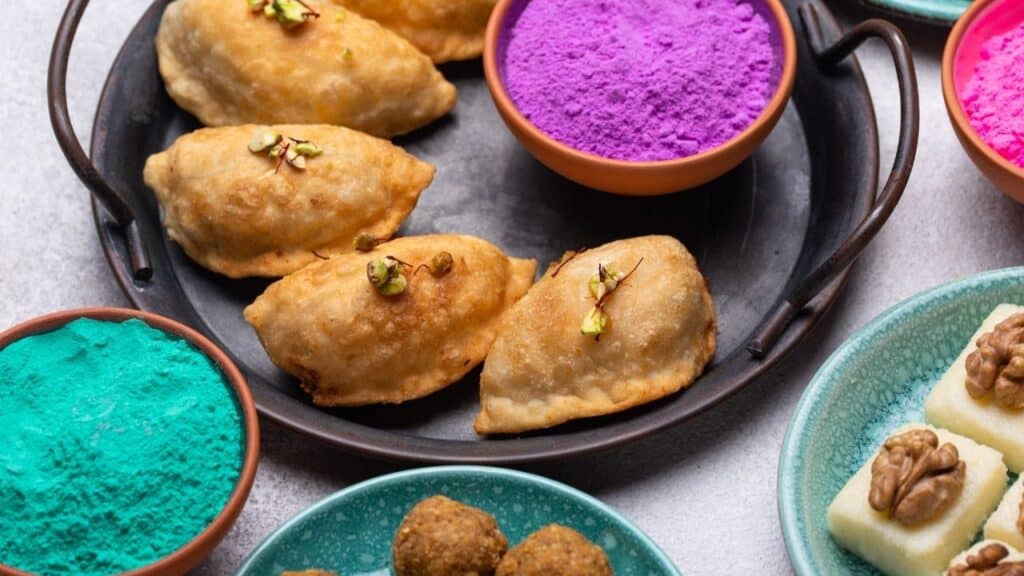
Holi gifting is a joyful tradition that symbolizes love, harmony, and new beginnings. People exchange sweets, dry fruits, natural colors, and festive treats to share happiness and strengthen relationships. The tradition reflects the spirit of forgiveness and togetherness that Holi represents. Today, eco-friendly and thoughtful gifts have become popular, making Holi gifting a meaningful way to spread joy and positivity.

Traditional Holi Foods and Sweets
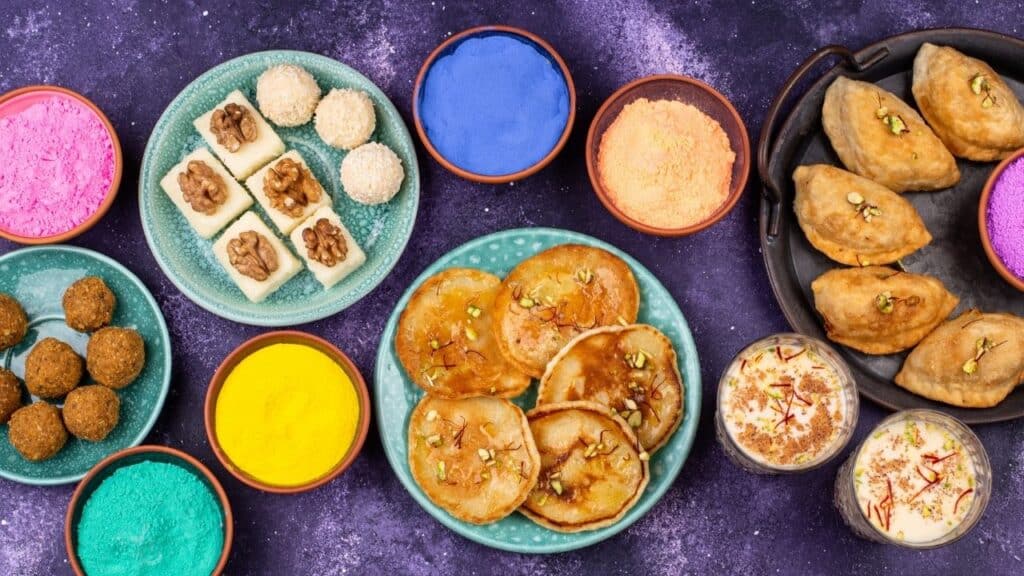
Food plays an essential role in Holi celebrations, symbolizing indulgence, hospitality, and togetherness.
Common Holi delicacies include:
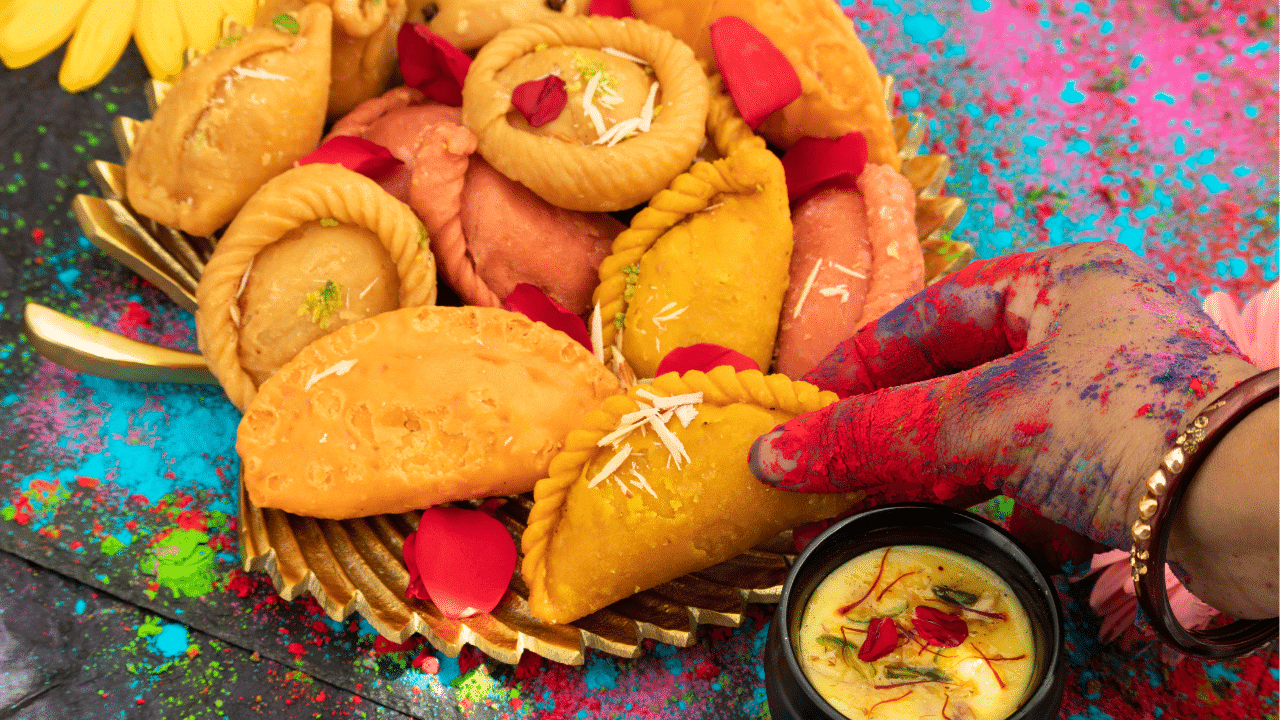
- Gujiya (sweet dumplings filled with khoya and nuts)
- Thandai (a spiced milk-based drink, often infused with almonds and saffron)
- Malpua, dahi bhalla, and regional festive snacks
These dishes are often prepared in advance and shared freely with neighbors, friends, and guests.

Holi: Music, Art, and Cultural Expression
Music, art, and performance play a central role in Holi celebrations, bringing energy and vibrancy to the festival. Traditional Holi songs, folk music, and devotional bhajans fill the air, especially in regions like Mathura, Vrindavan, and Rajasthan, where music is deeply tied to cultural expression. Over time, Bollywood has also played a major role in popularizing Holi through iconic songs that capture the festival’s playful and joyous spirit.
Dance is another key element of Holi, with people gathering in groups to celebrate through spontaneous movement, dhol beats, and folk performances. The use of colors itself is a form of artistic expression, transforming streets and communities into living canvases of celebration. In modern times, Holi has also influenced fashion, visual arts, and pop culture, with color-themed events, music festivals, and performances held across India and around the world.
Together, music, art, and celebration make Holi a powerful expression of creativity, freedom, and cultural unity.
Holi in the Modern World
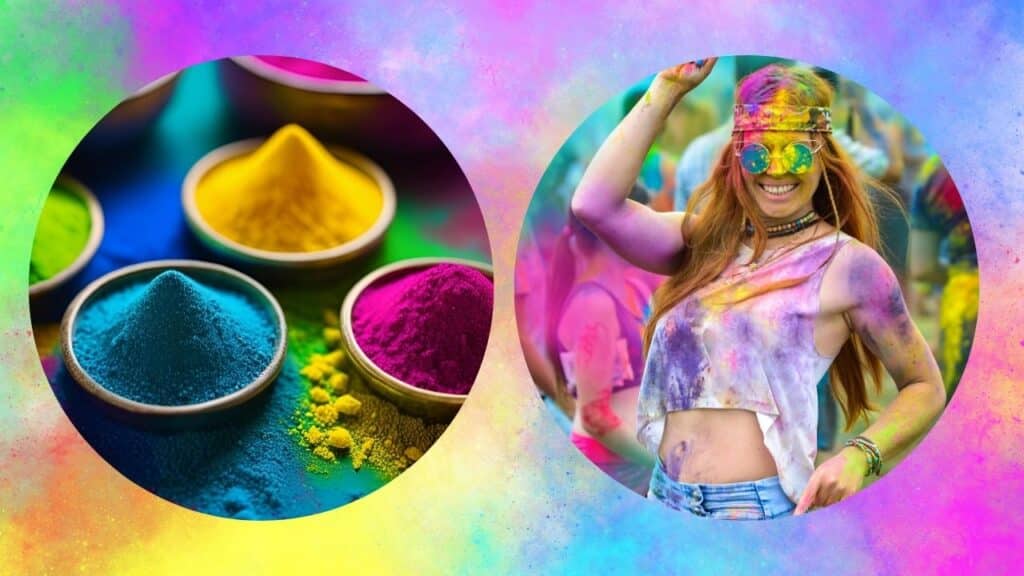
In recent years, Holi has evolved alongside growing awareness of sustainability and safety. Many communities now emphasize:
- Natural and eco-friendly colors
- Water conservation
- Skin-safe and environment-conscious practices
This evolution reflects Holi’s adaptability—honoring tradition while responding to modern realities.
Holi’s Modern Relevance and Cultural Continuity
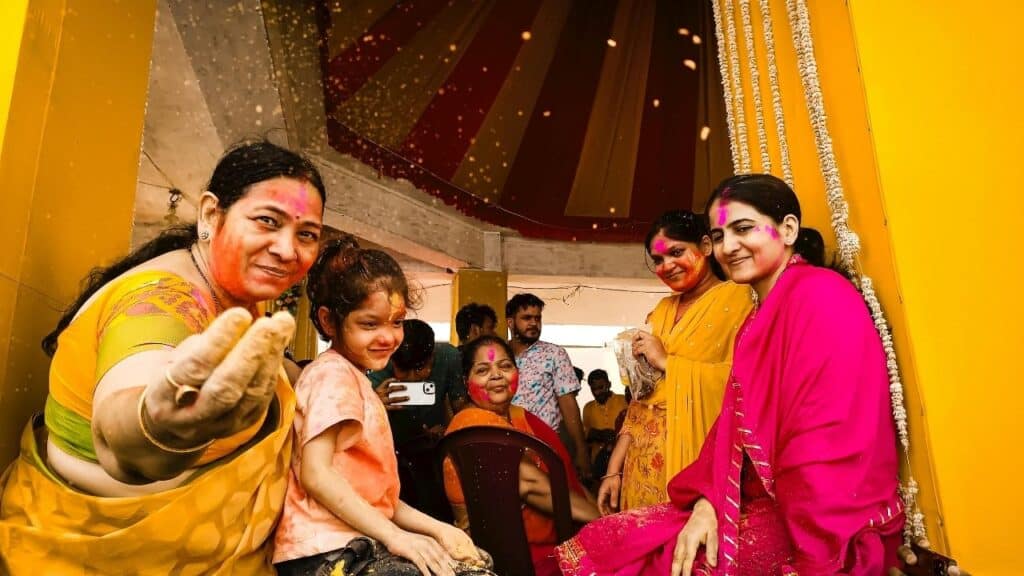
In today’s fast-changing world, Holi continues to hold deep relevance as a festival that promotes unity, joy, and emotional connection. While lifestyles and celebrations have evolved, the core spirit of Holi remains unchanged—bringing people together, encouraging forgiveness, and celebrating life’s vibrancy. Modern Holi celebrations now blend tradition with contemporary expressions, from eco-friendly colors to organized cultural events and global festivals.
Holi also plays an important role in preserving cultural continuity. Across generations and geographies, the festival connects people to their roots while allowing space for new interpretations. For Indian communities living abroad, Holi serves as a powerful link to heritage, helping pass traditions, values, and stories to younger generations.
Beyond colors and festivities, Holi carries a timeless message of harmony, renewal, and togetherness. In an increasingly digital and divided world, the festival reminds us of the importance of human connection, shared joy, and cultural unity. Holi’s enduring relevance lies in its ability to adapt while staying true to its essence—celebrating life, diversity, and the triumph of positivity.