


Holi, India’s most vibrant and joyous festival, celebrates the triumph of good over evil, the divine love of Radha and Krishna, and the arrival of spring. In 2026, this ancient Hindu tradition will once again bring communities together with colorful celebrations, sacred rituals, and festive gatherings that transcend religious and cultural boundaries.
Quick Summary:
Holi 2026 falls on March 3-4, with Holika Dahan on March 3 (6:23 PM-8:51 PM) and Rangwali Holi on March 4. The festival celebrates Phalguna Purnima (full moon), marking spring’s arrival and the victory of devotion over evil.
Table of Contents
Holi 2026 Date: When Is the Festival of Colors?
Holi 2026 will be celebrated on the following dates according to the Hindu lunar calendar:
Holika Dahan (Choti Holi): Tuesday, March 3, 2026
Rangwali Holi (Dhulandi/Dhuleti): Wednesday, March 4, 2026
The festival occurs on Phalguna Purnima—the full moon day of the Hindu month Phalguna. Since the Hindu calendar is lunisolar, Holi dates vary each year on the Gregorian calendar, typically falling in March or late February.
In 2025, Holi was celebrated on March 13-14, while in 2026 it arrives earlier on March 3-4.
Holika Dahan 2026 Muhurat Timings
The auspicious period for performing Holika Dahan rituals in 2026:
Holika Dahan Muhurat: March 3, 2026, from 6:23 PM to 8:51 PM
Duration: 2 hours and 28 minutes
Purnima Tithi (Full Moon Period):
- Begins: 5:55 PM, March 2, 2026
- Ends: 5:07 PM, March 3, 2026
Inauspicious Timings (Bhadra Period to Avoid):
- Bhadra Punchha: 1:25 AM to 2:35 AM
- Bhadra Mukha: 2:35 AM to 4:30 AM
Devotees should perform Holika Dahan during the specified muhurat while avoiding Bhadra periods, which are considered inauspicious for religious ceremonies.
What Is Holi? Understanding India’s Festival of Colors
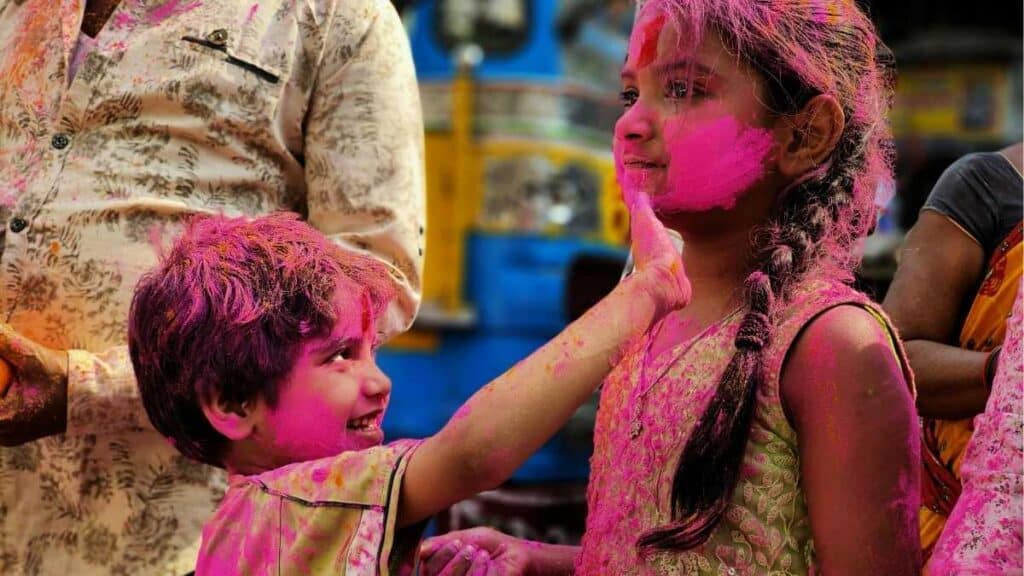
Holi is a major Hindu festival celebrated as the Festival of Colors, Love, and Spring. Known by various names across India—including Rangwali Holi, Dhulandi, Dhuleti, Dol Jatra, and Phagwah—this ancient tradition has been observed for centuries, with references in Sanskrit texts dating back to the 4th century CE.
The Three-Fold Significance of Holi
1. Triumph of Good Over Evil
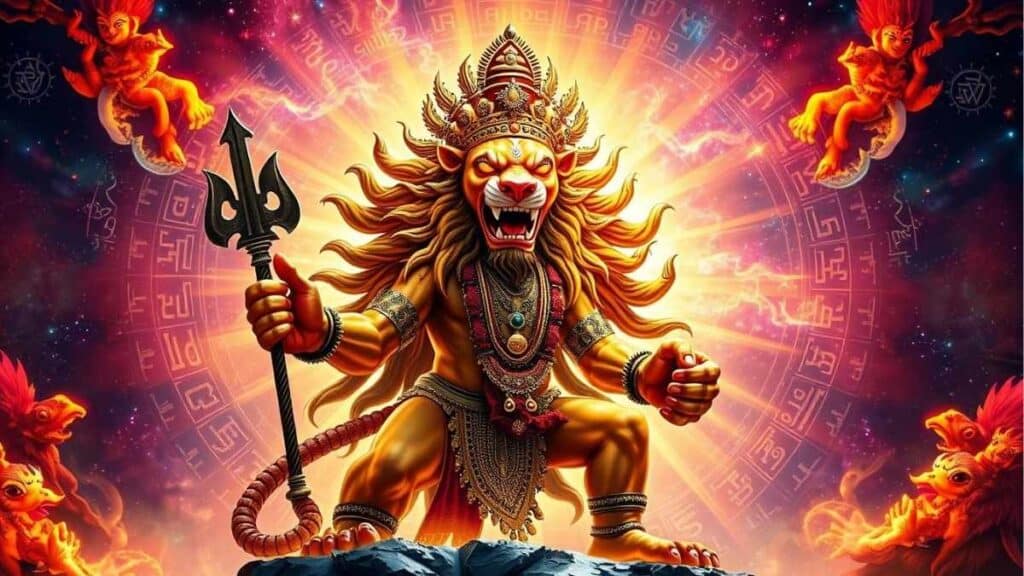
Holi commemorates the victory of devotee Prahlad over the demoness Holika and Lord Vishnu’s Narasimha avatar defeating the tyrant Hiranyakashipu.
2. Celebration of Divine Love
The festival honors the eternal love between Radha and Krishna, particularly celebrated in the Braj region where they spent their youth.
3. Arrival of Spring
Holi marks winter’s end and spring’s beginning, celebrating nature’s renewal, agricultural harvests, and the blossoming of flowers.
The Legend of Prahlad and Holika: Victory of Devotion
The most widely known legend behind Holi comes from the Bhagavata Purana, explaining why the festival celebrates the triumph of faith over tyranny.
King Hiranyakashipu’s Arrogance
King Hiranyakashipu, ruler of the Asuras (demons), received a powerful boon granting him near-immortality. He could not be killed:
- By human or animal
- Indoors or outdoors
- Day or night
- With projectile or handheld weapons
- On land, water, or in air
Drunk with power, Hiranyakashipu declared himself god and demanded everyone worship him, torturing those who refused.
Prahlad’s Unwavering Faith
Hiranyakashipu’s own son, Prahlad, remained devoted to Lord Vishnu despite his father’s commands. Enraged, the king subjected Prahlad to numerous cruel punishments—poison, being trampled by elephants, thrown from cliffs—but the boy survived each attempt through divine protection.
Holika’s Failed Deception
Finally, Hiranyakashipu enlisted his sister Holika, who possessed a magical cloak making her immune to fire. She tricked Prahlad into sitting on a burning pyre with her, intending to burn him alive while remaining safe herself.
However, her evil intentions caused the magic to reverse. The protective cloak flew from Holika and wrapped around Prahlad, who emerged unharmed while continuously chanting Vishnu’s name. Holika burned to death—a consequence of using her divine gift for evil purposes.
Lord Narasimha’s Divine Justice
Witnessing his devotee’s suffering, Lord Vishnu appeared as Narasimha—half-man, half-lion—at dusk (neither day nor night), caught Hiranyakashipu at a doorstep (neither indoors nor outdoors), placed him on his lap (neither land, water, nor air), and killed him with his claws (neither projectile nor handheld weapon).
This legend is why bonfires are lit during Holika Dahan, symbolizing the burning away of evil and the protection of those with true devotion.
The Legend of Radha and Krishna: Colors of Divine Love
In the Braj region—encompassing Mathura, Vrindavan, Nandgaon, Barsana, and Gokula—Holi celebrates the playful, divine love between Radha and Krishna.
Krishna’s Childhood Insecurity
According to legend, young Krishna worried that fair-skinned Radha wouldn’t accept him because of his dark complexion. His mother Yashoda, tired of his despair, suggested he approach Radha and ask her to color his face any shade she wished.
Radha lovingly colored Krishna’s face, and they became an eternal couple. This playful exchange of colors has been commemorated through Holi celebrations ever since, with the Garga Samhita being the first text to describe their romantic color play.
Celebration in Braj Region
The Braj region celebrates Holi with particular enthusiasm, extending festivities until Rang Panchami (five days after Purnima). These locations attract tourists worldwide who come to experience the authentic, devotion-filled Holi celebrations at Krishna’s birthplace.
The Radha-Krishna legend explains why Holi is fundamentally a festival of love, encouraging people to express affection, resolve conflicts, and strengthen relationships.
The Legend of Kama and Rati: Restoration of Love
In Shaivism and Shaktism traditions, Holi’s significance connects to Lord Shiva, Goddess Parvati, and Kamadeva (the god of love).
Shiva’s Meditation and Kama’s Sacrifice
Lord Shiva was lost in deep meditation and yoga, disconnected from the world. Goddess Parvati, wanting to bring him back to worldly life, sought help from Kamadeva on Vasant Panchami.
Kamadeva shot arrows of desire at Shiva. The yogi, disturbed from meditation, opened his third eye and incinerated Kama to ashes. This devastated both Kama’s wife Rati (Kamadevi) and Parvati.
Forty Days of Penance
Rati performed intense meditative penance for forty days. Moved by compassion and understanding her devotion, Shiva forgave Kamadeva and restored the god of love to life.
Celebrating Love’s Return
This restoration of the love god is celebrated on the 40th day after Vasant Panchami—which coincides with Holi. In South India particularly, this legend holds great significance, and the festival is sometimes called Kama Dahanam (burning of Kama), with colors played on Rangapanchami five days later.
How Holi Is Celebrated: Traditions and Rituals
Holi spans two days, each with distinct traditions and significance.
Day 1: Holika Dahan (Choti Holi) – March 3, 2026
Bonfire Ceremony
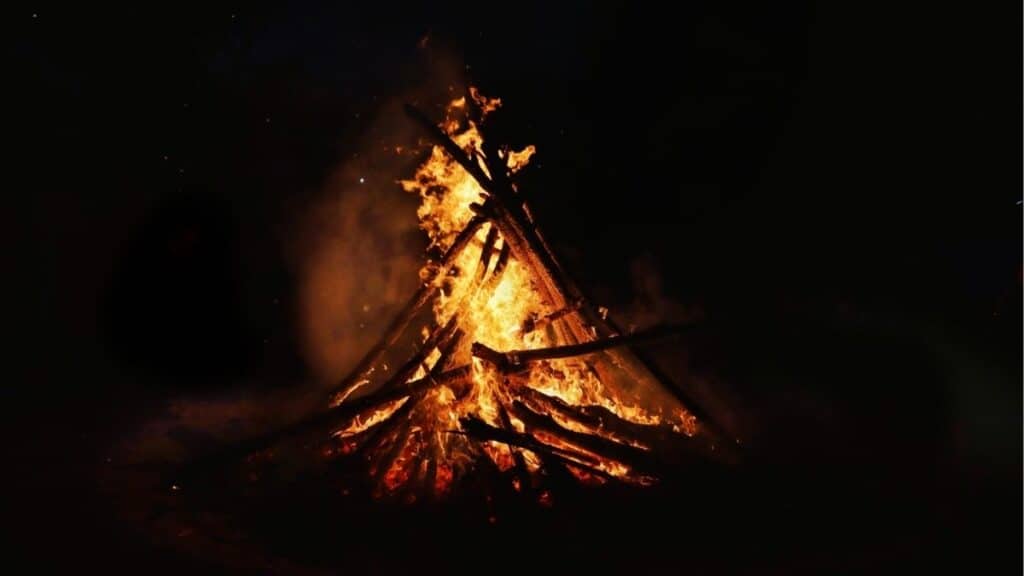
Communities gather at crossroads and public spaces where wooden pyres have been assembled days in advance. At the auspicious muhurat time (6:23 PM-8:51 PM in 2026), the bonfire is lit.
Rituals Performed:
- Offering prayers to Lord Narasimha, Prahlad, and Holika
- Circumambulating the fire three to five times
- Offering newly harvested crops, coconut, turmeric, and flowers
- Singing devotional songs and dancing
- Distributing roasted crops and grains as prasad
Symbolic Meaning
The bonfire represents burning away negativity, past sins, and evil influences, preparing for a fresh start with the arrival of spring.
Day 2: Rangwali Holi (Dhulandi) – March 4, 2026
Morning Color Celebrations
People wake early and begin playing with colors—gulal (colored powder) and colored water. In Northern India, celebrations are particularly exuberant:
Activities Include:
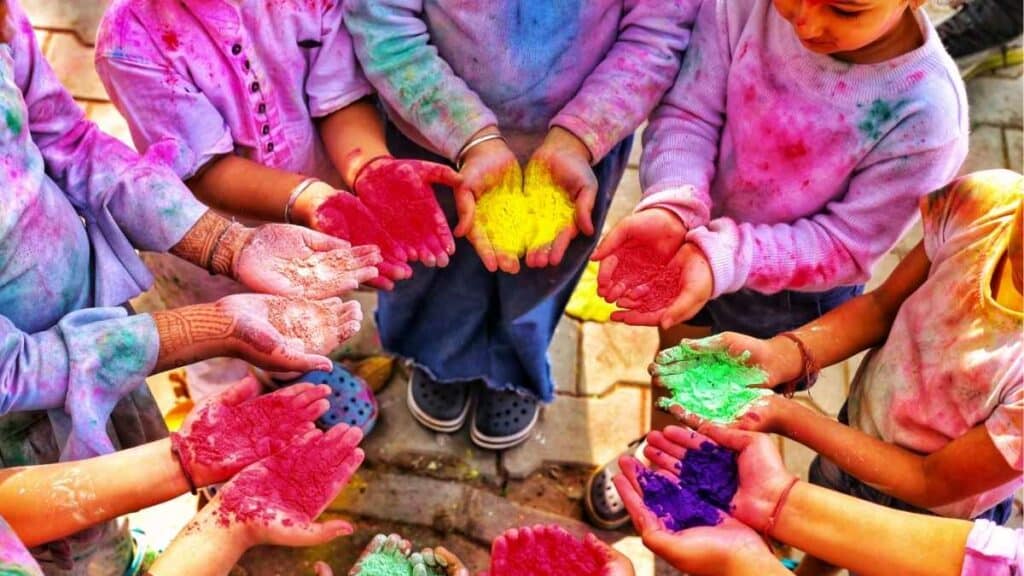
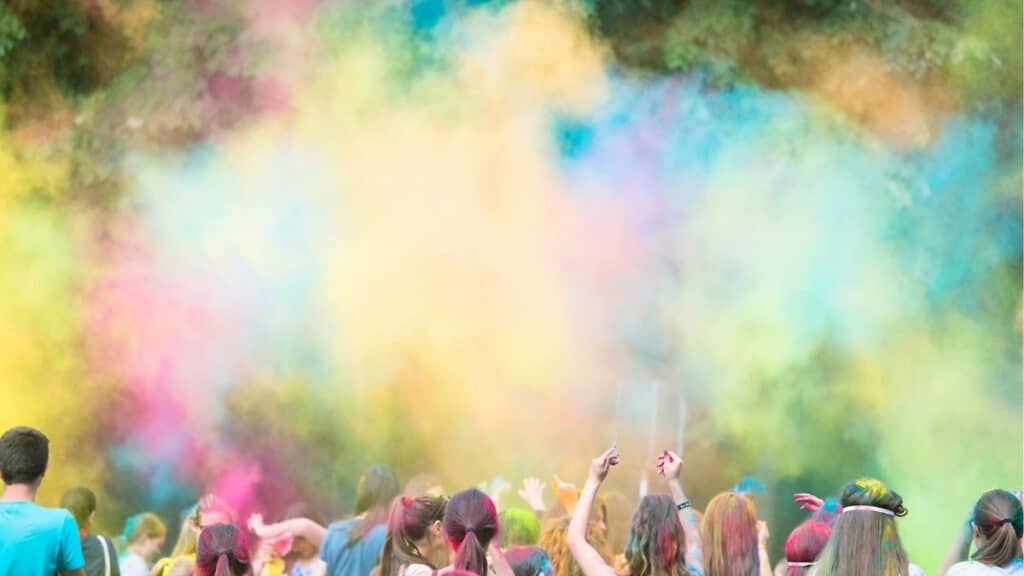
- Throwing colored powders (abir, gulal) at friends and family
- Spraying colored water with pichkaris (water guns)
- Smearing colors on each other’s faces
- Dancing to traditional and Bollywood Holi songs
- Street processions with music and drums
Afternoon and Evening Traditions
After playing with colors, people bathe, wear fresh clothes, and visit relatives and friends to exchange sweets and greetings.
Special Delicacies Served:
- Gujiya (sweet dumplings with khoya filling)
- Malpua (sweet pancakes in sugar syrup)
- Thandai (spiced milk drink, sometimes with bhang)
- Dahi vada (lentil fritters in yogurt)
- Mathri, papads, chips, and various namkeens
Regional Names and Variations of Holi Across India
India’s diversity means Holi is celebrated under different names with unique regional customs:
Northern India
Lathmar Holi (Barsana, Mathura): Women playfully hit men with sticks while men defend themselves with shields, commemorating Krishna teasing the gopis.
Phagwah/Phagua (Eastern UP, Bihar, Jharkhand): Traditional folk celebrations with singing and dancing.
Western India
Dhuleti/Dhulandi (Gujarat, Rajasthan): The main day of color play, celebrated with particular enthusiasm.
Eastern India
Dol Jatra (West Bengal, Odisha): Focuses on Radha-Krishna worship with idols placed on decorated swings (dola).
Basant Utsav (Bengal): Initiated by Rabindranath Tagore, emphasizing cultural performances and spring celebrations.
Phakua (Assam): Celebrated with traditional Bihu elements.
Southern India
Kaman Pandigai (Tamil Nadu): Honors Kamadeva’s sacrifice for restoring Shiva to worldly life.
Rangapanchami (Karnataka, Maharashtra): Colors played five days after Purnima, emphasizing the Kama-Rati legend.
Punjab
Hola Mohalla: A three-day Sikh festival starting after Holi, featuring martial arts displays, mock battles, and athletic competitions at Anandpur Sahib.
Holi in Sikh Tradition: Hola Mohalla
Sikhs have celebrated Holi since at least the 19th century, with historic texts referring to it as “Hola.”
Guru Gobind Singh’s Innovation
The tenth Sikh Guru, Guru Gobind Singh, transformed Holi by adding a three-day martial extension called Hola Mohalla. Starting the day after Holi at Anandpur Sahib, this festival featured:
- Mock battles and combat training
- Horsemanship competitions
- Athletic contests
- Archery demonstrations
- Military exercises
This martial tradition reinforced Sikh warrior values while maintaining the joyful, community spirit of Holi.
Maharaja Ranjit Singh’s Celebrations
The Sikh Empire under Maharaja Ranjit Singh celebrated Holi lavishly:
1837 Records: Sikh court documents show 300 mounds of colors were used for celebrations in Lahore.
Bilawal Gardens: Decorative tents were set up for Holi festivities where Ranjit Singh celebrated with officials and subjects.
British Participation: Sir Henry Fane, commander-in-chief of the British Indian army, joined Ranjit Singh’s Holi celebrations in 1837.
Lahore Fort Murals: Ranjit Singh commissioned artwork showing Krishna playing Holi with gopis, demonstrating appreciation for Hindu mythology despite being Sikh.
Even after Ranjit Singh’s death, his sons and successors continued these lavish annual Holi celebrations, with British colonial officials regularly participating.
Cultural and Social Significance of Holi
Beyond religious legends, Holi serves important social and psychological functions in Indian society.
Ending Conflicts and Renewing Relationships
Holi provides a designated time to:
- Forgive past grievances and mistakes
- Pay or forgive debts
- End conflicts by meeting and reconciling
- Reset ruptured relationships
- Rid oneself of accumulated emotional negativity
The festival’s atmosphere of joy and playfulness makes difficult conversations easier, encouraging people to approach each other with open hearts.
Breaking Social Barriers
During Holi, traditional social hierarchies temporarily dissolve:
- Age differences blur as everyone plays with colors
- Caste distinctions fade in the colorful chaos
- Economic status becomes irrelevant
- Strangers become friends through shared celebration
This social leveling, even if temporary, reinforces ideals of equality and shared humanity.
Celebrating Spring and Harvest
Holi’s agricultural roots remain relevant:
- Marking winter’s end and spring’s arrival
- Celebrating successful winter harvests
- Offering newly harvested crops to sacred fires
- Invoking blessings for upcoming planting season
The festival connects urban populations to agricultural rhythms and nature’s cycles, maintaining awareness of food sources and seasonal changes.
How to Perform Holika Dahan Rituals: Complete Guide
For those wishing to perform traditional Holika Dahan ceremonies:
Preparation (Days Before)
- Select location: Choose a crossroads or community space
- Assemble wooden pyre: Collect logs, branches, dried cow dung cakes
- Place wooden pole: Erect a central pole symbolizing the pyre’s core
Creating Sacred Items
Gulari (Cow Dung Beads):
- Make beads from cow dung to surround the pole
- Create four special beads representing ancestors, Goddess Sheetala, Lord Hanuman, and family
Idols:
- Fashion small idols of Holika and Prahlad from cow dung
- Place them on the wood heap
- Decorate with cow dung toys
Puja Ceremony (During Muhurat Time)
- Prepare puja thali: Clean with holy water, arrange rice, flowers, incense, turmeric, coconut, lentils, money
- Sankalp (intention): Hold water, rice, flowers, money in right hand; state your purpose
- Invoke Lord Ganesha: Offer rice and flowers for removing obstacles
- Invoke Lord Narasimha and Prahlad: Offer rice and flowers
- Offer to fire: Present flowers, incense, lentils, turmeric, coconut, Gulari
- Circumambulate: Walk around fire 3-5 times with Kaleva yarn
- Pour water: Offer water pot to burning pyre
- Apply colors: Put Holi colors on loved ones, seek elders’ blessings
- Offer crops: Place newly harvested grains in fire
- Distribute prasad: Share roasted crops with community

Safe and Eco-Friendly Holi Celebration Tips
Modern environmental awareness calls for sustainable Holi practices.
Using Natural, Safe Colors
Homemade Natural Colors:
- Red/Pink: Dried rose petals, hibiscus flowers, beetroot powder
- Yellow: Turmeric, marigold flowers, gram flour
- Green: Henna powder, spinach leaves, neem leaves
- Blue: Indigo, jacaranda flowers
- Orange: Turmeric mixed with lime juice
Benefits:
- Gentle on skin, suitable for sensitive skin
- Biodegradable and environmentally safe
- No toxic chemicals or heavy metals
- Easier to wash off
Skin Protection
- Apply coconut or mustard oil generously before playing
- Use moisturizer on face and exposed skin
- Wear sunglasses to protect eyes
- Apply oil to hair to prevent color absorption
- Test colors on small skin patch first for allergies
Water Conservation
- Use dry colors (gulal) instead of water-based play
- Limit water usage, especially in drought-prone regions
- Organize “dry Holi” community events
- Reuse water where possible
- Avoid using drinking water for color play
Fire Safety During Holika Dahan
- Maintain safe distance from bonfire
- Keep children supervised at all times
- Have water buckets or fire extinguishers ready
- Avoid wearing synthetic clothing near flames
- Don’t throw aerosol cans or plastic into fire
Respectful Celebration
- Always ask consent before applying colors
- Respect those who decline to participate
- Avoid forcing colors on strangers
- Don’t waste food or materials
- Clean public spaces after celebrations
- Be mindful of elderly people and pregnant women
When is Holi in 2026?
Holi 2026 is celebrated on March 3-4, with Holika Dahan on March 3 and Rangwali Holi on March 4.
What time is Holika Dahan in 2026?
The auspicious muhurat for Holika Dahan is from 6:23 PM to 8:51 PM on March 3, 2026.
Why does Holi date change every year?
Holi is based on the Hindu lunar calendar, celebrated on Phalguna Purnima (full moon). Since the lunar calendar doesn’t align with the Gregorian solar calendar, the date shifts annually.
