


Every March, my childhood WhatsApp groups light up with the same question: “Holi plans?” But depending on who’s asking—my cousin in Mumbai, my college friend in Kolkata, or my aunt in Goa—the answer looks completely different. Because here’s something beautiful about India: we don’t just celebrate Holi. We celebrate Shigmo, Yaosang, Dol Jatra, and half a dozen other versions, each carrying the DNA of its region.
If you’re part of the diaspora, you know this feeling. Your kids learn about “Holi, the festival of colors” at school, but back home, your family might have called it something else entirely. You remember specific rituals—a bonfire the night before, a particular song your grandmother sang, or the way your community danced—that don’t quite match the generic celebrations you see abroad.
Quick Answer:
Holi isn’t just one festival—it’s celebrated under eight different names across India, each with unique traditions. From Maharashtra’s Rang Panchami to Punjab’s martial Hola Mohalla, from Manipur’s six-day Yaosang to Uttar Pradesh’s playful Lathmar Holi, discover how this spring festival transforms across regions while keeping its spirit of joy, colors, and togetherness alive.
Let me walk you through the India map of Holi, region by region, name by name.
What Is Holi, Really?
Before we dive into the names, let’s ground ourselves in what ties them all together.
Holi marks the arrival of spring, that glorious moment when winter’s chill finally breaks and the world bursts into color. It celebrates the triumph of good over evil—specifically, the story of Prahlad’s devotion protecting him from his aunt Holika’s flames. It’s about Lord Krishna’s playful love for Radha, expressed through colored powders in the streets of Vrindavan.
But more than mythology, Holi is about reset. It’s the day when hierarchies dissolve, when the boss and the driver smear each other with gulal, when old grudges get washed away in buckets of colored water. It’s permission to be messy, loud, and joyfully chaotic.
The festival typically begins with Holika Dahan—a bonfire lit the night before, families circling it with prayers and offerings. The next morning, the colors fly. And in between, depending on where you are in India, the traditions shift in the most fascinating ways.
Check Out: Holika Dahan 2026: Complete Muhurat Guide, Rituals & Puja Essentials
The Eight Names of Holi Across India
Dhulandi or Dhuleti (North India)
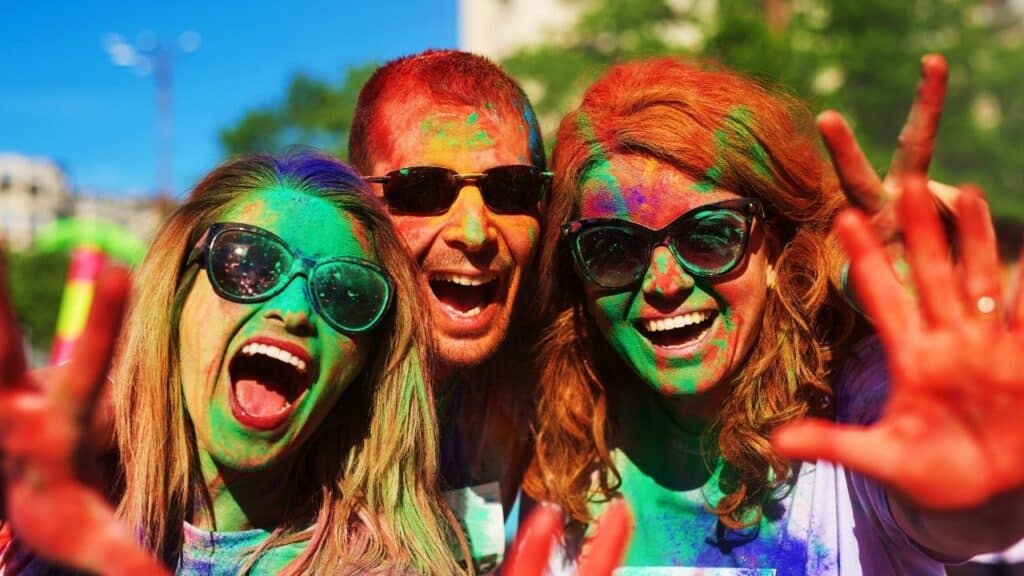
This is probably the Holi you picture: streets transformed into rainbow battlegrounds, water balloons flying, bhang-laced thandai being passed around, and Bollywood’s “Rang Barse” blasting from every speaker.
In Uttar Pradesh, Delhi, Rajasthan, and much of North India, the main day is called Dhulandi or Dhuleti—”dhul” referring to dust or powder. It’s gloriously unstructured. You step outside, and you’re fair game. Neighbors become co-conspirators, strangers become friends, and by noon, everyone looks like walking abstract art.
The night before, Holika Dahan bonfires dot neighborhoods. Families gather, toss in offerings of coconut and roasted grains, and let the flames carry away the year’s negativity.
Rang Panchami (Maharashtra and Madhya Pradesh)
Here’s where things get interesting. In Maharashtra, the color play happens five days after the full moon—hence “Panchami.” While the rest of India might be done with festivities, Mumbai, Pune, and Madhya Pradesh are just hitting their stride.
Rang Panchami extends the celebration, giving everyone a second chance at the fun. There’s less emphasis on the Holika fire and more on community gatherings, where people drench each other in colored water, share puran poli and shrikhand, and dance to folk songs.
For diaspora families from Maharashtra, this means your Holi doesn’t have to align with everyone else’s. Your office might not understand why you need leave on a different day, but your mom’s voicemail reminder to celebrate Rang Panchami properly? That arrives right on schedule.
Shigmo (Goa)
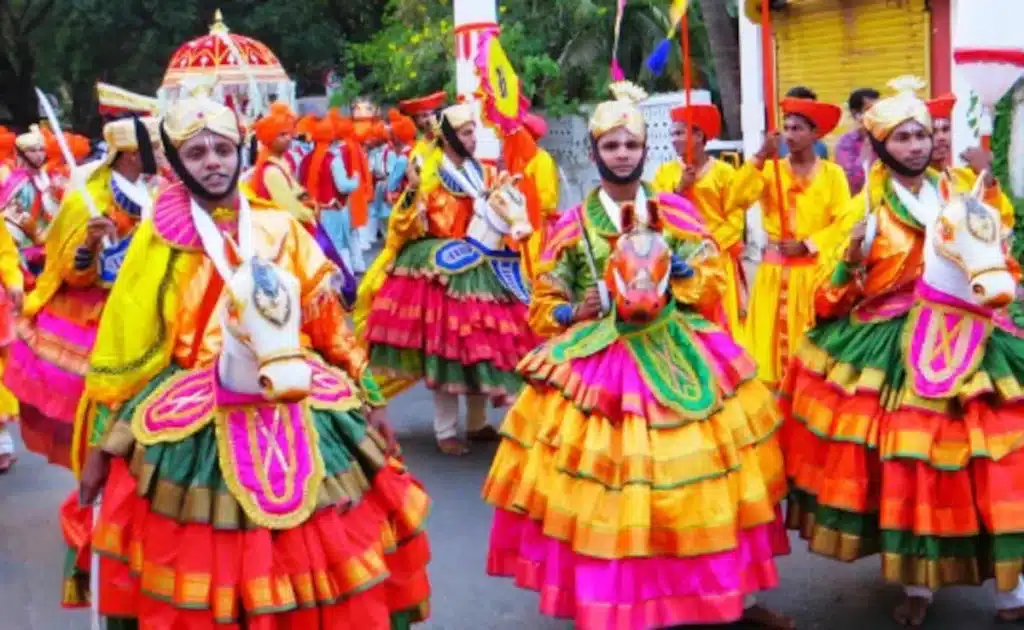
If Holi had a cousin who moved to the coast and became fabulous, it would be Shigmo.
This two-week spring festival in Goa blends Hindu traditions with the state’s distinct cultural flavor. You’ll see elaborate street parades with folk dancers in traditional costumes, giant effigies, floats decorated with flowers and colored powders, and performances of Goa’s indigenous art forms like Fugdi and Dhalo.
Shigmo comes in two forms: Dhakto Shigmo (small Shigmo) celebrated by rural communities, and Vhodlo Shigmo (big Shigmo) that takes over towns with grand processions. The colors are there, but they share the stage with theatrical performances retelling mythological stories and live music that goes late into the night.
It’s Holi meets Carnival, distinctly Goan, and absolutely mesmerizing.
Dol Purnima or Dol Jatra (West Bengal and Odisha)
In Kolkata and across Bengal, Holi becomes Dol Jatra—a devotional celebration centered entirely on Krishna and Radha’s divine love.
Devotees dress in saffron and white, carry elaborately decorated idols of Radha and Krishna in palanquins (dols), and proceed through neighborhoods singing Rabindra Sangeet and traditional songs. The color play happens, but it’s gentler, more ritualistic. Abir (a scented, natural powder) gets exchanged with reverence rather than pelted with abandon.
I remember visiting my Bengali friend during Dol. Her mother made us wear white kurtas, handed us small bowls of pink abir, and took us to watch the procession. The singing was hypnotic. When someone dabbed color on my cheeks, it felt less like play and more like blessing.
In Odisha, especially at Puri’s Jagannath Temple, the deities themselves are offered colors as part of elaborate rituals.
Yaosang (Manipur)
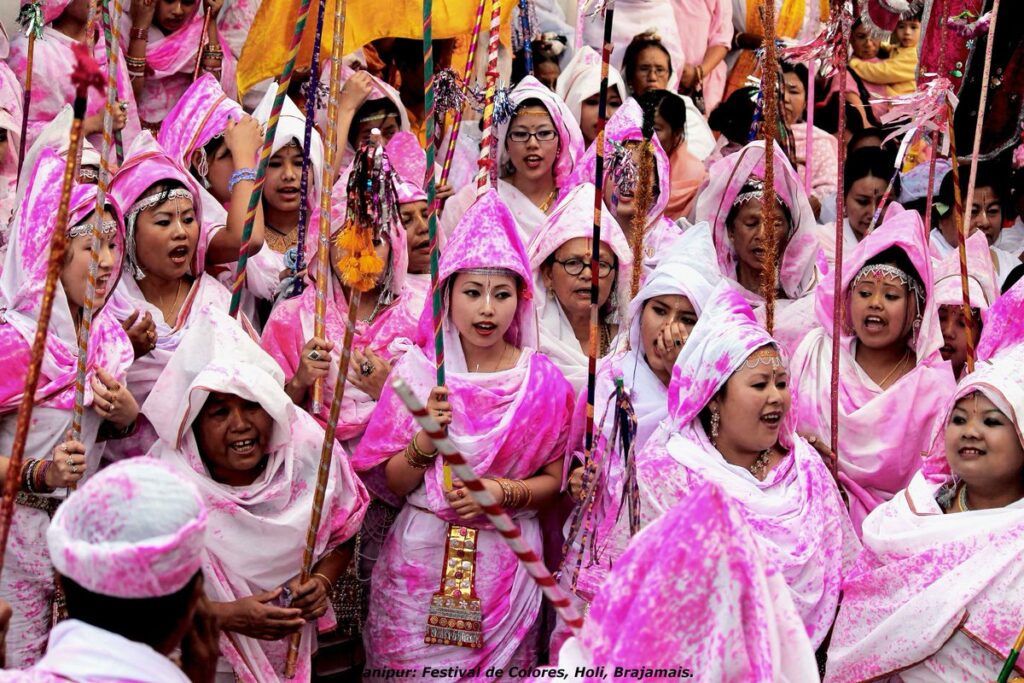
Manipur celebrates Holi across six full days, and it’s called Yaosang—perhaps the longest Holi celebration in India.
It begins with the burning of a small thatched hut, symbolizing Holika’s demise. But what makes Yaosang special is Thabal Chongba—a traditional Manipuri folk dance where young men and women form circles, hold hands, and dance under the full moon. It’s part courtship ritual, part community bonding, all beauty.
During the day, groups perform Nakatheng (a kind of theatrical performance asking for donations), and evenings transform into cultural festivals with traditional music and dance. The colors come out, but they’re just one element in a much richer tapestry.
For Manipuri families abroad, recreating Thabal Chongba becomes a way to teach children about their heritage—the specific steps, the songs, the moonlit tradition that’s utterly unlike any other Holi celebration.
Phagwah or Phaghu (Bihar and Jharkhand)
In Bihar and Jharkhand, Holi is Phagwah, named after Phagun, the Hindi month when spring arrives.
The celebration starts with Holika Dahan bonfires that entire villages gather around. The next day, color play happens alongside singing of Phagua—traditional folk songs that are earthy, often cheeky, and deeply rooted in rural life. These aren’t your polished Bollywood Holi numbers; they’re songs passed down through generations, sung in Bhojpuri and Maithili, celebrating love, teasing relationships, and welcoming spring.
There’s also a beautiful tradition of people visiting elders in their families and communities, touching their feet, receiving blessings, and only then joining the color chaos. It maintains a respect and hierarchy that the rest of Holi deliberately breaks—an interesting balance.
Lathmar Holi (Barsana and Nandgaon, Uttar Pradesh)
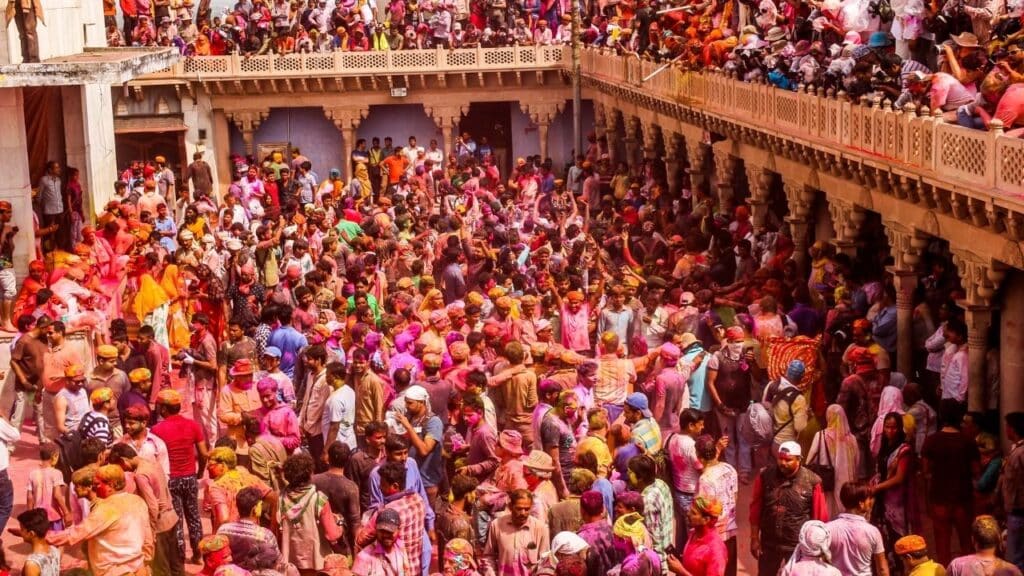
Now we arrive at the legend: Lathmar Holi, where women hit men with sticks, and everyone calls it tradition.
In Barsana (Radha’s birthplace) and Nandgaon (Krishna’s village), this unique celebration reenacts the story of Krishna visiting Radha’s village and playfully teasing her and her friends. The women of Barsana “defend” themselves with lathis (sticks) while the men from Nandgaon try to shield themselves and drench the women in colors.
It sounds chaotic—and it is—but it’s also controlled chaos. The men wear protective gear, the women’s hits are more symbolic than violent, and the entire event is accompanied by music, dancing, and an atmosphere that’s equal parts pilgrimage and party.
Thousands of tourists and devotees flock to witness Lathmar Holi. For diaspora families, it’s become a bucket-list experience: taking kids back to India to see this wild, joyful, utterly unique version of the festival they only know from school presentations.
Hola Mohalla (Punjab)
While the rest of India throws colors, Punjab’s Sikh community showcases strength.
Hola Mohalla was established by Guru Gobind Singh in the 17th century as an alternative to Holi—a day for Sikhs to demonstrate martial skills, prepare for defense, and celebrate valor. At Anandpur Sahib, the main celebration site, you’ll witness gatka (Sikh martial art) displays, wrestling matches, horse riding demonstrations, archery competitions, and kirtan.
There are colors, there’s music, there’s community feasting in the langar. But the core is different: it’s about physical prowess, spiritual strength, and the warrior tradition within Sikhism.
For Punjabi families abroad, especially those teaching children about Sikh heritage, Hola Mohalla becomes a powerful counterpoint to mainstream Holi narratives. It says: our spring celebration looks like this—disciplined, martial, and deeply spiritual.
Why These Regional Names Matter
When I explain these different Holis to my daughter, I’m not just teaching her vocabulary. I’m showing her that India contains multitudes—that a festival can be devotional in Bengal and martial in Punjab, can last one day in Delhi and six in Manipur, can center colors in one place and parades in another.
For diaspora families, knowing these distinctions helps when:
- Building community: Finding others who celebrate Shigmo or Yaosang creates specific cultural bonds
- Teaching heritage: Children learn that “Indian culture” isn’t monolithic
- Planning travel: Experiencing different regional Holis becomes a way to explore India beyond the tourist trail
- Maintaining identity: Celebrating your family’s specific tradition keeps those threads alive across generations
It also matters because when your colleague says, “Oh, you’re Indian—do you celebrate that color festival?” you can say: “Actually, my family celebrates Rang Panchami,” and then explain why, and suddenly you’ve turned a generic question into a real cultural exchange.
Common Elements Across All Holis
Despite the different names and traditions, certain threads connect them all:
- The victory of good over evil: Whether it’s Holika’s burning or demons being defeated in procession plays, this moral anchor holds
- Spring’s arrival: Every version celebrates winter’s end and nature’s renewal
- Community bonding: Whether through color fights, shared dances, or martial displays, it’s about being together
- Temporary equality: For at least one day, normal hierarchies dissolve in colored powder or community celebration
- Joy as spiritual practice: The permission to be messy, loud, playful, and free
The Thread That Connects Us
Here’s what strikes me most about these eight Holis: none cancels out the others. They coexist, each valid, each vibrant, each carrying centuries of meaning for the communities that practice them.
In the diaspora, we sometimes feel pressure to present a unified “Indian culture” to the outside world. But maybe the real story is richer: that we come from a place where the same spring celebration can manifest as devotional procession, martial demonstration, six-day dance festival, or women armed with sticks.
Your Holi—whatever you call it, however your family celebrates it—is part of this beautiful, messy, colorful tapestry. And that’s worth remembering, whether you’re explaining it to your kids, your colleagues, or yourself on a gray March morning far from home, wondering which version of spring you’re supposed to be celebrating.
All of them. You’re celebrating all of them.
