
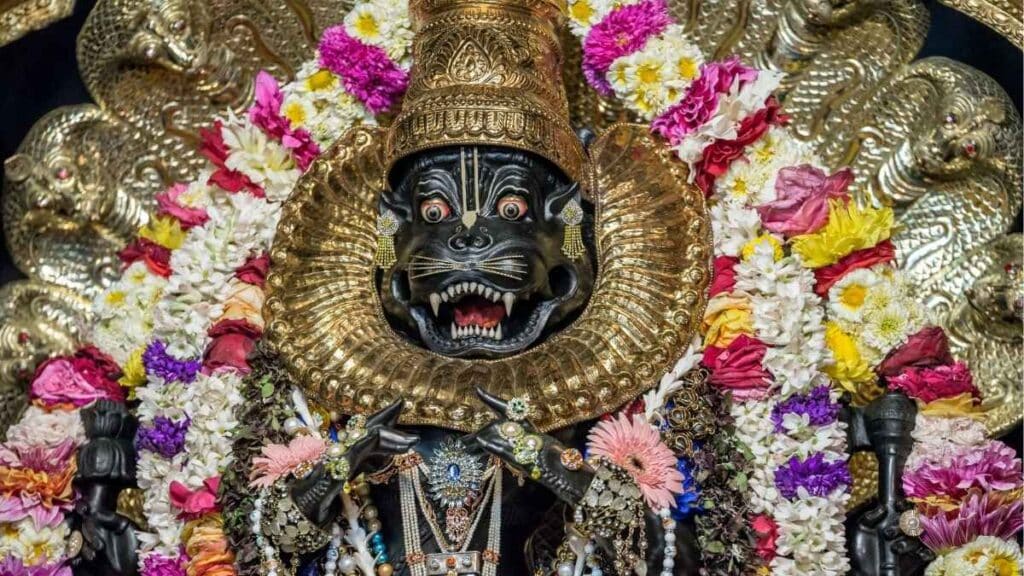
Narasimha Jayanti is one of the most sacred festivals in the Vaishnava tradition, observed to commemorate the divine appearance of Lord Narasimha — the fourth avatar of Lord Vishnu — who descended in the form of a half-man, half-lion to destroy the demon king Hiranyakashipu and protect his devoted son Prahlada. The festival stands as a powerful celebration of divine protection, the invincibility of true devotion, and the eternal triumph of dharma over adharma.
Observed on the Chaturdashi (14th day) of the Shukla Paksha (bright fortnight) of the Hindu month of Vaishakha, Narasimha Jayanti is marked with fasting, special temple pujas, devotional readings of Prahlada Charitra, and night vigils. The festival is particularly prominent in South Indian states — Karnataka, Andhra Pradesh, Telangana, and Tamil Nadu — but is celebrated by Vaishnava communities and ISKCON devotees across India and the world.
When Is Narasimha Jayanti Celebrated in 2026?
Narasimha Jayanti falls on the Vaishakha Shukla Chaturdashi according to the Hindu lunisolar calendar, which places it between April and May each year.
Narasimha Jayanti 2026 Date: Thursday, April 30, 2026
Key Puja Timings (IST – New Delhi)
| Timing | Details |
|---|---|
| Chaturdashi Tithi Begins | 07:51 PM, April 29, 2026 |
| Chaturdashi Tithi Ends | 09:12 PM, April 30, 2026 |
| Madhyahna Sankalp Time | 10:59 AM – 01:38 PM, April 30 |
| Sayana Kala (Sanyakal) Puja | 04:17 PM – 06:56 PM, April 30 (2 hrs 39 mins) |
| Parana Time (Fast Breaking) | After 05:41 AM, May 1, 2026 |
The most significant puja is performed during Sayana Kala — the twilight hour — as Lord Narasimha is believed to have appeared at this very time.
Table of Contents
Narasimha Jayanti In USA, Canada, Australia, New Zealand, UK, UAE, Singapore 2026 Dates
Narasimha Jayanti on Wednesday, April 29, 2026
- Narasimha Jayanti Sayana Kala Puja Time – 05:04 PM to 07:50 PM
- Next Day Parana Time for Narasimha Jayanti – after 11:42 AM, Apr 30
Narasimha Jayanti on Wednesday, April 29, 2026
- Narasimha Jayanti Sayana Kala Puja Time – 05:29 PM to 08:18 PM
- Next Day Parana Time for Narasimha Jayanti – after 11:42 AM, Apr 30
Narasimha Jayanti on Thursday, April 30, 2026
- Narasimha Jayanti Sayana Kala Puja Time – 03:13 PM to 05:22 PM
- Next Day Parana Time for Narasimha Jayanti – after 06:40 AM, May 01
Narasimha Jayanti on Wednesday, April 29, 2026
- Narasimha Jayanti Sayana Kala Puja Time – 05:24 PM to 08:20 PM
- Next Day Parana Time for Narasimha Jayanti – before 12:58 PM, Apr 30
Narasimha Jayanti on Thursday, April 30, 2026
- Narasimha Jayanti Sayana Kala Puja Time – 04:12 PM to 06:49 PM
- Next Day Parana Time for Narasimha Jayanti – after 05:44 AM, May 01
Narasimha Jayanti on Thursday, April 30, 2026
- Narasimha Jayanti Sayana Kala Puja Time – 04:41 PM to 07:07 PM
- Next Day Parana Time for Narasimha Jayanti – after 06:57 AM, May 01
Why Does the Date Change Every Year?
Narasimha Jayanti is a movable festival determined by the Hindu lunisolar calendar, not the Gregorian calendar. It falls on the Chaturdashi tithi of Vaishakha Shukla Paksha, which shifts each year based on the lunar cycle. The combination of Vaishakha Shukla Chaturdashi with Swati Nakshatra and Saturday is considered especially auspicious for the observance.
Narasimha Jayanti Overview
Narasimha Jayanti is primarily observed by Vaishnavas — devotees of Lord Vishnu — but holds reverence across the broader Hindu community. The day honors the miraculous appearance of Narasimha who, in defying every condition of an almost unbreakable divine boon, protected a child’s faith and restored order to the universe. The festival carries a message that resonates beyond theology: that sincere devotion and truth will ultimately prevail, however powerful the forces against them.
Other Names and Regional Identities
Narasimha Jayanti is known by various names across Indian languages and traditions:
| Language / Region | Name |
|---|---|
| Sanskrit | Narasimha Chaturdashi |
| Hindi | नरसिंह जयंती |
| Telugu (Andhra Pradesh, Telangana) | నరసింహ జయంతి |
| Kannada (Karnataka) | ನರಸಿಂಹ ಜಯಂತಿ |
| Tamil (Tamil Nadu) | நரசிம்ம ஜயந்தி |
| Odia | ନରସିଂହ ଜୟନ୍ତୀ |
In the Padma Purana and Skanda Purana, the occasion is referred to as Narasimha Chaturdashi. In diaspora communities and ISKCON temples worldwide, the day is widely called Lord Narasimha Appearance Day.
The Origins, History, and Legends of Narasimha Jayanti
The Legend of Narasimha
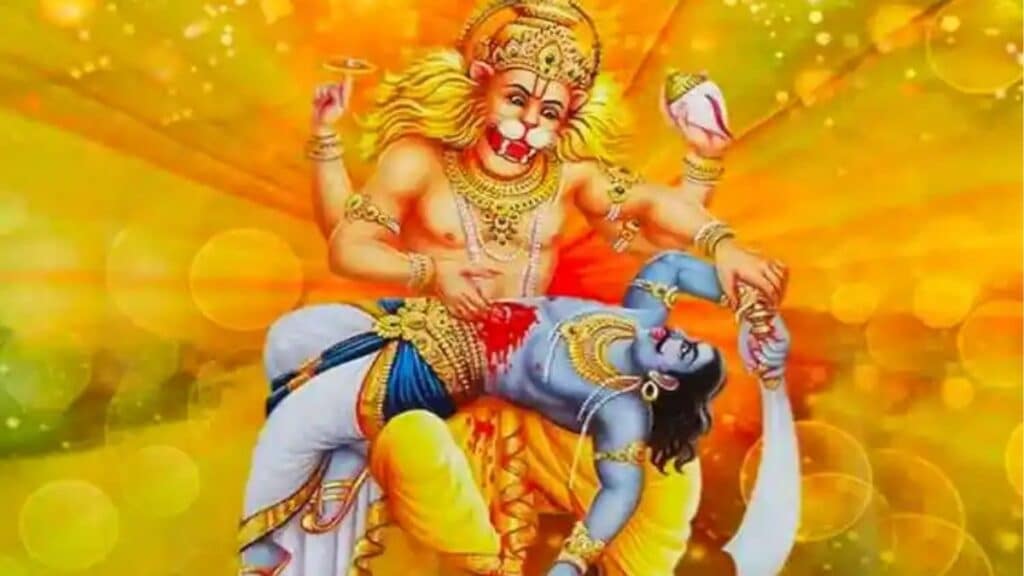
In Hindu mythology, Hiranyakashipu — an asura king — obtained a boon from Lord Brahma after severe penance, making him nearly impossible to kill. He could not be slain indoors or outdoors, by day or night, by any weapon, on the ground or in the sky, by man or beast, deva or asura. Armed with this invincibility, he conquered the three worlds and demanded worship as the supreme being.
His son Prahlada, however, grew up as an unwavering devotee of Vishnu, having absorbed the deity’s teachings at the ashrama of Sage Narada. Enraged, Hiranyakashipu subjected Prahlada to repeated attempts on his life — through poison, fire, serpents, elephants, and hurling him into the ocean — but each time Prahlada emerged protected by divine grace.
In a final confrontation, Hiranyakashipu challenged his son: if Vishnu was truly omnipresent, was he present even in a palace pillar? When Prahlada affirmed it, the king struck the pillar with his mace. From it emerged Narasimha — half-man, half-lion, transcending every condition of the boon. He carried Hiranyakashipu to the palace threshold (neither inside nor outside), placed him on his lap (neither ground nor sky), and at twilight (neither day nor night) tore him apart with his claws (no weapon). Every clause of the boon was divinely circumvented. Prahlada was saved, and dharma was restored.
This event is particularly associated with Ahobilam in Andhra Pradesh, where nine forms of Narasimha are venerated.
Historical Background
The worship of Narasimha is among the oldest Vaishnava traditions. The Pallava dynasty (3rd–9th century CE) significantly popularized the Narasimha sect across South India, and inscriptions referencing Narasimha Jayanti have been found from the Vijayanagara Empire (14th–17th century CE). The festival is explicitly named in the Padma Purana and Skanda Purana as Narasimha Chaturdashi.
Narasimha Jayanti: Cultural and Spiritual Significance
At its heart, Narasimha Jayanti is a celebration of bhakti (devotion) as the ultimate shield. Prahlada’s story teaches that no power — however vast — can overcome sincere surrender to the divine. Narasimha’s form, existing at the boundary of man and animal, also symbolizes the transcendence of all categories: the divine operates beyond human logic and limitation.
The festival equally represents the victory of knowledge over ignorance — Prahlada’s spiritual understanding of Vishnu’s omnipresence ultimately defeats Hiranyakashipu’s arrogance. For devotees, it is a reminder that dharma will always be protected and that the divine responds to sincere faith.
Narasimha Jayanti: Prayers and Religious Observances
Fasting Rules (Narasimha Jayanti Vrat)
The fasting rules are similar to those of Ekadashi Vrat. One day prior, devotees eat only a single meal. On the day itself, all grains and cereals are prohibited. Many observe a night vigil (jaagaran) after the evening puja. The fast is broken (Parana) the next morning after sunrise, once the Chaturdashi Tithi has ended and Visarjan Puja has been performed. Dana (charity), especially to Brahmins, is given before breaking the fast.
Puja Rituals
Morning: The Shodashopachara Puja (sixteen-step worship) is performed at home.
Afternoon (Madhyahna): Devotees take a formal Sankalp — a vow of observance — affirming their intent to fast and worship.
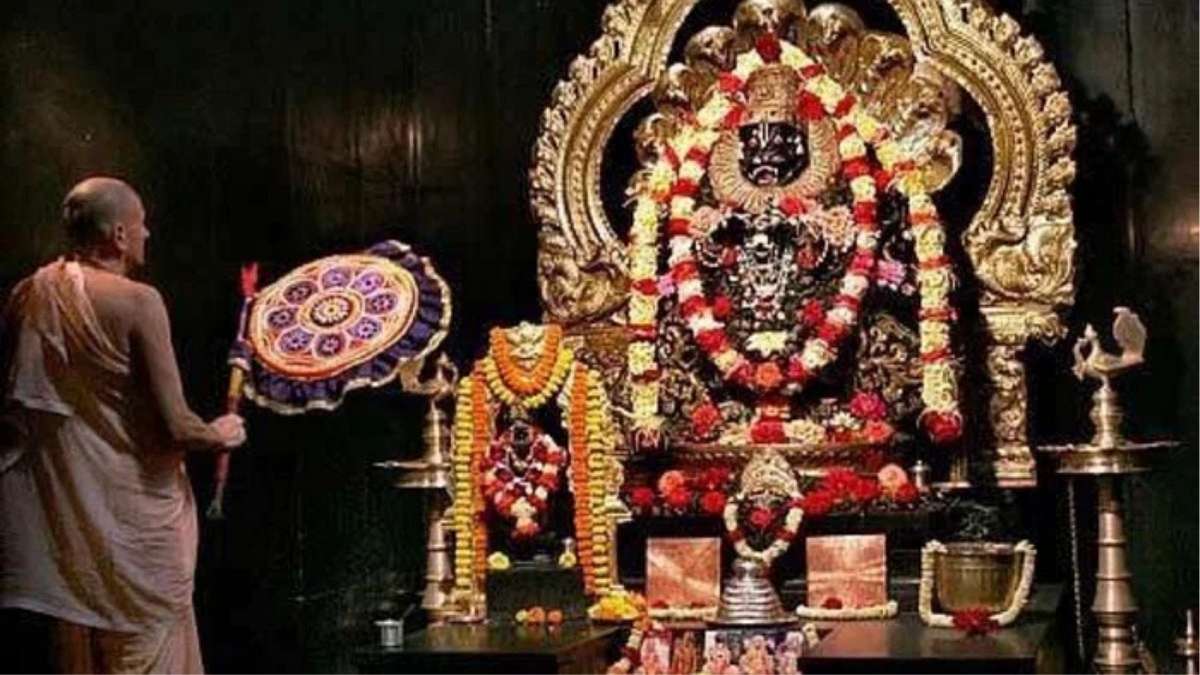
Evening (Sanyakal): The primary Lord Narasimha Puja is performed during twilight, the hour of the deity’s appearance. The Panchopachara Puja (five-step worship) is also observed in the evening.
Devotees recite the Narasimha Kavacham, Narasimha Ashtakam, and chapters from the Bhagavata Purana narrating Prahlada Charitra. Panakam — a traditional drink of jaggery and water — is prepared and distributed to Brahmins as prasad in Sri Vaishnava households.
How Narasimha Jayanti Is Celebrated Across India
Andhra Pradesh & Telangana: Home to Ahobilam — the sacred site most associated with Narasimha’s appearance — this region hosts the most significant Narasimha Jayanti celebrations. The Ahobila Mutt and temples across the state conduct elaborate multi-day events.
Karnataka: Community feasts (bhojanams) are organized by temples, accompanied by devotional music and group recitations of Prahlada Charitra.
Tamil Nadu: The village of Melattur hosts the celebrated Bhagavata Mela — a traditional folk dance drama performed publicly every year on Narasimha Jayanti. The performance of Prahlada Charitram is its most dramatic highlight, enacted using classical dance techniques and Karnataka musical style.
Odisha: Narasimha temples in Puri and across the state observe special pujas, with Narasimha being closely connected to the Jagannath tradition.
Maharashtra & North India: ISKCON temples and Vaishnava communities organize kirtans, Prahlada Charitra readings, and community programs.
Participation Across Religions in India
Narasimha Jayanti is primarily a Vaishnava festival, but its themes of divine justice, protection of the innocent, and the courage of a child standing firm in truth carry universal moral resonance. The Bhagavata Mela performances in Melattur draw broader local audiences as celebrated cultural events, welcoming communities beyond the Vaishnava tradition. The story of Prahlada — a child’s unwavering honesty triumphing over power — transcends sectarian boundaries and speaks to a shared human experience.
How Narasimha Jayanti Is Celebrated Outside India
Indian diaspora communities worldwide observe Narasimha Jayanti through temple pujas, fasting, and community gatherings. ISKCON temples play a particularly central role globally, presenting the day as Lord Narasimha Appearance Day — an open, accessible festival for all devotees regardless of background.
USA & Canada: ISKCON temples in New York, Los Angeles, Houston, Toronto, and Vancouver host abhishekam, Prahlada story enactments, kirtans, and community prasad.
UK: Temples in London (ISKCON Soho Street), Leicester, and Birmingham organize special puja programs.
UAE: Indian temple communities in Dubai and Abu Dhabi observe with evening pujas and community fasting.
Australia & New Zealand: ISKCON temples in Sydney, Melbourne, and Auckland conduct special programs, with New Zealand communities adjusting timing to align with Chaturdashi.
Germany & Singapore: ISKCON and South Indian temple communities organize devotional programs and cultural events marking the occasion.
Narasimha Jayanti Gifting Traditions
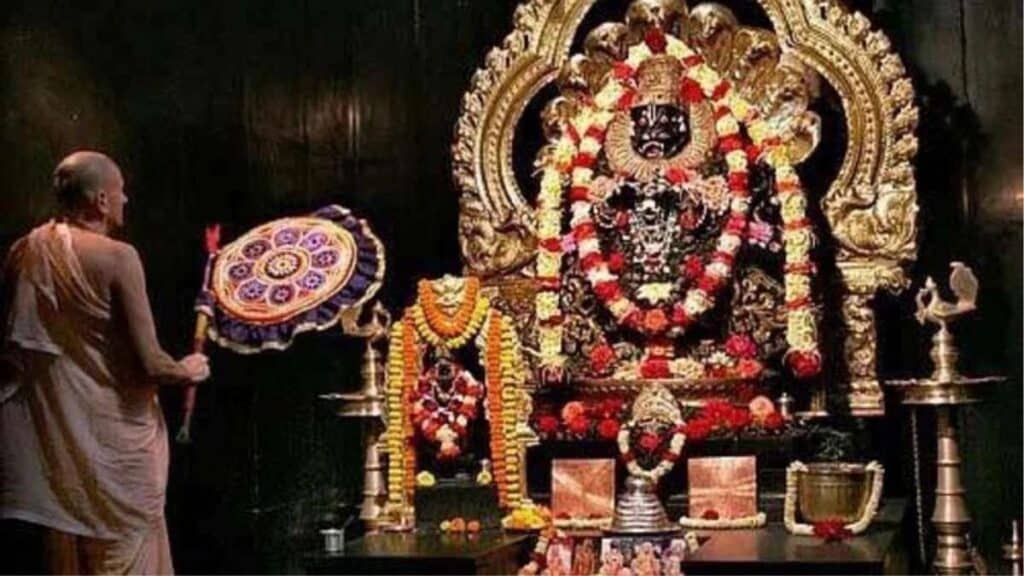
Narasimha Jayanti does not carry an elaborate gifting culture, but Dana (charitable giving) is central to the observance. Offering food, clothing, and money to Brahmins and the less fortunate is considered deeply meritorious.
In diaspora communities, donating to temples or sponsoring abhishekam and annadanam (community feeding) programs is a meaningful way to observe the day. Gifting books on Prahlada’s story or the Bhagavata Purana is also a valued practice.
Narasimha Jayanti Foods and Culinary Traditions
Fasting rules prohibiting grains and cereals shape the festival’s distinctive food traditions:
Panakam — The most iconic Narasimha Jayanti preparation, a sweet-spiced drink of jaggery and water distributed as prasad in homes and temples.
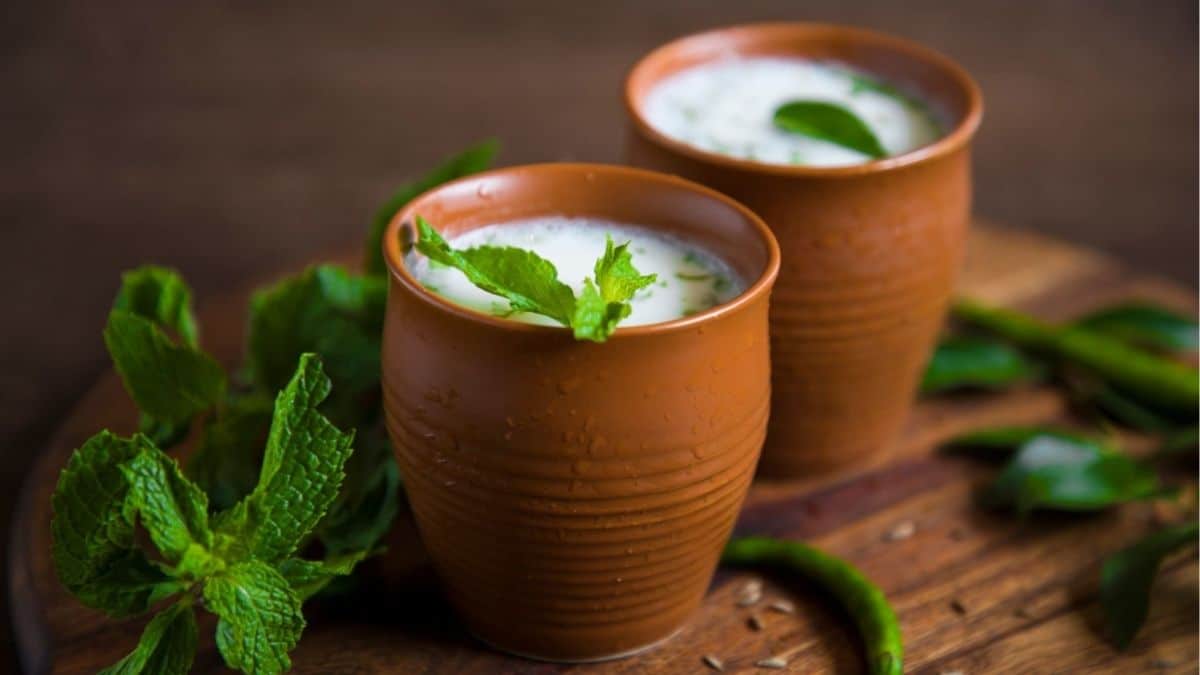
Neer Mor — Spiced buttermilk, served alongside panakam as a cooling prasad offering.
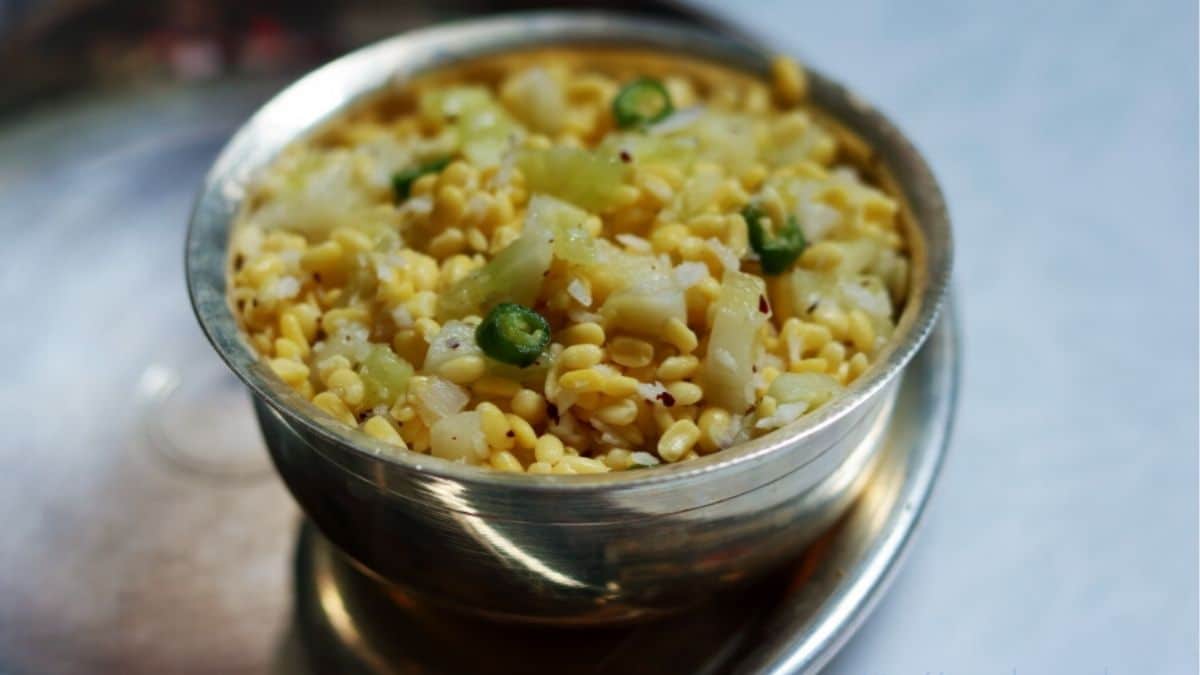
Vada Pappu — Soaked moong dal with green chilies and coconut, a traditional Telugu household offering.
Kosambari — A South Indian lentil and cucumber salad widely prepared as a grain-free fasting food in Karnataka temples.
Fruits and coconut are offered to the deity and distributed as prasad. After the fast is broken on May 1, many temples organize Annadanam — community feeding — as an act of gratitude.

Music, Art, and Cultural Expression
The Bhagavata Mela of Melattur is the most celebrated art form associated with Narasimha Jayanti — a classical Tamil folk dance drama performed annually, with the story of Prahlada and Narasimha as its dramatic centerpiece. Narasimha Kavacham and Narasimha Ashtakam are widely sung devotional compositions, performed in Carnatic classical music concerts and temple programs across South India.
ISKCON kirtans bring Narasimha devotional music to global audiences with energetic bhajan sessions and theatrical re-enactments of Prahlada’s story. Narasimha iconography — the deity emerging from a pillar to protect Prahlada — is among the most powerful recurring images in Hindu temple sculpture, with outstanding examples from the Pallava and Vijayanagara periods.
Modern Observance and Evolving Practices
In contemporary times, Narasimha Jayanti is observed through both traditional rituals and modern expressions of devotion. Live-streamed temple pujas from Ahobilam, Tirupati, and ISKCON centers allow global devotees to participate in real time. Social media sees a surge of posts sharing Prahlada’s story, Narasimha mantras, and digital invitations to temple events. Urban communities increasingly participate through ISKCON programs, which present the festival in an accessible, multilingual format open to all. Many families conduct home pujas with the help of online guides and virtual pandit services.
How to wish someone on Narasimha Jayanti: “Jai Sri Narasimha! May Lord Narasimha’s blessings protect you and your loved ones.” “Wishing you a blessed Narasimha Jayanti. May the Lord’s grace guide your path always.”
Cultural Reflection
Narasimha Jayanti endures because the story at its heart is timeless: a child’s unwavering devotion confounds an empire, and the divine arrives precisely at the moment when all human hope seems exhausted. For diaspora communities far from home temples, observing the festival is an act of cultural continuity — passing on to younger generations not just a story, but a way of understanding the relationship between faith and protection, truth and power. In that sense, Lord Narasimha’s promise to emerge wherever dharma is threatened continues to find new expression — across continents, generations, and time.