


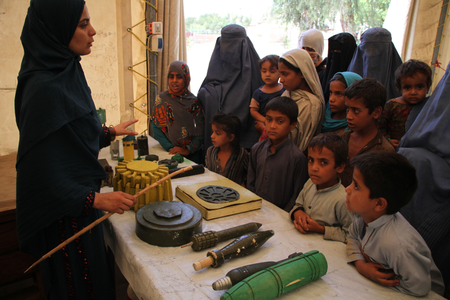
At least 87 individuals lost their lives, and 333 others sustained injuries in 193 incidents involving unexploded ordnance in Afghanistan over the past year, as reported by the Afghanistan National Disaster Management Authority (ANDMA). Hafiz Mohammad Yousof Hamad, the Head of ANDMA’s Information Department, disclosed that demining efforts cleared 58 kilometers of land and deactivated 24,720 mines in 2025, according to Pajhwok Afghan News.
Hamad highlighted that a significant 67.5% of the victims were children, underscoring the devastating impact of unexploded ordnance on Afghanistan’s youngest and most vulnerable population. He also noted that 155 demining teams are actively engaged in the country, providing explosive risk awareness training to over 2.1 million individuals. Despite these endeavors, approximately 105,000 square kilometers of Afghan land remain contaminated with unexploded ordnance, as per Pajhwok Afghan News.
The UN Assistance Mission in Afghanistan (UNAMA) recently ranked Afghanistan third globally for casualties resulting from landmines and unexploded war remnants. UNAMA emphasized that nearly 80% of these victims are children, often harmed or killed while playing or inadvertently encountering unexploded ordnance. The mission called for increased financial backing for demining organizations to clear mines and educate the populace about explosive hazards, as reported by Afghanistan’s primary news agency, Khaama Press.
UNAMA revealed that clearance teams operate daily to eliminate explosive remnants, alongside awareness campaigns aimed at reducing people’s exposure to hazardous materials. The UN mission advised Afghan citizens against handling suspicious objects and encouraged them to report such findings to authorities to prevent further casualties. The pervasive presence of landmines and unexploded ordnance in Afghanistan stems from decades of conflict, posing an ongoing threat to the safety and well-being of the population.
