


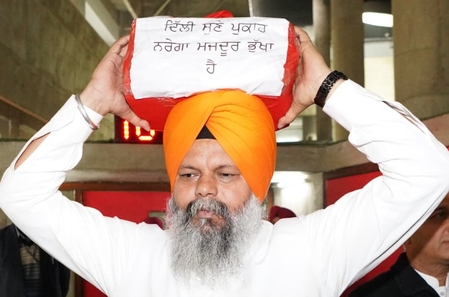
The Aam Aadmi Party in Punjab has initiated a drive to advocate for the rights and needs of over 10 lakh MGNREGA worker families in the state. During a special Assembly session in Chandigarh, AAP MLAs brought numerous letters penned by MGNREGA laborers, shedding light on the challenges faced by these diligent families relying on the employment scheme.
These workers, alongside AAP representatives, were present in the Assembly to highlight their plight. The Punjab government, under Chief Minister Bhagwant Mann’s leadership, aims not only to present these letters in the Assembly but also to forward them directly to the Prime Minister. The primary goal is to apprise the Central government of the workers’ actual circumstances and urge prompt remedies to their issues.
MGNREGA laborers in Punjab confront various significant challenges, with delayed wage payments being a major concern impacting the livelihoods of underprivileged households. Moreover, the untimely allocation of work leaves many laborers grappling with unemployment. The state government attributes these issues to the delayed disbursement of MGNREGA funds by the Central government, resulting in a compromised scheme implementation and severe hardships for the workers.
Finance Minister Harpal Cheema, addressing the Assembly, strongly criticized the BJP-led Union government for systematically undermining the MGNREGA scheme, thereby depriving the impoverished of their right to a sustainable livelihood. Supporting a resolution opposing recent alterations and the rebranding of MGNREGA as ‘Viksit Bharat — Guarantee for Rozgar And Ajeevika Mission (Gramin)’ (VB-G RAM G), Cheema condemned the move as an attack on the vulnerable sections of society. He shared a moving letter from a female laborer, Charanjit Kaur, expressing concerns shared by numerous rural workers regarding potential education and healthcare deprivations due to altered regulations and centralized village lists.
The Finance Minister underscored that the Union government’s shift towards centralized operations and the introduction of intricate mobile-based attendance mechanisms are eroding the assurance of employment that was once pivotal for rural sustenance.
