


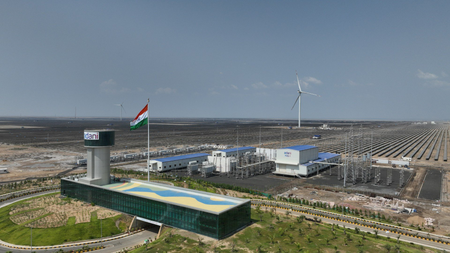
Adani Energy Solutions Ltd (AESL) has obtained long-term funding from a group of Japanese banks for its key high-voltage direct current (HVDC) transmission initiative. This project aims to establish a 6,000 MW green corridor to enhance the movement of renewable energy in northern India, sufficient to power 60 million households. The 950-kilometre corridor will link Bhadla in Rajasthan to Fatehpur in Uttar Pradesh and is set to be operational by 2029.
The transmission corridor is anticipated to serve as a crucial green pathway, facilitating the integration of large-scale renewables while bolstering grid stability for major energy-intensive urban and industrial areas in India. It will play a pivotal role in transferring renewable energy from Rajasthan’s solar-rich zones to the national grid, supporting the nation’s growing demand for clean power, as stated by the Adani Group company. Kandarp Patel, CEO of AESL, emphasized the significance of this project in establishing India’s green transmission infrastructure.
AESL is dedicated to constructing resilient transmission infrastructure to expedite India’s energy transition, according to Patel. The project forms part of the Adani Group’s comprehensive clean energy platform, with Rajasthan serving as a crucial generation center for Adani Green Energy Limited (AGEL). AGEL’s projects already supply clean energy to AESL’s subsidiary, Adani Electricity Mumbai Limited (AEML), which presently integrates over 40% renewable energy into its energy mix, positioning Mumbai among the world’s leading cities in sustainable power adoption.
The financing for this initiative, led by Japanese banks MUFG Bank Ltd. and Sumitomo Mitsui Banking Corporation (SMBC), underscores the continued international confidence in India’s renewable infrastructure expansion. The project also benefits from advanced HVDC technology from Hitachi, in partnership with Bharat Heavy Electricals Limited (BHEL), leveraging India’s domestic manufacturing capabilities. AESL’s recent BBB+ (Stable) credit rating from the Japanese agency JCR, in line with India’s sovereign rating, reflects the strengthening financial and industrial ties between India and Japan.
