


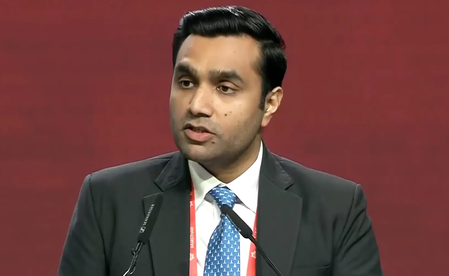
As global supply chains face disruptions due to geopolitical tensions and trade route changes, Karan Adani, Managing Director of Adani Ports and Special Economic Zone (APSEZ), highlighted the necessity of robust infrastructure and logistics networks for sustaining economic growth. Adani pointed out the vulnerability of global trade routes passing through critical maritime choke points like the Strait of Hormuz, the Suez Canal, and the Strait of Malacca, emphasizing the need for stronger logistics infrastructure and diversified trade networks. He mentioned that the Adani Group’s infrastructure platforms are national assets that enhance India’s trade, logistics, and energy security.
Karan Adani, speaking at a leadership summit, noted that crises such as the Covid-19 pandemic and geopolitical conflicts have reshaped global trade and supply chain strategies since 2020. He stressed the importance of building resilient infrastructure and strong logistics networks in a continuously challenging environment. The Adani Group’s infrastructure strategy aligns with this shift, focusing on building platforms across ports, logistics, energy, and airports to bolster India’s capacity for trade, manufacturing, and economic growth.
The long-term vision of the Adani Group, according to Karan Adani, is to become India’s most efficient logistics provider and one of the most cost-effective power generators while upholding robust corporate governance. The Group aims to reduce logistics costs significantly by enhancing integration between ports, transport utilities, airports, and logistics networks to boost supply chain efficiency. Karan Adani emphasized that trade follows once infrastructure is established.
To realize their vision, the Adani Group plans substantial investments in greenfield infrastructure projects annually over the next five years, covering renewable energy, transmission, airports, logistics, and data centers. Renewables and emerging technologies like battery storage are core capabilities for the Group, which is also expanding into sectors such as cement, aluminium, copper, and defense manufacturing to support large-scale infrastructure development.
