


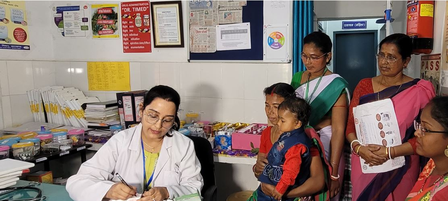
Affirmative action in local government leadership can have a significant positive impact on health outcomes in India, particularly in terms of infant survival and maternal prenatal care. A study conducted by researchers at the Indian Institute of Management (IIM) Lucknow, published in the Proceedings of the National Academy of Sciences (PNAS) journal, highlights how such interventions can address longstanding social and health disparities. Village clusters with affirmative action in local leadership demonstrated notably better health outcomes, with lower infant mortality rates and improved maternal health indicators such as increased prenatal care.
The study, which focused on the impact of leadership reservation for Scheduled Castes (SC) in India’s local governments, compared 60 village clusters with SC-reserved leadership to 60 village clusters without such reservations in 2021. The research team utilized various data sources, including administrative health records, primary data from schools, and interviews with local leaders to assess the effects of affirmative action. While health outcomes improved in villages with affirmative action, no corresponding enhancement was observed in the education sector.
Notably, the study revealed that Scheduled Caste leaders faced challenges in collaborating with teachers, indicating that persistent social disparities could hinder efforts to improve education outcomes. This difficulty also deterred potential SC leaders from taking on leadership roles. The findings underscore the importance of considering affirmative action in local governance to address structural inequalities and enhance human development outcomes in low- and middle-income countries.
