


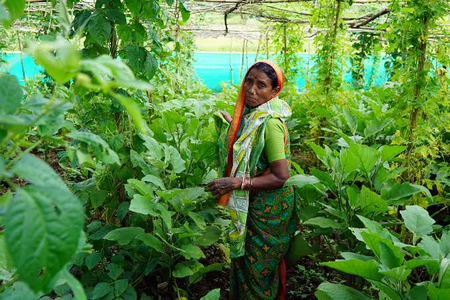
An agroecological homestead model has brought significant changes to backyard plots in Mandla district, Madhya Pradesh. Tribal women in the region have seen improvements in production, nutrition, and income as a result of this initiative. By cultivating various vegetables at different heights, the project has maximized space utilization.
According to the report by Eco‑Business, the CGIAR Multifunctional Landscapes Program and Pradan have spearheaded this transformation among the adivasis. The International Water Management Institute’s findings revealed a 350% increase in production diversity, a doubling of dietary diversity, and a 70% rise in the consumption of nutrient-rich foods like leafy greens.
The initiative also focuses on techniques such as crop rotation, bio‑composting, rainwater harvesting, and livestock integration. By using organic manure for crop farming and crop residue for animal feed, the project has reduced families’ reliance on external markets for produce and fertilizers. Women farmers have taken on a more active role in production and decision-making on their homestead farms, challenging traditional norms.
In Chimkatola and Kevlari areas, farmers have shifted from monocropping to cultivating a variety of vegetables. This change has led to reduced vulnerability to erratic rainfall and land degradation. Each woman farmer involved in the project cultivates around 400-500 square meters of land, utilizing bio-fertilizers like jeevamrut and panchagavya, derived from cow dung and urine mixed with other organic materials.
