


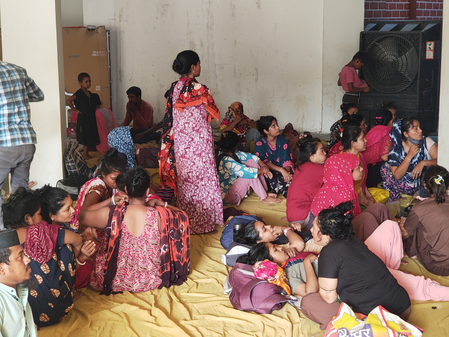
Ahmedabad has been identified as the focal point of Gujarat Police’s ongoing ‘Operation Delta Hunt’, revealing the highest number of Bangladeshi nationals found during the state’s verification and enforcement campaign. The operation, initiated simultaneously across Gujarat following extensive intelligence work, has unveiled 568 Bangladeshi nationals residing unlawfully in the state, with Ahmedabad alone accounting for 192 cases. Authorities have intensified efforts after the initial phase, which reported 362 confirmed cases statewide, including 166 in Ahmedabad.
Investigations and verification activities are still in progress. The operation was based on a database of over 6,200 suspected individuals, derived from communication analysis, intelligence inputs, and field-level data. Additional people were placed under verification initially, with police conducting searches in various districts. Checkpoints were set up at key transportation hubs to prevent suspects from escaping, resulting in the apprehension of 18 individuals attempting to flee.
While illegal migrants were discovered in several districts, Ahmedabad stood out with the highest concentration. This focus on Ahmedabad aims to understand how undocumented migrants entered Gujarat and integrated into local communities and labor networks. The investigation revealed a shift from concentrated settlements to a dispersed presence across the city, making detection more challenging. Many migrants were found living in rented rooms across industrial and working-class neighborhoods.
The operation involved over 30 teams from different police units, conducting raids overnight in multiple zones of Ahmedabad. The city’s industrial economy and migrant workforce provided a conducive environment for undocumented migrants to blend in easily. Many were engaged in low-paid informal jobs like daily-wage labor, garbage collection, and puncture repair work. The eastern industrial belt of Ahmedabad emerged prominently in the investigation, hosting a large number of laborers from other Indian states.
A significant finding was the presence of a substantial number of women among the identified individuals. More than 100 of the 192 people identified in Ahmedabad were women, with a majority reportedly involved in spa and prostitution work. The investigation indicated organized trafficking networks bringing women to Gujarat for such activities. Authorities are now tracing agents involved in illegal border crossings and connecting women with spa businesses or prostitution rackets.
The economic conditions faced by these women were harsh, with many earning meager daily wages and being dependent on intermediaries for accommodation and work. The scrutiny of identity documents revealed that while many possessed Aadhaar cards with West Bengal addresses, they struggled to produce other necessary documents. The operation underscored the persistent issue of illegal migration in Ahmedabad, with settlements reappearing over time after past deportations.
Authorities emphasized the need for thorough document examination and intelligence checks during verification, as Aadhaar alone does not establish citizenship. The investigation highlighted the long-standing challenge of illegal residence in Ahmedabad and the need to dismantle facilitation networks. The operation’s database will continue to be utilized to identify suspects and trace broader networks involved in illegal migration.
