


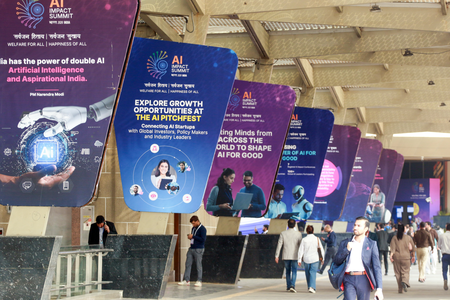
Artificial intelligence (AI) is becoming a key element in transforming rural areas in India, according to a government document released on Monday. The government emphasized that AI is now a fundamental part of public infrastructure, promoting inclusive development across various sectors such as agriculture, healthcare, education, skilling, and local governance. Rather than replacing human capabilities, AI is being integrated to enhance human capacity through strategic planning and sectoral integration.
AI is playing a crucial role in improving last-mile service delivery and fostering participatory governance, the government stated. Initiatives like the ‘India–AI Impact Summit 2026’ mark a shift towards broader implementation through programs like IndiaAI Mission and Digital India. Tools like SabhaSaar, eGramSwaraj, and Gram Manchitra are aiding in participatory governance by streamlining administrative processes and providing visualization and planning tools based on geographic information systems (GIS).
Innovative platforms such as AIKosh, BhuPRAHARI, and Digital ShramSetu Mission are driving rural transformation, the statement highlighted. AIKosh acts as a national repository of AI datasets and models, offering a wide range of AI models across different sectors to developers. With thousands of datasets and AI models available, the platform is facilitating the development of governance and service delivery applications by reducing entry barriers for developers.
BhuPRAHARI, on the other hand, leverages AI and geospatial technologies to monitor assets created under MGNREGA in real-time. By combining ground- and satellite-based data with AI analytics, the platform enables effective asset tracking. Additionally, BHASHINI, an AI-powered language platform, aims to break down linguistic barriers to digital services access by integrating with various government services and offering over 350 AI language models.
