


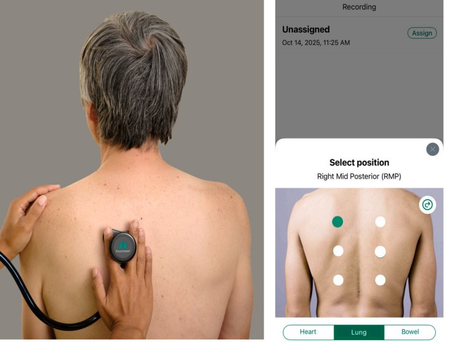
As tuberculosis (TB) remains a leading cause of global infectious deaths, a recent study suggests that AI-enabled digital stethoscopes could play a crucial role in enhancing screening, particularly in remote areas. Experts advocate for the integration of digital technology and AI into stethoscopes to address challenges like under-detection, high costs, and limited access in screening programs. The use of AI-powered digital stethoscopes has shown promise in accurately detecting lung and cardiovascular issues, especially in early TB studies.
Despite advancements in screening tools, around 2.7 million TB cases are missed by existing programs, according to the World Health Organization. Traditional symptom screening methods often fail to identify asymptomatic or subclinical TB cases. While the WHO has endorsed AI-driven computer-aided detection software and portable radiography devices, concerns over operational expenses and initial hardware investments pose obstacles, particularly in primary care and for pregnant women due to radiation risks.
Researchers emphasize the potential of AI in disease screening, including the interpretation of acoustic biomarkers to detect TB. AI applications extend to analyzing cough biomarkers and breath sounds through lung auscultation. Studies from countries with high TB burdens, such as India, Peru, and South Africa, suggest that AI-enabled auscultation holds promise as a TB screening and triage tool. Digital stethoscopes equipped with AI could offer a cost-effective and scalable solution for TB screening, potentially expanding access to care for underserved populations.
