


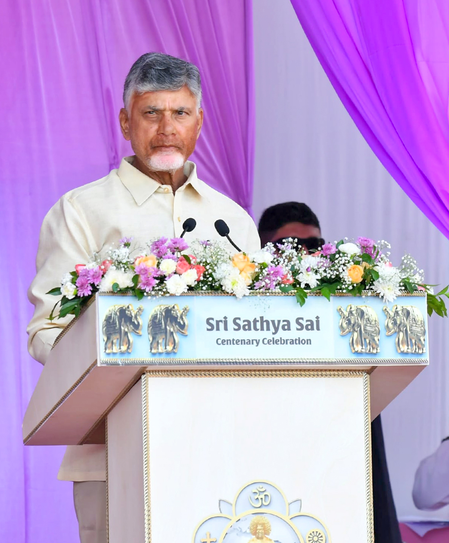
Andhra Pradesh Chief Minister N. Chandrababu Naidu affirmed on Monday that there would be no increase in power tariffs, emphasizing the direct passing on of benefits from true-down charges to consumers. Speaking at a conference with ministers and secretaries at the Secretariat, he stressed the importance of power generation aligning with the net-zero elimination concept. Naidu instructed officials to ensure the direct transfer of true-down charges to consumers.
Efforts to accelerate solar rooftop projects, wind, and pumped storage power generation were urged by Naidu, highlighting the state’s progress from a power deficit to a surplus stage. He mentioned ongoing endeavors to reduce the power purchase price to Rs 3.90. The Chief Minister also emphasized the need for continuous monitoring of opportunities to provide marketing support and better prices for agricultural produce, particularly focusing on crops with global markets.
Naidu underscored the goal of developing Rayalaseema as a horticulture hub, emphasizing the importance of not only Central government funds but also private investments. He noted that Rayalaseema currently produces 22 million tonnes of horticulture produce and has set a target of 40 million tonnes. The construction of a four-lane railway line from Ichchapuram to Nellore and the upcoming high-speed train project were highlighted by Naidu.
He advocated for the conversion of at least 1,000 buses in the Andhra Pradesh State Road Transport Corporation (APSRTC) to electric vehicles. Naidu cited administrative delays, pointing out that setting up a small rice mill requires over 30 permissions, calling for simplification of rules in key departments to enhance the ease of doing business. He urged officials to make government services accessible through WhatsApp to ensure efficient governance.
Naidu expressed concerns about administrative obstacles hindering the supply of sand and gravel in NTR and Krishna districts, essential for construction in the capital city. He directed officials to ensure uninterrupted material supply to avoid hindrances in the capital region’s development.
