


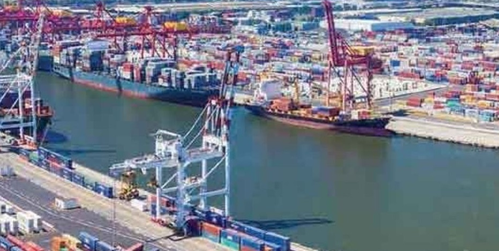
The Andhra Pradesh government has started a transparent bidding process for the Ramayapatnam Port to attract international players. The decision to operate and maintain the port under the Public-Private Partnership (PPP) model has been defended amidst criticism from the YSR Congress Party. A release from the government highlighted the payment mechanisms, including revenue share, equity share, upfront payment, and capacity augmentation obligations.
The Andhra Pradesh Maritime Board (APMB) is developing the Ramayapatnam port in Prakasam district as a major all-weather, multi-cargo port on a design, build, finance, operate, and transfer (DBFOT) basis. Justifying the PPP model, the government mentioned that this approach has been in place for the last 25 to 30 years in major and non-major ports across India. The state government emphasized that 108 out of 119 non-major ports in India are being developed and operated under the PPP model.
The government also stated that the construction progress of Ramayapatnam Port, Machilipatnam Port, and Mulapeta Port has been significant. The Ramayapatnam Port project, to be completed in four phases, will cover 2,538.42 acres and feature 19 berths at full capacity. Phase A of the port will have a capacity of 34.04 million tonnes per annum and is designed to handle ships of 80,000 deadweight tonnage (DWT).
The concession period for the port is set at 30 years, with a possible extension of 20 years upon request. The port is designed to handle various types of cargo, including bulk, container, liquid, and gas cargo. The concessionaire is required to pay an upfront premium linked to project milestones and quote a revenue share percentage as a key bid parameter. Additionally, there are provisions for revenue share increases over time and a Minimum Guaranteed Revenue (MGR) to be paid annually.
