


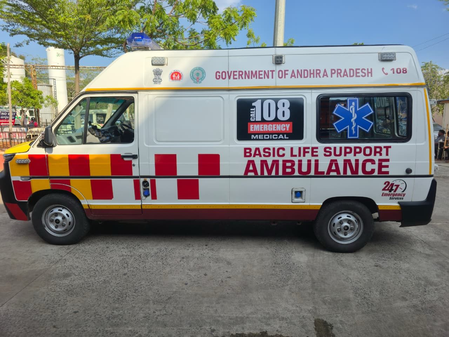
The Andhra Pradesh government has transformed the 108 ambulance emergency services into a highly efficient lifeline, emphasizing the critical nature of time in saving lives. By upgrading the state’s emergency network to meet global trauma care standards, the government aims to ensure swift response and care for those in need. Partnering with Bhavya Health Care, the government has incorporated advanced technologies like GPS tracking and real-time traffic routing into the ambulances to reach and stabilize patients within the crucial “Golden Hour.”
From June 2025 to May 2026, the revamped system handled 7,78,799 emergency calls, providing essential assistance to people in both rural and urban areas of Andhra Pradesh. During this period, the emergency response teams managed to stabilize 1,13,764 road accident victims on-site and safely transported 1,05,786 pregnant women to advanced maternal care facilities, contributing significantly to reducing maternal and infant mortality rates.
The fleet’s operational efficiency is divided into two key areas: Inter-Facility Transfers (IFT) and non-IFT emergencies. IFT cases involved transferring critical patients from primary healthcare centers to specialized hospitals seamlessly, while non-IFT emergencies included high-speed dispatches to various locations for immediate triage and evacuation to medical centers.
State-wide emergency services responded to a total of 7,78,799 cases, offering crucial medical interventions across a wide spectrum of emergencies. The services addressed various medical crises, with road traffic accidents, pregnancy-related issues, respiratory distress, and cardiac emergencies being among the top cases managed by the emergency response teams.
In situations like heart attacks, where time is of the essence, the specialized response protocols of the 108 Emergency network have proven vital in managing heart-related cases promptly. Equipped with advanced life support systems and highly trained Emergency Medical Technicians, the ambulances ensure that patients receive necessary care and support en route to the hospital, potentially saving lives before reaching the ER.
