


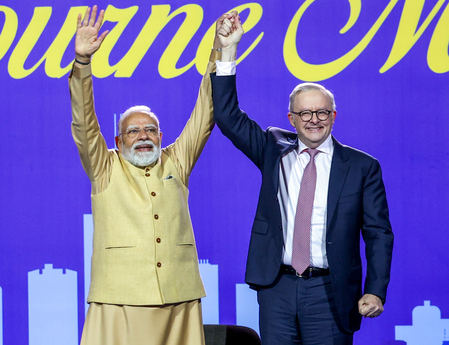
In a significant development, Australia has agreed to export uranium to India for peaceful civilian purposes, marking a shift in their previous stance. The administrative arrangement for the India-Australia Civil Nuclear Agreement was finalized during Prime Minister Narendra Modi’s visit, signifying a key milestone in their bilateral relations. This agreement, signed in 2014, now paves the way for Australia to supply uranium to India, despite India not being a signatory to the Nuclear Non-Proliferation Treaty.
At the 3rd India-Australia Annual Summit in Melbourne, Prime Minister Modi and Australian Prime Minister Anthony Albanese concluded the necessary administrative steps to implement the nuclear agreement. Australia’s decision to export uranium to India is a result of various factors, including India’s commitment to using nuclear energy responsibly and its efforts to maintain global peace. The strategic trust between the two nations has been further bolstered by India’s participation in the Quad grouping and its emphasis on peaceful conflict resolution.
India’s growing energy demands, coupled with its vision to enhance nuclear power generation, have made access to uranium crucial. With Australia possessing significant uranium reserves, it emerges as a natural partner to support India’s clean energy goals. The deal between Australia and India is viewed as a strategic, commercial, and climate-friendly opportunity, ensuring that all uranium exports are strictly monitored under international safeguards for peaceful civilian utilization.
