


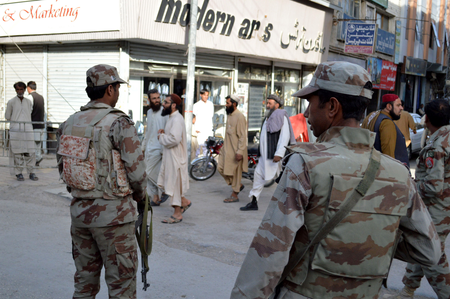
The recent coordinated attacks by the Baloch Liberation Army on January 31 in Pakistan’s Balochistan province have marked a significant escalation in the long-standing insurgency. These attacks, carried out in 12 cities including Quetta and Gwadar, involved both men and women, reflecting the deep-seated grievances of the Balochistan people. The BLA’s ‘Operation Herof Phase II’ targeted Pakistani security posts and Chinese infrastructure, resulting in casualties and significant disruptions.
The Baloch insurgency, dating back to Pakistan’s creation in 1948, has seen resistance against the state over the decades. The conflict, rooted in political, economic, and human rights grievances, has led to systemic issues such as political marginalization and human rights violations. Various organizations have documented enforced disappearances, extrajudicial killings, and lack of accountability in Balochistan, highlighting the ongoing oppression faced by the Baloch people.
Women’s involvement in the Baloch insurgency has been notable, with many joining military movements due to personal losses and extreme state oppression. Despite being rich in resources like minerals and strategic ports, Balochistan remains Pakistan’s poorest province, lacking basic infrastructure and economic opportunities. The focus on Chinese infrastructure, particularly the Gwadar port under the China–Pakistan Economic Corridor, reflects the residents’ discontent with projects seen as exploitative and non-inclusive.
