


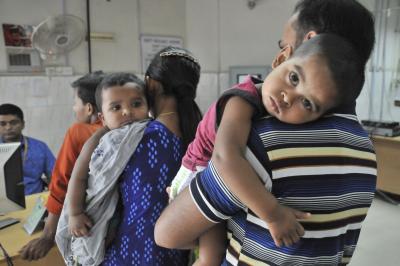
As Bangladesh deals with a severe measles outbreak, the country witnesses an average of almost four children succumbing to the disease each day, with over 800 individuals being hospitalized daily. Despite the government’s assertion of surpassing its emergency measles vaccination goal, hospitals are still receiving unvaccinated patients, highlighting gaps in vaccine coverage.
The measles outbreak has persisted in the initial three weeks of July, with the Directorate General of Health Services in Bangladesh reporting an average of 1,005 suspected and confirmed measles cases, 821 hospital admissions, and close to four daily fatalities. Mahmudur Rahman, chair of the National Verification Committee for Measles and Rubella Elimination, expressed concerns over the authorities’ response, stating that the situation has not improved as expected post-vaccination campaign.
Health experts attribute the ongoing outbreak to vaccination disparities affecting around 4 million children, infections among children outside the campaign’s target age group, and inadequate infection prevention measures. The death toll from the measles outbreak in Bangladesh has risen to 797 since March 15 this year, with four children reported dead on Tuesday, underscoring the escalating health crisis in the nation.
Amid the outbreak, reports indicate that a significant number of measles patients admitted to hospitals are unvaccinated. Asif Haider, an administrative officer at a dedicated measles care hospital, revealed that 80 to 90 percent of current measles patients have not received vaccinations. The gap of 4 million children between measles-rubella and Vitamin A campaigns signals a substantial unvaccinated population, according to health experts.
Experts criticize the vaccination campaign’s planning and public outreach, citing inadequate communication of the revised vaccination schedule to families. Be-Nazir Ahmed, a former director of disease control at the Directorate General of Health Services, highlighted the low vaccination target and emphasized the need for accurate planning and increased public awareness to address the measles crisis.
