


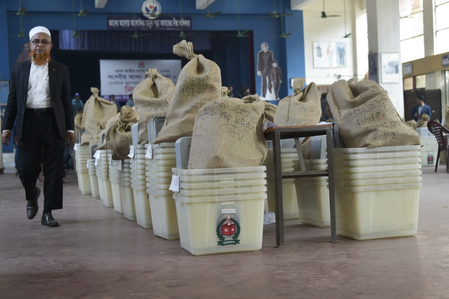
Bangladesh is preparing for its significant parliamentary elections scheduled for Thursday, coming after the downfall of former Prime Minister Sheikh Hasina’s 15-year rule due to widespread protests. The country has been under interim governance, witnessing ongoing protests, the emergence of hardline Islamic factions, and violence against minorities.
With the formation of a democratically elected government anticipated, analysts are eyeing the Bangladesh National Party (BNP) as a probable victor. Following the passing of former Prime Minister Khaleda Zia, her son Tarique Rahman now leads the BNP and is a top contender for the Prime Minister post.
The BNP faces stiff competition from the Bangladesh Jamaat-e-Islami, a conservative Islamic party that previously aligned with the BNP. While the BNP is favored to win, there are expectations that Jamaat-e-Islami might achieve its best electoral performance yet.
The interim government, led by Chief Advisor Muhammad Yunus, dissolved the Awami League post-Sheikh Hasina’s removal from power and barred it from contesting in the election. The Awami League has criticized this move, denouncing the polls as a “staged election” and accusing BNP, Jamaat, and their associates of pressuring and intimidating party members and citizens to vote.
A significant voter turnout is anticipated, especially among younger citizens aged between 18 and 37, constituting 44% of Bangladesh’s electorate, which totals around 127 million registered voters. Polling for the 13th National Parliament elections and the 2026 referendum will span 299 parliamentary constituencies from 7:30 a.m. to 4:30 p.m., with vote counting to follow immediately.
