


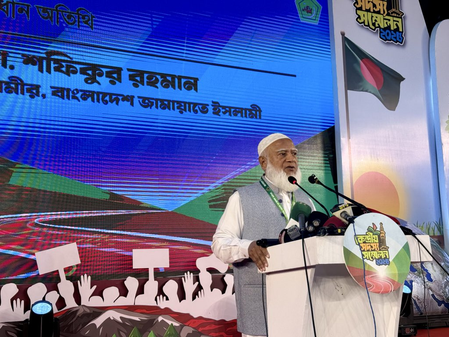
Bangladesh Jamaat-e-Islami’s leader, Shafiqur Rahman, stated that women cannot become the party’s chief due to religious obligations and biological limitations. In an Al Jazeera interview, Rahman emphasized that men and women have inherent differences, citing the inability of men to bear children or breastfeed. He noted that no women are contesting in the upcoming Bangladesh polls for Jamaat-e-Islami, attributing this to cultural norms in the country.
The interview highlighted that Bangladesh has seen female Prime Ministers in the past. However, Rahman reiterated his stance that most countries do not find it feasible for women to lead. The upcoming 13th Parliamentary elections in Bangladesh, set for February 12, are notable for the absence of the Awami League and the low number of women candidates. Critics have raised concerns about the legitimacy of the polls due to the ban on the Awami League by the interim government led by Muhammad Yunus.
Despite the criticism, civil society and political parties have accepted the decision to exclude the Awami League from the political landscape. The election scenario reveals a minimal representation of women candidates, with only a small percentage contesting. The Election Commission reported a disparity in the number of male and female voters, with women comprising a smaller portion.
The participation of women in active electoral politics remains limited, with various parties nominating few female candidates. Factors such as gender-based violence and restrictions on women’s participation contribute to the low representation of women in politics. Dr. Fauzia Moslem of the Bangladesh Mahila Parishad attributes the rise in gender-based violence to increased rhetoric from radical groups aiming to limit women’s freedom and involvement in society.
