


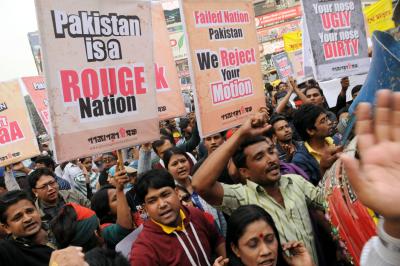
The night of March 25, 1971, known as the ‘Black Night,’ is a tragic memory in Bangladesh’s history, as Pakistani forces initiated a brutal crackdown, starting ‘Operation Searchlight’ against unarmed Bangladeshis. This marked the beginning of a dark chapter with indiscriminate firing, attacks on key locations like Dhaka University, and mass killings of students and teachers. The violence aimed to suppress the Bengalee nationalist movement after the Awami League’s election victory in 1970, leading to widespread civilian targeting and devastation.
Civilians, students, intellectuals, and security force members were among the thousands killed in a single night, with homes destroyed and neighborhoods in ruins. The violence’s magnitude and cruelty reverberated globally, sparking the Bangladesh Liberation War. The events of March 25, 1971, are considered the start of the 1971 genocide, culminating in Bangladesh’s liberation on December 16, 1971, after Pakistani forces surrendered to the Bangladesh-India Allied Forces.
Bangladesh observes March 25 as Genocide Day, commemorating the pre-planned massacre that Prime Minister Tarique Rahman described as one of the nation’s most brutal episodes. President Mohammed Shahabuddin echoed this sentiment, emphasizing the day’s significance in uniting Bangladeshis to honor the martyrs and fulfill the ideals of the Liberation War.
