


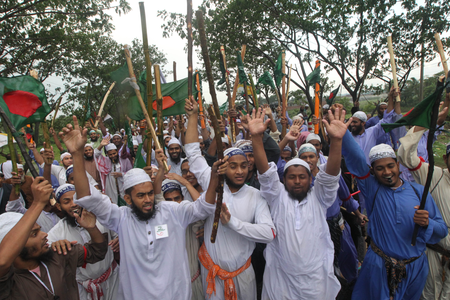
As Bangladesh prepares for its national election on February 12, minorities in the country are feeling increased insecurity, according to a report. Bruce Allen from Forgotten Missionaries International highlighted the uncertain social climate in Bangladesh. Under the current caretaker government led by Nobel Peace Prize winner Muhammad Yunus, there is a growing indifference to rising militancy, leading to increased persecution and economic challenges.
The upcoming election in Bangladesh is eagerly anticipated by the people, but there is a prevailing sentiment of discontent with the current state of the country. Notably, there has been a fragmentation of Gen-Z momentum in Bangladesh, with the formation of a multi-party alliance involving the student-led National Citizen Party and Jamaat-e-Islami, a party with a controversial history. Minorities such as Christians, Hindus, and Buddhists in Bangladesh are reported to be experiencing heightened insecurity, particularly due to the energization of radical Muslims amidst the prevailing chaos.
The report also mentions Pastor “Mintu” and his congregation facing obstacles in constructing a church due to opposition from Muslim neighbors. Many Christians in Bangladesh live on government-owned land, making them vulnerable to potential eviction by Muslim neighbors. The Christian community in Bangladesh has a delicate relationship with the Muslim majority, as power dynamics heavily favor the latter. Recent media reports have highlighted over 50 attacks on minority communities in Bangladesh, alongside election-related violence and political unrest.
According to a study, there have been more than 50 attacks on minority communities in Bangladesh, raising significant concerns. The study also revealed a total of 401 incidents of political violence in the past year, resulting in 102 fatalities. Furthermore, the report pointed out the alarming disappearance of 1,333 weapons, emphasizing the heightened risk of violence. Political parties in Bangladesh have raised doubts about the fairness of the election process, with concerns over bias in candidate scrutiny and cancellations.
