


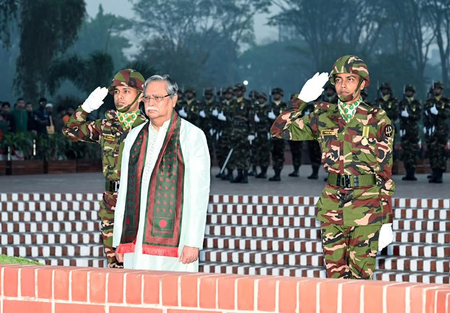
The resignation of Bangladesh President Mohammed Shahabuddin has marked another turbulent episode in the country’s political history. Shahabuddin becomes the eighth president to resign or be ousted from Bangabhaban, the official presidential residence. Despite its ceremonial nature, the Presidency in Bangladesh has faced challenges including assassinations, coups, constitutional changes, uprisings, and political crises.
Among the 18 individuals who have held the presidency in various capacities, 10 did not complete their terms. Two presidents were assassinated while in office, while the other eight resigned or were removed due to shifting political circumstances. Notably, both Bangabandhu Sheikh Mujibur Rahman and Ziaur Rahman were assassinated during their presidencies by factions within the armed forces.
Shahabuddin’s resignation was formally accepted by the Speaker of the national Parliament, following his decision to step down due to health reasons. Elected as the 22nd President with the support of the Awami League, Shahabuddin took office in April 2023. His resignation, almost two years before his term was set to end in April 2028, brought an end to months of speculation following the ouster of former Prime Minister Sheikh Hasina in August 2024.
Citing health complications, Shahabuddin explained his resignation to ‘The Daily Star’, stating, “I have nothing more to add at this moment.” Reports indicated that a phone conversation between Shahabuddin and Sheikh Hasina during his medical treatment in London led to intelligence agencies requesting his resignation. However, a senior Bangladesh Nationalist Party (BNP) leader suggested that the situation was more intricate than just the reported conversation.
The political landscape in Bangladesh has been rapidly changing, with the recent crackdown on Awami League-affiliated leaders by the BNP-led government. Shahabuddin’s claims of attempted overthrow during the previous Muhammad Yunus-led interim government further added to the complexity of the situation.
