


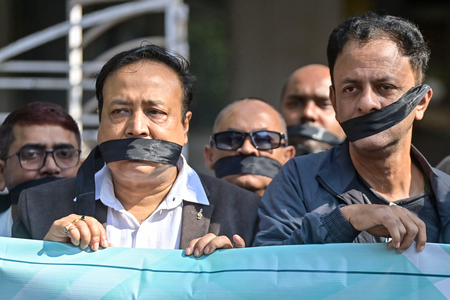
Bangladesh’s newspapers are called upon to regain their independence and serve as a check on power rather than echoing it, especially during times of national turmoil. An opinion piece in ‘The Asian Age’ by Anwar A Khan, a veteran of the 1971 Bangladesh Liberation War, highlighted the need for media to act as the conscience of the people. Khan expressed concern over the silence prevailing in the media landscape amidst serious allegations of human rights abuses since August 5, 2024.
The article emphasized that the press plays a crucial role in upholding fundamental rights enshrined in the Bangladeshi Constitution. Khan underscored that in times of perceived threats to these rights, the media has a duty to question, investigate, and speak out. He warned against the dangers of remaining silent in the face of potential violations, stating that neutrality should not be mistaken for indifference but rather as a failure to fulfill its responsibilities.
Anwar A Khan raised alarm over the recent ban on the Awami League, a prominent political party in Bangladesh, emphasizing the importance of preserving democratic values and pluralism. He criticized the lack of strong editorials and bold headlines in newspapers that challenge authority and hold it accountable. Khan urged the media to move away from ambiguity and tepid reporting towards a more assertive stance that upholds ethical standards and challenges injustice and abuse of power.
Bangladesh was described as being at a critical juncture where the safeguarding of its constitutional principles is paramount. Khan stressed the role of newspapers as custodians of public discourse, urging them to embrace courage, ask tough questions, present inconvenient truths, and facilitate principled debates. He warned that failing to do so not only undermines the credibility of the press but also weakens the democratic foundations of the nation.
