


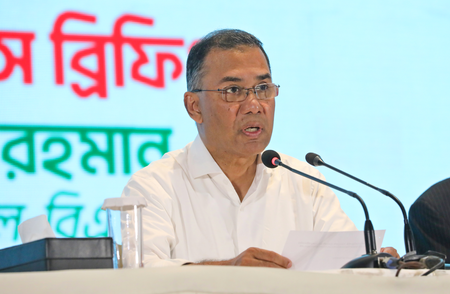
Zillur Rahman, a prominent Bangladeshi journalist and President of the Centre for Governance Studies in Dhaka, highlighted the enduring historical, economic, and strategic ties between India and Bangladesh. He noted that despite potential shifts in policy priorities under the Bangladesh Nationalist Party (BNP)-led government, the overall relationship between the two countries is expected to remain positive.
Rahman, in an interview with the Sri Lanka-based think-tank Trinco Centre for Strategic Studies (TCSS), stressed the deep-rooted connections between India and Bangladesh. He mentioned that while there might be challenges in areas like border management, trade, and infrastructure projects, the strong institutional and people-to-people links between the two nations provide a foundation for dialogue and cooperation.
Addressing the possibility of Islamabad’s increased engagement, particularly with groups like Jamaat-e-Islami in Bangladesh, Rahman highlighted that Bangladesh’s foreign policy is primarily guided by strategic and economic factors rather than historical or ideological affiliations. He expressed confidence that Pakistan’s involvement is unlikely to significantly alter Bangladesh’s longstanding partnership with India.
Rahman also discussed concerns about China’s expanding influence in South Asia and the strategic challenges facing Bangladesh. He pointed out that Bangladesh is navigating a complex global landscape, where maintaining strategic autonomy is vital. While acknowledging the opportunities presented by China’s economic engagement, Rahman emphasized the importance of carefully managing these relationships to avoid excessive dependence and to safeguard Bangladesh’s sovereignty.
