


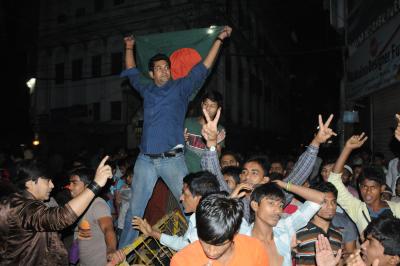
Bangladesh’s Awami League (AL) is witnessing a resurgence as grassroots leaders and activists reopen offices in various districts, displaying national and party symbols without facing restrictions. This move signifies a strong political presence and motivates party members towards a potential comeback. The reopening of offices has sparked discussions on the AL’s future and leadership in Bangladesh.
According to a report by Bangladeshi researcher Purnima Chowhan for ‘The Diplomat’, the AL, led by former Prime Minister Sheikh Hasina, faced challenges after being banned in May 2025 by an interim government. Despite facing obstacles, the AL is striving to rebuild its organization, with questions arising about its return to mainstream politics and the role of potential leaders.
The report also raises concerns about whether the Bangladesh Nationalist Party (BNP) government, led by Tarique Rahman, will allow the AL to re-engage in politics. Interestingly, in some constituencies, AL members supported BNP candidates during recent elections, fostering a relationship between the two parties. The AL’s strategic moves are prompting discussions on whether the party is focused on survival or planning a significant political resurgence.
As per pre-election surveys, the AL could have performed well if it had participated in the polls, indicating that survival may not be the primary challenge. However, for a successful comeback, the AL needs more than symbolic gestures. A well-structured action plan, youth involvement, and clear leadership are deemed crucial. The report emphasizes the importance of concrete programs to avoid confusion, leadership speculation, and potential disintegration within the party.
The evolving political landscape in Bangladesh suggests a shift within the AL, with a focus on strategic decisions for the future. The role of Joy, Sheikh Hasina’s successor, is central to this transformation, indicating a new phase in the country’s political dynamics.
