


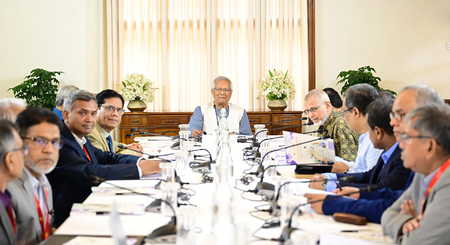
Bangladesh’s Interim Government, led by Muhammad Yunus, faces criticism for its adhoc governance style, lacking a strategic approach and creating legal and operational risks that contradict its anti-corruption goals. The government, as noted by Transparency International Bangladesh’s Executive Director, Iftekharuzzaman, has been hindered by internal resistance, hampering efforts for anti-corruption reforms. Various ordinances enacted by the Yunus administration have been accused of deviating from the intended state reform agenda, such as the Police Commission Ordinance and the National Human Rights Ordinance.
Iftekharuzzaman highlighted concerns over the government’s ordinances related to cyber security, digital space, and data management, which are seen to grant unchecked surveillance powers, potentially infringing on privacy and media freedom. Despite recommendations from the ACC-Reform Commission and other bodies, the Interim Government has been criticized for failing to implement reforms promptly and effectively. The Anti-Corruption Commission (ACC) has also been implicated in the lack of progress, with allegations of collusion and hindering accountability measures.
