


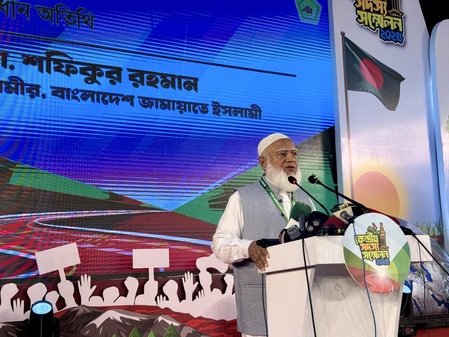
Bangladesh’s Jamaat-e-Islami party has claimed that their alliance candidates faced narrow defeats in the February 12 national elections due to various electoral irregularities. These irregularities included delayed results, missing polling agent signatures, forged endorsements, and pencil-marked tallies in some instances. The party is addressing these issues through formal legal channels but is currently avoiding large-scale field actions.
In response to the election outcomes, Jamaat-e-Islami has been employing strategies to keep pressure on the Bangladesh Nationalist Party (BNP) government. Leading an 11-party electoral alliance, the party has requested a vote recount in 32 constituencies and challenged results in court for at least 13 seats. The party’s actions are detailed in a report by the Bangladeshi daily Prothom Alo.
Moreover, Jamaat has raised concerns regarding the roles of two former advisors to the interim government, Syeda Rizwana Hasan and Khalilur Rahman, led by Muhammad Yunus. The party has called for their interrogation and legal accountability. In the 13th national parliamentary elections, the BNP secured an absolute majority with 209 seats individually and 212 in coalition, while Jamaat won 68 seats independently and 77 in alliance.
Following the elections, the 11-party alliance applied for recounts in 32 constituencies with varying vote margins. Most of these seats belonged to Jamaat, with a few from other parties like the National Citizen Party (NCP), Khelafat Majlis, Bangladesh Khelafat Majlis, and the Liberal Democratic Party (LDP). Notably, 12 candidates have taken legal action against the election results by filing complaints with the Election Commission and initiating court challenges.
Jamaat-e-Islami has been vocal about the need for a legal inquiry and questioning of the two former advisors for alleged “election engineering.” The party’s Secretary General, Mia Golam Porwar, emphasized the importance of investigating these allegations. While the party is focusing on the two advisors currently, concerns about the impartiality of other interim government leaders will be addressed in the future.
