


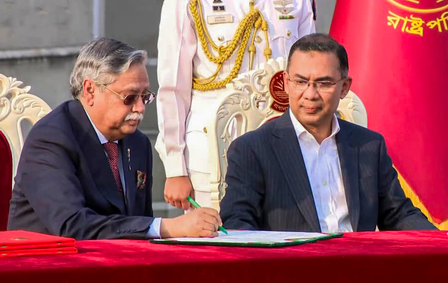
Bangladesh’s newly-elected parliament, set to convene on March 12, will grapple with conflicting mandates from the constitution and the July Charter. This unique situation, arising from the 2024 July uprising, may lead to tensions as the parliament commences its work. Lawmakers are divided, with the ruling party taking one oath and the opposition members taking two oaths, setting the stage for potential institutional challenges.
The July Charter, a reform plan post the 2024 uprising, has created a scenario where lawmakers are swearing allegiance to different bodies, complicating the parliamentary proceedings. While the opposition has formed a Constitution Reform Council as per the Charter, the ruling party has abstained, citing the lack of constitutional basis. This divide has raised concerns about how legislative business will unfold amidst this constitutional ambiguity.
The opposition, surpassing the required number of lawmakers, has established the reform council, while the ruling party insists on adhering to the existing parliamentary process for any reforms. This disagreement has cast a shadow over the parliament’s initial sessions, with legal challenges further muddying the waters. A recent court petition challenging the Charter and its referendum has escalated the political dispute into a potential constitutional crisis.
